We are all wired with various appetites and desires, some good, some not. These desires, whether for attention, pleasure, or material things, can powerfully influence our lives. If left unchecked, they can subtly steer us off course, preventing us from experiencing the deeper, more meaningful life God intends for us, both in our relationships and spiritually. It's crucial to recognize the pervasive nature of these inner longings. [04:00]
The Apostle Paul once wrote that he would not have known what sin truly was if the law had not pointed it out. He realized that the commandment, "You shall not covet," actually made him more aware of his own strong desires to have what others possessed. Romans 7:7-8
Reflection: What is one desire in your life that, if left unchecked, you recognize could potentially hinder your spiritual growth or your most important relationships?
When faced with desires we know are unhealthy or unhelpful, our natural inclination is often to simply tell ourselves, "Don't." We try to exert self-control, believing that sheer willpower can overcome these urges. However, experience often shows us that our desires are frequently stronger than our resolve. This approach, while well-intentioned, often leaves us feeling defeated and trapped in a cycle of trying and failing. [07:00]
Paul explained that the very commandment meant to guide him toward life instead seemed to bring him closer to spiritual death. He found that sin, using the opportunity provided by the law, tricked him and led him astray. Romans 7:10-11
Reflection: Reflect on a time when you tried to overcome an unhelpful desire by simply telling yourself "don't." What was the outcome, and what did that experience teach you about the limits of willpower alone?
The struggle with our desires is not unique; even the Apostle Paul openly confessed his own profound internal battle. He admitted that he often found himself doing the very things he didn't want to do, and failing to do the good he desired. This internal war, where our mind knows what is right but our actions betray us, can make us feel like prisoners, caught in a cycle of regret and recommitment. It's a deeply human experience that reveals our need for something beyond ourselves. [23:00]
Paul lamented, "I don't understand my own actions. I don't do what I want to do, but instead, I do what I hate. I have the desire to do good, but I lack the power to carry it out. The good I long to do, I don't do, and the evil I want to avoid, I keep on doing." Romans 7:15, 18-19
Reflection: In what specific area of your life do you most resonate with Paul's honest confession of doing what you don't want to do, or not doing what you know is good?
After acknowledging the profound human struggle with desires and the inadequacy of self-effort, there is a powerful message of hope. For those who have placed their trust in Jesus and are seeking to follow His way, there is no condemnation. This truth is a profound encouragement, offering liberation from the guilt and shame that often accompany our failures. Through Christ, a new path is opened, not just a different way, but a new source of power to live a life free from the old cycle of sin and death. [26:00]
Paul declared, "Therefore, for those who are united with Christ Jesus, there is now no judgment or guilt. Because through Christ Jesus, the life-giving Spirit's law has set you free from the law of sin and death." Romans 8:1-2
Reflection: How does the truth of "no condemnation in Christ Jesus" personally encourage you when you reflect on past struggles or current temptations?
The better way to navigate our desires is not to simply say "Don't," but to cry out "Help!" This simple act is an admission of our inability to overcome on our own, fostering a humble posture of surrender to God's ways. It creates personal accountability, as we actively engage in what we can do while relying on divine assistance. Moreover, it reminds us that we are not alone, inviting God's Spirit and the support of others into our lives, partnering us with His transformative work. [30:00]
The Spirit of God comes to our aid in our weaknesses. We often don't know how to pray as we should, but the Spirit Himself intercedes for us with groans too deep for words. Romans 8:26
Reflection: What is one specific desire you are currently wrestling with, and what would it look like to genuinely cry out "Help!" to God's Spirit and take a practical step of surrender this week?
I told you up front about my weakness for chips and queso because that little confession points to a much bigger truth: we are appetite machines. We hunger—for sugar, praise, control, safety, perfection—and those hungers shape our choices. Some desires are healthy and God-given; others are short-term gratifications that steal the future we want. Slapping a "don't" on the bad ones rarely works. Paul watches this same human pattern: the law names the wrong, but naming it can actually amplify its pull. When we try to live by "don't" alone we end up trapped in a cycle—resolve, failure, shame, repeat—like being a prisoner to our own impulses.
Paul's honesty in Romans is the place where hope breaks in. He admits he can’t fix himself, and that's the point: we were never designed to manage these hungers apart from rescue. The cross and the resurrection introduce a different power—the Spirit who gives life—who frees us from the law of sin and death. That means freedom is not simply moral improvement; it’s being reoriented and empowered from the inside. Practically, this looks less like commanding ourselves and more like crying out, "Help!"—a short prayer that does three things at once: admits incapacity, opens our hands in surrender, and activates both God's power and our own responsible actions. Calling for help is not passivity. It invites the Spirit's work, creates accountability, and motivates the small, faithful moves that keep us afloat while God does the heavy lifting. So instead of centering life around "Don't," center it around honest dependency: say "Help," mean it, and then take the next right step with others beside you. The freedom Christ offers is not a way to avoid struggle; it's a new ground from which the struggle changes shape and is eventually overcome.
As different as we all are—different ages, personalities, wirings—one thing we all have in common is that we are appetite machines. Those appetites are different for each of us, but we all have appetites for a lot of things.
We have appetites for attention, for fame, popularity. We have an appetite for entertainment, pleasure, money, for materials, stuff in our lives. These appetites can sideline us and prevent us from experiencing what we ultimately want in relationships, career, financially, and spiritually.

When we have these desires that we know are not good for us pop up in our lives, we tend to just slap a don't on it. Like an upside down Nike slogan—"Just don't." And we think that's gonna take care of it. But it's not effective.
There's not one person who has ever been fully self-controlled. Not one person who has ever said, "I’ll just slap a don't on things I'm not supposed to do & I'll slap a do on the things I am supposed to do, & I'm good." Don't is not enough.
Paul has us right where he wants us. He's trying to connect us to a human experience that's true for all of us so he can show us what Jesus did for us through His death on the cross and the resurrection.
The good that we want to do, we don't do. And the things that we say, "Don't do this," is the stuff we just keep on doing. That cycle makes us feel like prisoners—failing, shame, recommit, fail again.
We can't do it on our own. We need rescue. The answer is Jesus. Good news and help are on the way.
Don't say, "Don't." Say "Help." Saying "Help" admits that you can't do it on your own, gives a posture of surrender, and invites God into the struggle.
It gives us a humble posture. One of surrender, and we cannot live the Christian life without surrender. It's in that moment we open our hands and go, "Jesus, I surrender, I don't know why this desire is here, so Jesus, help.
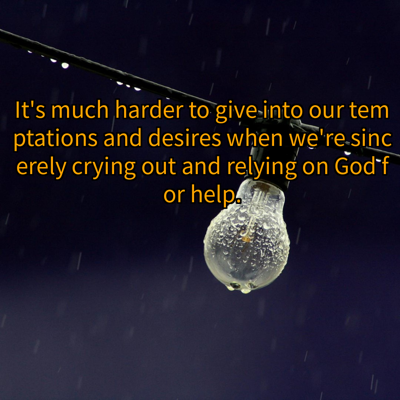
It's much harder to give into our temptations and desires when we're sincerely crying out and relying on God for help.
Hi, I'm an AI assistant for the pastor that gave this sermon. What would you like to make from it?
Add this chatbot onto your site with the embed code below
<iframe frameborder="0" src="https://pastors.ai/sermonWidget/sermon/freedom-from-desires" width="100%" height="100%" style="height:100vh;"></iframe>Copy