|
Current Plan
|
Pastor
$30per month
|
Team
$100per month
|
|
|---|---|---|---|
| Sermons per month | 4 | 5 | 20 |
| Clips per sermon | 2 | 8 | 20 |
| Admins that can edit sermon pages and sermon clips |  |
1 | 5 |
| Sermons automatically pulled from Youtube and emailed to you | |
by Mon morning | on Sundays |
| Sermon clips translated into any language (example) | |
|
 |
| AI Assistant's website training depth | NA | Crawls your homepage and all pages linked from it |
Crawls your homepage and pages up to two links deep |
| AI Assistant's youTube Sermon Training | NA | Sermons from the past 12 months | Sermons from the past 24 months |
| Max length of videos | 1.5 hours | 2.5 hours | 4 hours |
| Customer support | |
Chat + Zoom calls |
Caption Text


Clip Settings
Genesis
John 3:16
Psalm 23
Philippians 4:13
Proverbs 3:5
Romans 8:28
Matthew 5:16
Luke 6:31
Mark 12:30

 Click to upload
You can upgrade to a paid plan to set your clip settings

Cancellation
We’re sorry to see you end your subscription
Could you let us know why so that we can improve our ministry?
Create a new chatbot from a video of your church service
Why_the_Bible_1_19_25.pdf
by Stacy Goralski  on Jan 20, 2025
**Summary:**
The sermon emphasizes the unique and divine nature of the Bible, highlighting its role as a holy book set apart by God to reveal His will and plan for salvation. It underscores the importance of scripture in combating temptation, as demonstrated by Jesus during His time in the wilderness. The Bible is portrayed not only as a tool for spiritual warfare but also as a guide for living in relationship with God and others. The sermon stresses the Bible's flawless internal consistency and supernatural inspiration, despite being written by diverse authors over centuries. It warns against doubting the reliability of scripture and encourages a deep, respectful engagement with God's word. The pastor pledges to uphold the Bible as the sole authority and urges the congregation to cherish and share it.
**Key Takeaways:**
- **The Bible as a Divine Revelation:** The Bible is not just any book; it is a divine revelation that allows us to know God, His will, and His plan for our salvation. It is sustained by God and set apart as holy, providing a foundation for our faith and guiding us in our spiritual journey. Understanding its divine nature encourages us to approach it with reverence and a desire to align our lives with its teachings.
- **Scripture as a Weapon Against Temptation:** Jesus' use of scripture to combat temptation in the wilderness serves as a powerful example for us. The Bible, described as the "sword of the spirit," equips us to face challenges and resist the devil's schemes. By immersing ourselves in scripture, we gain strength and wisdom to overcome the trials we encounter, reminding us of the importance of knowing and applying God's word in our lives.
- **The Bible's Role in Relationships:** Beyond being a tool for spiritual warfare, the Bible instructs us on how to live in relationship with God, others, and creation. It provides moral and spiritual guidance, helping us navigate life's complexities with integrity and love. By following its teachings, we cultivate a life that reflects God's character and fosters harmony in our communities.
- **The Unity and Consistency of Scripture:** Despite being written by various authors across different times and cultures, the Bible maintains a flawless internal consistency and unity. This coherence testifies to its supernatural inspiration and the divine orchestration behind its message. Recognizing this unity strengthens our faith in the Bible's authority and reliability, encouraging us to trust its teachings fully.
- **The Importance of Upholding Scripture's Authority:** The sermon warns against the dangers of doubting or deconstructing the Bible's authority. Such skepticism can lead to confusion and spiritual peril. Instead, we are called to approach scripture with a healthy fear and respect, acknowledging its role as the ultimate source of truth and guidance. By committing to uphold the Bible's authority, we safeguard our faith and the faith of those around us.
**Bible Study Discussion Guide**
**Bible Reading:**
- Isaiah 40:8
- 2 Timothy 3:16-17
- Matthew 4:1-11
**Observation Questions:**
1. According to Isaiah 40:8, what is said about the word of God, and how does this relate to the sermon’s emphasis on the Bible's divine nature?
2. In 2 Timothy 3:16-17, what purposes of scripture are highlighted, and how do these purposes support the sermon’s message about the Bible's role in our lives?
3. How does Jesus use scripture in Matthew 4:1-11 to respond to temptation, and what does this demonstrate about the power of God’s word?
**Interpretation Questions:**
1. The sermon describes the Bible as a "sword of the spirit." How does this metaphor help us understand the role of scripture in spiritual warfare?
2. What does the sermon suggest about the importance of the Bible's internal consistency and unity, and how does this affect our trust in its teachings?
3. How does the sermon’s warning against doubting scripture’s authority challenge current cultural attitudes towards the Bible?
**Application Questions:**
1. Reflect on a time when you faced temptation. How might immersing yourself in scripture have changed your response?
2. The sermon encourages a deep engagement with God’s word. What practical steps can you take this week to deepen your study of the Bible?
3. Consider your relationships with others. How can the Bible guide you in fostering harmony and integrity in these relationships?
4. The pastor pledged to uphold the Bible as the sole authority. How can you make a similar commitment in your personal life?
5. Identify a specific area in your life where you struggle to trust the Bible’s teachings. What can you do to strengthen your faith in this area?
6. The sermon warns against the dangers of deconstructing the Bible’s authority. How can you engage with scripture in a way that builds rather than undermines your faith?
7. Think of someone in your life who might benefit from hearing about the Bible’s divine nature and role. How can you share this message with them this week?
Day 1: The Bible as Divine Revelation
The Bible stands as a divine revelation, a sacred text through which God reveals His will and plan for salvation. It is not merely a historical document or a collection of moral teachings; it is a living testament to God's desire to be known by humanity. As believers, we are invited to approach the Bible with reverence, recognizing its unique role in our spiritual journey. By engaging deeply with scripture, we align our lives with God's purposes and gain insight into His character and intentions for us. This divine revelation serves as the foundation of our faith, guiding us in truth and righteousness.
Psalm 119:105-106 (ESV): "Your word is a lamp to my feet and a light to my path. I have sworn an oath and confirmed it, to keep your righteous rules."
Reflection: How can you create a daily habit of engaging with the Bible to better understand God's will for your life?
Day 2: Scripture as a Weapon Against Temptation
Scripture is a powerful tool in the believer's arsenal, equipping us to resist temptation and stand firm against the adversary's schemes. Jesus' example in the wilderness, where He used scripture to counter the devil's temptations, illustrates the importance of knowing and applying God's word in our lives. By immersing ourselves in scripture, we gain the strength and wisdom needed to navigate the challenges we face. The Bible, described as the "sword of the spirit," empowers us to overcome trials and remain steadfast in our faith.
Ephesians 6:17 (ESV): "And take the helmet of salvation, and the sword of the Spirit, which is the word of God."
Reflection: Identify a specific temptation you face regularly. What scripture can you memorize and use to combat this temptation when it arises?
Day 3: The Bible's Role in Relationships
The Bible provides guidance on how to live in relationship with God, others, and creation. It offers moral and spiritual principles that help us navigate life's complexities with integrity and love. By following its teachings, we cultivate a life that reflects God's character and fosters harmony in our communities. The Bible instructs us on how to love our neighbors, seek justice, and walk humbly with God, shaping our interactions and relationships in ways that honor Him.
Colossians 3:12-14 (ESV): "Put on then, as God's chosen ones, holy and beloved, compassionate hearts, kindness, humility, meekness, and patience, bearing with one another and, if one has a complaint against another, forgiving each other; as the Lord has forgiven you, so you also must forgive. And above all these put on love, which binds everything together in perfect harmony."
Reflection: Think of a relationship in your life that needs healing or strengthening. How can you apply biblical principles to improve this relationship today?
Day 4: The Unity and Consistency of Scripture
Despite being written by diverse authors over centuries, the Bible maintains a flawless internal consistency and unity. This coherence testifies to its supernatural inspiration and the divine orchestration behind its message. Recognizing this unity strengthens our faith in the Bible's authority and reliability, encouraging us to trust its teachings fully. The consistent message of God's love, redemption, and justice throughout scripture assures us of its divine origin and purpose.
2 Peter 1:20-21 (ESV): "Knowing this first of all, that no prophecy of Scripture comes from someone's own interpretation. For no prophecy was ever produced by the will of man, but men spoke from God as they were carried along by the Holy Spirit."
Reflection: Reflect on a time when you doubted the consistency of the Bible. How can understanding its divine unity help you trust its teachings more deeply?
Day 5: The Importance of Upholding Scripture's Authority
Upholding the authority of scripture is crucial for safeguarding our faith and the faith of those around us. Doubting or deconstructing the Bible's authority can lead to confusion and spiritual peril. Instead, we are called to approach scripture with a healthy fear and respect, acknowledging its role as the ultimate source of truth and guidance. By committing to uphold the Bible's authority, we ensure that our beliefs and actions are grounded in God's word, providing a firm foundation for our spiritual lives.
Isaiah 40:8 (ESV): "The grass withers, the flower fades, but the word of our God will stand forever."
Reflection: In what ways can you demonstrate a commitment to upholding the authority of scripture in your daily life and interactions with others?
1. "The Bible is the book we call 'Holy.' It is set apart and sustained by God so that we can know Him, His will, and His plan for our salvation."
2. "If Jesus relied on scripture, why should we think we could deal with temptation any better without it? We try to go it alone, but it’s often more difficult than we can bear."
3. "The Bible is more than a tool for battle. It tells us who God is and how to live in relationship with Him, and how we ought to live with others and creation."
4. "We speak to God through prayer, He speaks to us through His word. We must be familiar with it so that we are not deceived."
5. "If you want to know the voice of God, you must know the word of God! The Bible serves as a guide and a mirror, showing us our need for a savior."
6. "In this Holy Bible, we have 66 separate books written by 40 authors over roughly 2,000 years, spanning three continents and three languages."
7. "Despite a marvelous array of topics and goals, the Bible displays a flawless internal consistency. It never contradicts itself or its common theme."
8. "Only the one true, holy God could provide us with such a flawless Bible that reveals such a matchless message."
9. "The Bible was transcribed and transmitted very carefully through official scribes who had to go through ritual cleansing before even touching original manuscripts."
10. "My pledge to you is that the Scriptures, the Holy Bible, will always be my only source of authority. Here I stand, I can do no other."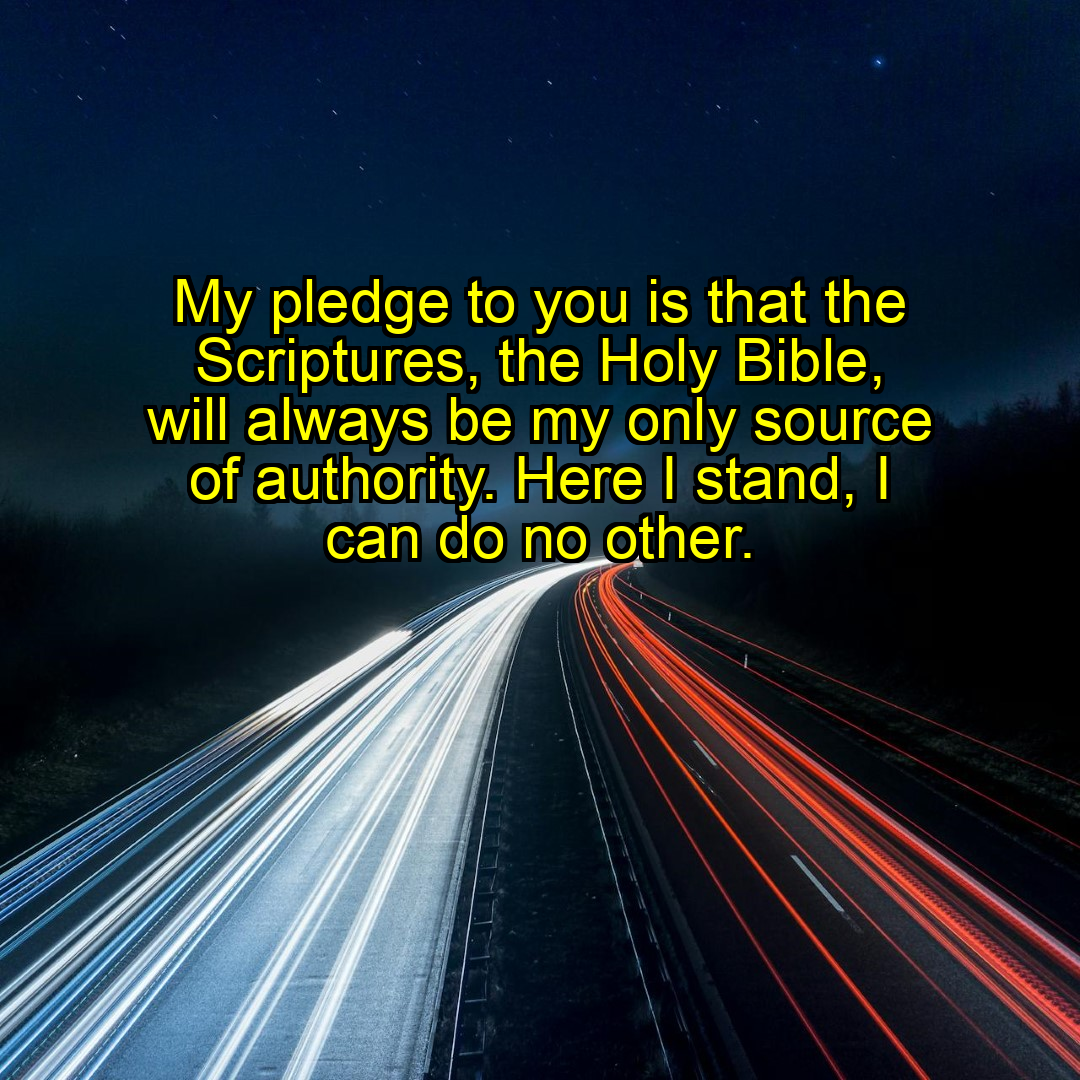
Why_the_Bible_1_19_25.pdf
-
Hi, I'm an AI assistant for the pastor that gave this sermon. What would you like to make from it?
Login
Check your email
You should receive an email in the next few seconds with a link to sign you in. Be sure to check your spam folder.
Embed link
Add this chatbot onto your site with the embed code below
<iframe frameborder="0" src="https://pastors.ai/sermonWidget/sermon/embracing-gods-call-a-journey-of-faith-and-obedience" width="100%" height="100%" style="height:100vh;"></iframe>Copy
© Pastor.ai