|
Current Plan
|
Pastor
$30per month
|
Team
$100per month
|
|
|---|---|---|---|
| Sermons per month | 4 | 5 | 20 |
| Clips per sermon | 2 | 8 | 20 |
| Admins that can edit sermon pages and sermon clips |  |
1 | 5 |
| Sermons automatically pulled from Youtube and emailed to you | |
by Mon morning | on Sundays |
| Sermon clips translated into any language (example) | |
|
 |
| AI Assistant's website training depth | NA | Crawls your homepage and all pages linked from it |
Crawls your homepage and pages up to two links deep |
| AI Assistant's youTube Sermon Training | NA | Sermons from the past 12 months | Sermons from the past 24 months |
| Max length of videos | 1.5 hours | 2.5 hours | 4 hours |
| Customer support | |
Chat + Zoom calls |
Caption Text

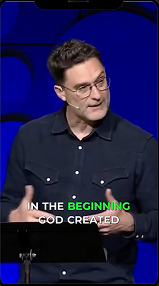
Clip Settings
Genesis
John 3:16
Psalm 23
Philippians 4:13
Proverbs 3:5
Romans 8:28
Matthew 5:16
Luke 6:31
Mark 12:30

 Click to upload
You can upgrade to a paid plan to set your clip settings

Cancellation
We’re sorry to see you end your subscription
Could you let us know why so that we can improve our ministry?
Create a new chatbot from a video of your church service

Jan 4th "From Death to Life" Eph. 2:1-10
by C3Stockbridge  on Jan 07, 2026
Jan 4th "From Death to Life" Eph. 2:1-10
Devotional
Day 1: Remembering Christ’s body and blood with gratitude
At the table, you hold ordinary bread and juice that carry an extraordinary reminder. They point to Jesus’ body offered and his blood poured out to cover sin. Coming forward is not performance; it is grateful remembrance and humble worship. As you pause, name your thanks and remember that forgiveness is not earned but received. Let this meal anchor your heart in what Christ has done and in the hope of the kingdom to come. [20:32]
Matthew 26:26–29 — During the meal, Jesus took bread, thanked the Father, broke it, and shared it, saying it represented his own body given for them. Then he took a cup, gave thanks, and invited them all to drink, saying it stood for the new covenant sealed by his blood poured out so many could be forgiven. He added that he would not drink from the vine again until the day he would share it new with them in his Father’s kingdom.
Reflection: Before your next communion, what specific thanks will you speak to Jesus, and what sin or burden will you confess as you remember his body and blood for you?
Day 2: Facing the truth: spiritually dead without Christ
Scripture does not flatter our condition apart from Christ. It says we were spiritually dead—shaped by the world’s mindset, influenced by the enemy, and driven by our own desires. Dead means unable to move Godward unless God moves first. This sobering truth levels pride and removes any basis for boasting. Yet seeing winter clearly prepares the soul to rejoice when spring breaks in. [33:06]
Ephesians 2:1–3 — You were spiritually lifeless because of your trespasses and sins. You walked in step with the present world, under the sway of the ruler of the air, the spirit now energizing disobedience. All of us once followed the cravings of body and mind, and by our very nature, we stood under God’s just wrath.
Reflection: Where do you still notice the world’s patterns shaping your thinking, and how might you invite the Spirit to renew that specific area this week?
Day 3: But God—rich in mercy, great love
Into that helplessness comes the bright turn: but God. He is rich in mercy and great in love, and he acted while we were still dead. He made us alive with Christ, not because we improved ourselves, but because grace went all the way. Even the faith to trust him is a gift he gives. Rest today in the gift, not your grip, and let gratitude rise. [49:56]
Ephesians 2:4–9 — But God, overflowing with mercy and great love, made us alive together with Christ even when we were dead in sins—this is sheer grace. He raised us up with Christ and gave us a place with him in the heavenly realm. Through the coming ages he will display the boundless wealth of his grace in his kindness toward us in Christ Jesus. For by grace you are saved through faith; this is not from yourselves but God’s gift—so no one can boast.
Reflection: If you tend to measure your worth by effort, what is one way you will practice receiving grace as a gift today?
Day 4: Raised with Christ to display His kindness
Being made alive means being joined to Christ—raised with him and given a seat with him. Your life now participates in his life, and your future is secured in his presence. God’s purpose is to showcase, through you, the limitless wealth of his grace and kindness for all ages to see. This gives courage in suffering and steadiness in uncertainty. You are held, and your story tells more about his kindness than your strength. [54:11]
Ephesians 2:6–7 — God raised us up with Christ and seated us with him in the heavenly places in Christ Jesus, so that in the ages to come he could put on display the immeasurable riches of his grace through his kindness to us in Christ.
Reflection: When anxiety surfaces about your future, how could remembering that you are seated with Christ reshape one concrete decision you’re making right now?
Day 5: His workmanship for everyday good works
God did not just rescue you from the grave; he brought you into his workshop. You are his workmanship—his crafted poem—made new in Christ. The good works prepared for you are often ordinary: faithfulness at home, integrity at work, kindness with neighbors, repentance when you fail. As you walk in them by the Spirit’s power, you put God’s character on display. Expect small, steady acts of obedience to become a living canvas of grace. [01:06:05]
Ephesians 2:10 — We are God’s handiwork, crafted in Christ Jesus to carry out good works—works God prepared in advance for us to step into.
Reflection: Identify one ordinary relationship (spouse, child, coworker, neighbor). What is one good work, small and concrete, that you will do there this week as God’s workmanship?
Sermon Summary
Ephesians 2 unfolds a stark movement from spiritual death to divine restoration. The opening portrait is unflinching: apart from Christ, human beings are spiritually dead—enslaved to the world’s values, to the power of the evil one, and to the impulses of the flesh—and by nature subject to God’s righteous wrath. That winterlike condition is necessary to see how radical God’s intervention is. The decisive phrase “but God” interrupts the sentence of condemnation and reveals the heart and action of God: rich in mercy and great in love, he makes the dead alive with Christ. The same resurrection power that raised Jesus is enacted to give sinners new spiritual life, and that life is received by faith which itself is a gift from God.
This divine action is not merely remedial; it re-creates. Those made alive are described as God’s workmanship—poiēma—a masterful poem crafted by the Creator. Believers are not simply repaired; they are artists’ work designed for particular, prepared good works. The purpose of salvation includes both the believer’s good and God’s glory: in the ages to come God will display the immeasurable riches of his grace through redeemed people. Practical implications flow from this theology: sanctification is a process enabled by the Spirit, ordinary obedience is the locus of those prepared works, and the believer’s choice to follow Christ is itself enabled by God’s prior work in making dead hearts alive.
The passage also engages church history and theology, rejecting notions that human will is morally neutral or sufficient to initiate saving faith. Instead, it insists on divine initiative—God must first give life and faith—while still affirming genuine human response. The result is a humble and robust gospel: sinners once dead are now living, commissioned to reflect God’s character by doing the ordinary, Spirit-empowered works for which they were created.
Key Takeaways
- 1. All were spiritually dead in sin Being “dead” is existential, not merely moral. It describes an incapacity to seek God or produce truly holy obedience—an orientation shaped by the world, the devil, and the flesh. This diagnosis prevents any human boasting and clarifies why spiritual life must start outside of human effort. [31:48]
- 2. But God effects resurrection life Divine mercy breaks into human hopelessness: God, by his character of mercy and love, raises the spiritually dead with Christ. This is not a cosmetic change but a radical re-creation that unites the believer with Jesus’ resurrection power. The initiative belongs to God, and the outcome is life that reorients desire and destiny. [48:08]
- 3. Faith itself is God’s gift Ephesians insists that faith is not merely a human decision layered on prior neutrality; it is part of the gift given by God in effectual calling. When God gives life, he enables the will to receive Christ—so human assent is real, yet its root is divine grace. This preserves both responsible response and the glory of God’s initiative. [62:51]
- 4. Made as God’s masterful workmanship Believers are described as poiēma—crafted masterpieces—created anew for good works God prepared in advance. Salvation’s telos is practical: ordinary, Spirit-empowered faithfulness (marriage love, integrity at work, childlike obedience) that displays God’s grace to the world. The Christian life therefore is both gift and vocation: to embody God’s artistry in real relationships. [64:53]
Youtube Chapters
- [00:00] - Welcome
- [18:15] - Communion: Remembering the Last Supper
- [25:37] - Reading: Ephesians 2:1–10
- [29:58] - Sermon Outline: Dead, But God, Workmanship
- [31:48] - What “Dead” Means Spiritually
- [48:08] - But God: Divine Intervention Explained
- [49:56] - By Grace Through Faith (Eph 2:8)
- [64:53] - From Grave to God’s Workshop
- [66:39] - Living Out Prepared Good Works
- [69:50] - Invitation and Closing Prayer
Bible Study Guide
- Ephesians 2:1–10
As for you, you were dead in your transgressions and sins, in which you used to live when you followed the ways of this world and of the ruler of the kingdom of the air, the spirit who is now at work in those who are disobedient. All of us also lived among them at one time, gratifying the cravings of our flesh and following its desires and thoughts. Like the rest, we were by nature deserving of wrath. But because of his great love for us, God, who is rich in mercy, made us alive with Christ even when we were dead in transgressions—it is by grace you have been saved. And God raised us up with Christ and seated us with him in the heavenly realms in Christ Jesus, in order that in the coming ages he might show the incomparable riches of his grace, expressed in his kindness to us in Christ Jesus. For it is by grace you have been saved, through faith—and this is not from yourselves, it is the gift of God—not by works, so that no one can boast. For we are God’s handiwork, created in Christ Jesus to do good works, which God prepared in advance for us to do.
Observation questions
- In verses 1–3, what three influences shaped our former way of life, and how does Paul describe our condition under them?
- In verses 4–7, list the actions God performs (the verbs) and note how each ties us to Christ (“with Christ,” “in Christ”).
- According to verse 7, what is God’s stated purpose for saving people, and how far into the future does that purpose reach?
- What everyday examples were named as the “prepared good works” God calls us to walk in? [01:07:09]
Interpretation questions
- “Dead in trespasses and sins” is the starting point (v. 1). What does “dead” mean practically for a person’s desires and abilities, and how does that shape the way someone thinks about approaching God? [31:48]
- How does the phrase “But God” (vv. 4–5) reframe a person’s story when guilt or despair feels final? What happens to pride, and what happens to hopelessness?
- If faith itself is God’s gift (v. 8), how does that fit with a real human choice to trust Christ? How might this understanding affect the way someone tells their own conversion story? [01:03:11]
- “We are his workmanship… created in Christ Jesus for good works… prepared beforehand” (v. 10). What does this say about the value of ordinary obedience versus only “big” ministry dreams? [01:07:09]
Application questions
- Where do you feel the pull of “the course of this world” most—media, success, sexuality, politics, approval? What is one concrete practice you will adopt this week to renew your mind toward God’s kingdom? [36:17]
- Think of someone who seems spiritually unresponsive. How does the truth that God gives resurrection life change the way you pray and love them? Write a name and one way you’ll show Christlike care this week. [48:08]
- Retell your story of coming to Christ in two minutes. How can you highlight God’s gracious initiative and remove boasting? Share with the group and note one sentence you’ll keep for future conversations. [55:14]
- Identify two ordinary “prepared good works” in your closest relationships this week (marriage, family, roommates, coworkers). What would obedience look like in detail (words, timing, action)? Put each on your calendar. [01:07:09]
- Where might you still think you were “neutral” or “basically fine” without Christ? How would embracing “by nature children of wrath” change your view of grace and your patience with others? [59:39]
- God saves to “put on display” the immeasurable riches of his grace (v. 7). When did you sense the Spirit prompting you to show God’s character at work or home? What held you back, and what will trust look like next time? [54:56]
- Name three ways you see God’s craftsmanship in your life right now (gifts, growth, healed habits). How will you steward each for his glory this month—one next step for each? [01:06:05]
Sermon Clips
The first three verses are full of really bad news. In fact, the scripture reveals to us that outside of Christ, we are far worse than we ever wanted to admit, and far worse than we could ever imagine. And what we find is that God and the good news of the gospel, that God has loved us and sent his son to die for us, is far greater news than we ever thought possible. [00:29:09] (31 seconds) #GospelIsGreater
You were dead, he says, in the trespasses and sins in which you once walked. And I love the past tense reality of this because Paul is speaking to believers in Ephesus, to the church who were who is in Ephesus. He's saying, this is who you believers used to be. You're not that anymore. Praise God. By the grace of God, you're no longer spiritually dead. But you used to be outside of Christ, outside of faith in Jesus, outside of being born again by the Holy Spirit, you were spiritually dead. [00:32:30] (36 seconds) #OnceDeadNowAlive
And so Isaiah tells us that our best day looks like filthy rags apart from Christ. Because of sin, because of the reality of what it means to inherit a sinful nature, which is what Ephesians two is clearly teaching us. What Paul picks up very clearly in Romans five. Because we've inherited a sinful nature. Our will is in bondage to our sin nature. We are spiritually dead. We desire sinful things. We don't desire godly things. This is the state of the soul before Christ. [00:40:12] (44 seconds) #BondageToSinNature
And before we go and look around our families or or this room or our our workplace and begin to say, wow, I'm better than you. This scripture removes any opportunity to boast. Because it says we were all once there. And by the way, the fact that you're no longer there has nothing to do with you and everything to do with God. Amen. That's where we're headed next. [00:40:57] (27 seconds) #AllGraceAllGod
We have a heart problem, the scripture says. Our hearts don't desire or beat for God apart from Christ. Our hearts are not sick or wounded. Our hearts are not sick needing medicine. They're not wounded, needed needing mending. Scripture says that they're dead and they need a resurrection, which is why in Ephesians one, Paul writes these words at the starting in verse 20, talking about resurrection. This power the power to believe for for us who believe, verse 19, according to the work of his great might, verse 20, that he worked in Christ when he did what? Raised him from the dead and seated him at his right hand in the heavenly places. [00:41:32] (55 seconds) #HeartsNeedResurrection
And so Ephesians one ends with the resurrection power of God because in Ephesians two, we're still talking about the resurrection power of God. We're talking about the resurrection power of God that brings the dead to life. And that's exactly what Paul's talking about here is that, friends, we don't need medicine to make us well spiritually. We don't need someone to come and bind up our wounds. We need Jesus to make us alive Amen. Because we were dead. [00:43:06] (29 seconds) #JesusGivesLife
``but god. With the reality that we were dead, with the reality that we could not come to God on our own, with the reality that we weren't drowning with our hand in the air, and Jesus pulled us out. No. With the reality that we were dead, sunk at the bottom of the ocean, and could not move. Jesus dove in, grabbed us dead, brought us out, and gave us life. With that reality, we press into the grace of God. [00:47:38] (32 seconds) #ButGodDoveIn
Because God who is just and holy and who has been offended, and our sin is cosmic treason against the most holy God, but because he is merciful and loving, not just just and holy, but praise God, merciful and loving, he has made a way for you and for me to be forgiven of our sin, to be reconciled to him, to be seated with Christ in the heavenly places. Why? Because of who God is. He is merciful and he is loving. Not only just, but merciful. What a great god we have. That he would love us and send his son to die for us. [00:50:41] (53 seconds) #MercyMadeTheWay
Login
Check your email
You should receive an email in the next few seconds with a link to sign you in. Be sure to check your spam folder.
Embed link
Add this chatbot onto your site with the embed code below
<iframe frameborder="0" src="https://pastors.ai/sermonWidget/sermon/embracing-gods-call-a-journey-of-faith-and-obedience" width="100%" height="100%" style="height:100vh;"></iframe>Copy
© Pastor.ai