Sep 09, 2026
A young man scored fifty-one points in two basketball games. He hoped for celebration. His father only mentioned the four missed free throws. He said, "Your feet were wrong." The boy learned a painful lesson that day. Love felt conditional, based on performance.
This is not God's way. Scripture says "God is love." This is different than saying "God loves." If God merely loved, it could be an action He sometimes does. But God is love. His very nature and being are love itself. He cannot stop loving you any more than He could stop being God.
You may have learned that love is something you earn. You project that onto God, picturing Him on a swivel chair, turning away when you fail. But God's face is always turned toward you in love. His posture is one of constant desire for you. When was the last time you imagined God smiling at you?
Whoever does not love does not know God, because God is love. In this the love of God was made manifest among us, that God sent his only Son into the world, so that we might live through him. In this is love, not that we have loved God but that he loved us and sent his Son to be the propitiation for our sins.
(1 John 4:8–10, ESV)
Prayer: Ask God to quiet the inner critic that tells you His love is conditional.
Challenge: Write the phrase "God is love" on a notecard and place it where you will see it today.
God sent His Son into the world. He did not send Jesus to condemn the world. He sent Jesus so the world could be saved through Him. The cross was never God learning to love you. The cross was God proving He always had.
Jesus did not die to change God's mind about us. He died to change our minds about God. The cross shows the ultimate length God will go for your good. His love is agape—a willful commitment to your highest good. It is also the intimate love of a friend and a parent.
We often carry a false idea that God is mostly angry with us. The cross dismantles that lie. It is the final, undeniable proof of a love that existed before you took your first breath. What false idea about God’s anger do you need to lay at the foot of the cross?
For God so loved the world, that he gave his only Son, that whoever believes in him should not perish but have eternal life. For God did not send his Son into the world to condemn the world, but in order that the world might be saved through him.
(John 3:16–17, ESV)
Prayer: Thank Jesus that His death was a declaration of love, not a negotiation for it.
Challenge: Read John 3:16-17 aloud and underline the words "loved" and "saved."
Jesus stood in the Jordan River. He had performed no miracles yet. He had preached no sermons. The heavens tore open. A voice spoke. It said, "This is my beloved Son, with whom I am well pleased." Jesus heard He was loved before He had done any work. His identity came before His activity.
Even Jesus needed to hear He was the Beloved. He needed this confirmed at each stage of His mission. His ministry flowed from His belovedness; it did not earn it. The apostles understood this. They called failing, sinful believers "beloved" forty-seven times in their letters.
Your performance does not make God love you. Your failures do not make Him love you less. Your identity as His beloved is settled. Like Jesus, you need to hear this truth again and again. Where in your life are you trying to earn a love that is already yours?
and behold, a voice from heaven said, “This is my beloved Son, with whom I am well pleased.”
(Matthew 3:17, ESV)
Prayer: Confess your tendency to base your worth on your work instead of God's word.
Challenge: Set a timer for 2 minutes and sit in silence, letting the Father say "You are my beloved" to you.
The poet William Blake wrote that we are put on earth to learn to bear the beams of love. Stepping into God's unconditional love can feel overwhelming. It is like leaving a dark room for full sunlight. The light is good, but it is bright. We are more accustomed to the shadows of conditional love.
We behold the glory of the Lord, the face of Jesus. We see absolute love looking back at us. This love knows every secret and sin yet loves us completely. This act of beholding transforms us. It awakens the dormant love within our own hearts. We cannot love until we have first been loved.
You must learn to stand in this light. You must let God's love warm you. This happens not by striving, but by looking. It is a simple, steady gaze upon the One who smiles at you. What makes it difficult for you to receive a love you did not earn?
And we all, with unveiled face, beholding the glory of the Lord, are being transformed into the same image from one degree of glory to another. For this comes from the Lord who is the Spirit.
(2 Corinthians 3:18, ESV)
Prayer: Pray for the courage to step out of the shadows and into the light of God's affection.
Challenge: Identify one moment today to pause, breathe, and behold God's love for you.
The boy heard only criticism about his feet. Years later, a counselor offered a new perspective. His father was in the stands, intently watching his feet. He was looking for a way to help, a way to love. He loved his son, but he got the order wrong. He should have celebrated first.
Your heavenly Father never gets the order wrong. He never stops coming to your games. He never stops watching your feet. He never fails to love you in exactly the way you need. Human love is often flawed and conditional. God's love is perfect and constant.
You may have missed this love because of wounded hearts or bad theology. But God's pursuit of you never ceases. His desire for you is unwavering. He loves you because He loves you because He loves you. Can you recognize God's presence in the ordinary moments of your day?
We love because he first loved us.
(1 John 4:19, ESV)
Prayer: Ask God to help you see His loving presence in the details of your life today.
Challenge: Call or text one person and tell them, "God loves you without condition."
A childhood basketball story opens the reflection: a young player scores fifty-one points across two games but returns home to a father who remarks only on a flawed stance — “your feet were wrong.” That memory becomes emblematic of a larger human pattern: many people absorb a conditional model of love from parents, coaches, and institutions and then project that pattern onto God. The conditional-love pattern produces a “swivel-chair” spirituality in which people try to earn divine favor by doing the right things and fear God’s turned back the moment they fail.
That false narrative gets dismantled by a clearer reading of Scripture and tradition. The simple but radical claim “God is love” (1 John 4:8) reframes love as God’s very being, not a transactional activity. The agape love of God wills the good of the beloved, pursues rescue at the cost of a cross (John 3:16–17), and never arrives or withdraws according to human performance. The death of Christ does not teach God to love; it reveals how God has always loved. The baptismal voice over Jesus — “This is my Son, the Beloved” (Matthew 3:17) — shows belovedness preceding ministry and models how identity rooted in love, not achievement, shapes life and mission.
Receiving that love proves difficult because conditioned hearts find the light of unconditional love overwhelming. William Blake’s phrase about learning “to bear the beams of love” captures the slow work of letting in what feels too bright after long darkness. The New Testament repeatedly names ordinary, failing people “beloved,” and Paul insists that beholding the Lord’s glory transforms believers “from one degree of glory to another” (2 Corinthians 3:18). Small practices reorient attention: the breath prayer ties inhalation and confession to a rhythm of receiving — short phrases like “Father, You love me because You love me” become habituations that teach the body and soul to accept divine affection.
A counseling anecdote reframes the father’s critique: the father had been watching his son’s feet from the stands, seeking a way to help. The image closes the reflection with assurance: the heavenly Father keeps coming to the games, watches the feet, and loves without requiring fifty-one points. Concrete spiritual formation — repeated invitations to receive rather than prove — trains the heart to stand in the sun of God’s unearned, unchanging love.
God's love for you is not a verb He sometimes does — it's who He is.
Most of us learned, somewhere along the way, that love is something you earn.
If I can earn God's love, then I'm in charge of it.
Love isn't one of God's activities. It's His very being, His whole self.
We have to learn to bear love — because being truly, fully loved is almost too much to take.
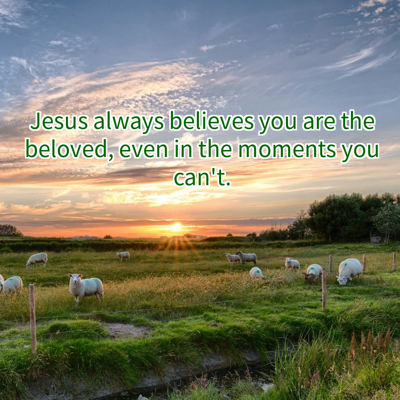
Jesus always believes you are the beloved, even in the moments you can't.
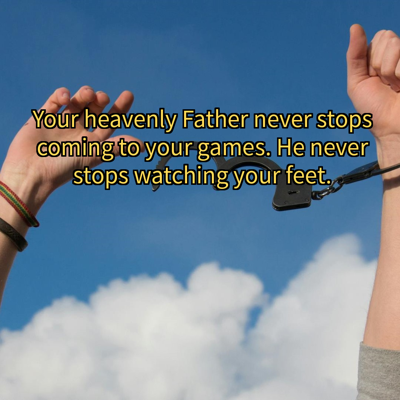
Your heavenly Father never stops coming to your games. He never stops watching your feet.
You are the Beloved — not because you do good things, not because you have a lot of things, not because people speak well of you.
Hi, I'm an AI assistant for the pastor that gave this sermon. What would you like to make from it?
Add this chatbot onto your site with the embed code below
<iframe frameborder="0" src="https://pastors.ai/sermonWidget/sermon/you-are-loved" width="100%" height="100%" style="height:100vh;"></iframe>Copy