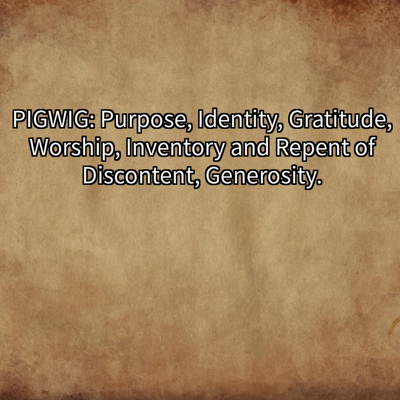
The series frames worship as the organizing center of life—what a person values most, sacrifices for, and orients attention around—arguing that misdirected worship produces regret while right-ordered worship makes people life-giving. Money appears as a common rival to God, able to capture ambition, anxiety, and affections; the call centers on using money without letting it become an object of worship. Philippians 4:10–20 functions as a paradigmatic case: Paul expresses deep gratitude for the Philippians’ repeated financial support while insisting that true contentment is a learned virtue rooted in Christ’s sustaining strength (4:11–13). Contentment, the text asserts, does not come naturally for most but is cultivated by purpose, identity, gratitude, worship, honest inventory and repentance of the habits that fuel discontent, and generosity—the mnemonic PIGWIG summarizes these practices.
The historical example of the Philippians demonstrates how faithful financial partnership can enable far-reaching ministry. Their early and ongoing gifts funded Paul’s travels and ministry needs and helped underwrite letters written during imprisonment—letters (Philippians, Ephesians, Colossians, Philemon) that shaped Christian theology and ethics across generations. The narrative emphasizes that generous stewardship often seeds outcomes the givers never foresee.
That theological and historical reflection shifts to immediate application through a local campaign called Worship Multiplied. The campaign sets a 20-month goal of increased giving totaling $1 million: $500k toward a Campus Expansion Fund (upfitting a Pittsboro rental and land purchase to reduce an $850k loan) and an additional $500k in General Fund boosts (monthly support for two new campus pastors and accelerated loan payments). The plan explains why an interim upfit of a rental facility on East Street precedes a long-term build—build projects extend 3–4 years, and interim capacity prevents stunted growth now. Two giving tracks—monthly General Fund pledges and one-time Campus Expansion gifts—allow different forms of participation; every pledge remains voluntary and is framed as stewardship rather than coercion. The campaign closes with a corporate moment of prayer over a map of Chatham County, inviting intercession for campus launches, new pastoral hires, and multiplied worship across the region.
Key Takeaways
- 1. bearing practices. Repeated, specific repentance breaks patterns and opens space for resilient trust.
Generosity multiplies gospel impact
Giving functions as catalytic stewardship that enables ministry beyond sight and lifespan; seed offerings often fund unforeseen, far-reaching fruit. Generosity reframes resources as entrusted goods rather than personal securities, training hearts away from hoarding toward risk for the kingdom. Intentional, cheerful sharing concretely multiplies worship and opens doors for sustained gospel witness.