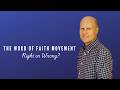
The Word of Faith movement has become a massive movement, embraced by many and rejected by many others as heresy, error, or even occult. The main teachings under examination include faith as a creative force, confession and “name it and claim it,” prosperity and seed-faith giving, healing, Jesus’ spiritual death, and whether Christians are “little gods.” The Bible must be the final measure: if a doctrine lines up with the Word of God, believers should receive it; if it does not, believers should toss it out.
Kenneth E. Hagin stands near the center of the modern movement’s history, yet his ministry should not be judged by isolated quotes or critics who have not honestly heard him. Brother Hagin sought to teach faith and healing accurately, walked in love toward criticism, and later tried to correct ministers who had taken Word of Faith doctrines to extremes. The extremes of prosperity promises, the hundredfold return, and confession can give critics plenty of fuel, but ministries built mainly on bashing other ministers produce a sour spirit.
Paul calls the gospel proclamation “the word of faith which we preach” in Romans 10:8. The word of faith, in that biblical sense, belongs to Paul’s group: faith in Christ, confession of Christ, and belief in His resurrection unto salvation. The Word of Faith movement, as it has often appeared in recent decades, must be distinguished from Paul’s word of faith because faith can be twisted into something outside Scripture. Truth should be received, but error should be left behind when it goes off the rails.
Faith is not a force to be worshiped or a technique to control life. Jesus says, “Have faith in God,” making God the object of faith. Prayer, worship, ministry, money, and even faith can become idols when they become more important than God Himself. Faith comes by hearing the Word of God, rests on God’s Word, and trusts God as the One who fulfills what He has promised.
Hebrews 11 defines faith as the substance, assurance, and title deed of things hoped for. Hope points to the future, but faith says, “I have it now,” even before the five physical senses reveal it. Faith does not deny a problem or pretend sickness is not present; faith deals with the problem by laying hold of God’s provision. Real Bible faith also has corresponding action. Abel offered, Noah prepared, Abraham obeyed, Moses forsook Egypt, and the martyrs refused to deny Christ. Faith believes God, moves on His Word, and stands firm all the way to the end.
Key Takeaways
- 1. The Bible must settle every doctrine. The Word of Faith movement cannot be accepted wholesale or rejected wholesale merely because of its name or its personalities. The Word of God must weigh every claim, every testimony, and every popular promise. Truth remains truth even when it has been abused, and error remains error even when it is preached by somebody sincere. [07:53]
- 2. Faith must remain fixed on God. Faith becomes dangerous when it is treated like a god, a force, or a formula that works apart from the Lord. Jesus did not say to have faith in faith; He said, “Have faith in God.” Faith receives from God because it relies upon God, not because faith itself possesses independent power. [36:23]
- 3. Hope looks ahead, faith receives now. Hope expects God’s promise in the future, while faith takes hold of God’s promise as a present reality. Faith is not controlled by appearances, feelings, or the five physical senses. Faith does not deny the facts of a need, but it refuses to let those facts have the final word over God’s promise. [45:42]
- 4. Real faith always has corresponding action. Bible faith is more than agreeing with truth in the mind. Abel offered his best, Noah built an ark, Abraham left home, and Moses made costly choices because they believed God. Actions do not earn God’s promise, but genuine trust in God eventually moves a person to obey what God has said. [54:20]
- 5. Faith stands firm to the end. The heroes of Hebrews 11 were not all delivered from hardship, torture, or death, yet they did not renounce the Lord. Faith is not proven only by visible breakthroughs; faith is also proven by steadfastness when obedience costs dearly. The final goal is to die in faith, trusting Christ and entering heaven. [1:12:34]
Youtube Chapters
- [00:00] - Welcome
- [00:32] - What Is the Word of Faith Movement?
- [01:47] - Major Word of Faith Teachings
- [02:59] - Origins and Growth of the Movement
- [08:30] - A Personal Perspective on Kenneth Hagin
- [12:58] - Hagin’s Warning Against Extremes
- [14:24] - Criticism, Context, and a Sour Spirit
- [22:23] - Romans 10 and the Word of Faith
- [28:52] - Paul’s Word of Faith Versus Extremes
- [31:49] - Is Faith a Creative Force?
- [33:42] - What Bible Faith Really Is
- [36:23] - Have Faith in God
- [40:59] - Faith, Hope, and the Title Deed
- [50:45] - Why Faith Is Necessary
- [54:20] - Faith Has Corresponding Action
- [1:13:43] - Die in Faith and Receive Christ