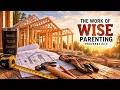
Wisdom builds a house, not merely as a structure but as a household, a family, and a legacy. Biblical wisdom means relating to God as God and allowing His Word to serve as the blueprint for life. A household that stands and endures therefore requires more than a name on a birth certificate. Parenting is good work, meaningful work, joyful work, but it is also a labor of love.
Wise parenting begins by modeling what is wise. Proverbs describes the righteous person as walking in integrity, and that steady walk becomes a blessing to the children who follow. Integrity does not mean perfection. Children do not need parents who pretend to be perfect. They need parents who are honestly and genuinely seeking to walk with God. A child watches reactions when life is difficult, listens to words about other people, notices where time and money go, and detects whether faith is merely discussed or actually shaping life.
Wise parenting also teaches what is true. Proverbs places the home at the center of instruction, with both father and mother helping a child understand God’s wisdom. Instruction must aim beyond rules toward reasons. God’s commands flow from His good purpose and His concern for life. Words provide one clear example: words have power, the heart should be engaged before the mouth, restraint can be maturity, silence can sometimes be a mistake, and tone always matters. Wisdom thinks before it speaks and knows when love requires a gracious word.
Wise parenting corrects what is foolish. Discipline is not about venting frustration, producing pain, or controlling a child. Love is the motive, wisdom is the goal, self-control is the manner, and timely correction is the responsibility. Small choices become habits, habits become patterns, patterns shape character, and character determines direction. Correction must fit the behavior, explain the wrongdoing, and distinguish rebellion from immaturity. Foolishness needs correction, but childishness often needs patience. Anger cannot properly discipline because anger asks how to vent, while wise correction asks what the child needs.
Prayer holds all of this together. Parenting brings anxiety, inadequacy, regret, and situations beyond human control. God does not force wisdom upon a child, but He does change the parent who yields to Him. Prayer asks God to make faith genuine, instruction clear, correction discerning, and love steady. One day at a time, one example at a time, one conversation at a time, God builds a household through parents who trust Jesus and follow Him.
##
Key Takeaways
- 1. Authenticity blesses children more than perfection. Integrity is a pattern of life, not a flawless performance. Children can recognize when faith is real because they see how it shapes responses, priorities, speech, and conduct when life is hard. A parent’s honest dependence on God can make trust in Jesus appealing to a watching child. [46:58]
- 2. Rules need reasons rooted in God. Instruction reaches deeper when children understand why wisdom matters. God’s direction is not arbitrary control but the guidance of One who has their best interest in mind. Patient conversations help a child see that obedience is connected to life, not merely compliance. [55:20]
- 3. Words require wisdom, restraint, and grace. Words can wound like sword thrusts or bring healing to a soul. Wisdom pauses long enough to think, knows when to speak and when to refrain, and refuses to separate truth from tone. A gracious response can accomplish what a harsh word only destroys. [61:01]
- 4. Correction aims at wisdom, not punishment. Loving discipline looks beyond the immediate moment to the direction a child’s character is taking. Wise correction distinguishes deliberate rebellion from simple immaturity and refuses to react in anger. The question is not how frustration can be released, but what the child needs in order to grow. [68:58]
- 5. Prayer changes the parent’s heart first. Parents cannot force a child to choose God’s wisdom. Prayer can ask God to arrange helpful influences around a child, but it must also ask Him to make the parent a more faithful model, teacher, and corrector. God’s help meets parental inadequacy as parents return to Him again and again.
## [73:40]
Youtube Chapters