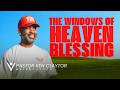
The people returned from exile to rebuild God’s house. But distractions crept in. They built paneled homes while the temple lay in ruins. Crops failed. Wages vanished like coins through torn pockets. Haggai confronted them: “Is it time for you to dwell in your fancy houses while My house lies desolate?” God demanded timber from their hands, not excuses from their lips. [02:05]
God’s house represents His presence and priority. When Israel neglected it, their labor became futile. Jesus said, “Seek first the kingdom” – not as abstract piety, but as concrete action. The temple’s stones mattered because worship matters. Your giving, serving, and disciple-making rebuild what hell has broken.
Many juggle careers, family, and personal goals while treating God’s work as optional. But your “timber” – time, skills, finances – rebuilds eternal things. What project, purchase, or pursuit have you prioritized over bringing your “boards” to His house?
“Go up to the mountains and bring down timber and build my house, so that I may take pleasure in it and be honored.”
(Haggai 1:8, NIV)
Prayer: Ask Jesus to reveal one area where you’ve built your kingdom over His this month.
Challenge: Write down three “timbers” (time, talent, treasure) you’ll contribute to church this week.
Malachi’s audience hoarded tithes while complaining of lack. They robbed God, then blamed Him for closed heavens. God issued a dare: “Test Me in this. Bring the whole tithe…see if I won’t open the floodgates.” The tithe wasn’t a tax – it was a key. Abraham proved this centuries earlier, giving Melchizedek a tenth of spoils before the Law existed. [15:03]
Tithing declares God owns everything. Withholding it isn’t frugality – it’s theft. Jesus affirmed tithing while demanding deeper generosity. The widow’s mites mattered more than Pharisees’ showy gifts because her heart trusted the Provider, not the provision.
You budget for what you value. Automatic payments for Netflix and car loans prove priorities. What if you automated tithing first? Where have you let cultural cynicism override biblical obedience?
“Bring the whole tithe into the storehouse…Test me in this,” says the Lord Almighty, “and see if I will not throw open the floodgates of heaven.”
(Malachi 3:10, NIV)
Prayer: Confess any area where you’ve withheld tithes or doubted God’s provision.
Challenge: Check your last bank statement. Calculate what 10% of your income would be.
Abraham faced a choice after defeating kings: keep the plunder or honor God. He met Melchizedek – priest of God Most High – and gave a tenth of everything. No command compelled him. No threat loomed. He recognized the Source of victory and surrendered the firstfruits instinctively. [15:17]
This pre-Law act reveals tithing’s true nature: worship, not obligation. Jacob later vowed to tithe after seeing heaven’s ladder. Their examples show giving flows from encountering God’s faithfulness, not fearing His wrath.
You’ve tasted God’s deliverance – healed relationships, jobs preserved, addictions broken. Do your gifts reflect gratitude or guilt? What “spoils of battle” (bonuses, promotions, windfalls) have you kept rather than surrendering the first portion?
“Then Abram gave him a tenth of everything.”
(Genesis 14:20, NIV)
Prayer: Thank Jesus for one specific blessing this year. Dedicate its “tenth” to His work.
Challenge: Next time you receive unexpected money, give 10% before spending any.
Pharisees counted garden herbs to tithe but ignored justice. Jesus shocked them: “You should have practiced the latter without neglecting the former.” He upheld tithing while demanding more – mercy, faithfulness, radical generosity. The tithe was the floor, not the ceiling. [16:24]
God cares about both precision and passion. Calculating percentages matters, but so does compassionate giving. The early church sold properties to feed orphans. Zacchaeus gave half his wealth after meeting Jesus. Exact obedience fuels extravagant love.
You may tithe meticulously yet withhold forgiveness from a family member. Or give generously while ignoring the homeless outside your workplace. Where has technical obedience masked a stingy heart?
“Woe to you…You give a tenth of your spices…But you have neglected the more important matters…justice, mercy and faithfulness.”
(Matthew 23:23, NIV)
Prayer: Ask God to expose any area where rule-keeping replaces wholehearted surrender.
Challenge: Review your budget. Circle one luxury you’ll reduce to increase giving.
Paul told Corinthians: “Whoever sows sparingly reaps sparingly.” Farmers don’t grumble while planting – they sing, anticipating harvest. Giving isn’t a funeral for your money but a festival of trust. The Macedonian churches begged to give despite poverty, proving joy fuels generosity, not abundance. [18:01]
God loves cheerful givers because He’s a cheerful Giver. He “so loved that He gave” His Son. When you tithe joyfully, you mirror His nature. The widow’s two coins delighted Jesus more than rich men’s piles because she gave with abandon, not anxiety.
What mental script plays when the offering basket passes? Dread over bills? Resentment toward needs? Or excitement for gospel advance? What would change if you visualized your gift buying Bibles for Brazil or feeding orphans in Kenya?
“Each of you should give what you have decided in your heart to give, not reluctantly or under compulsion, for God loves a cheerful giver.”
(2 Corinthians 9:7, NIV)
Prayer: Thank God for three specific ways your giving impacts others eternally.
Challenge: Donate to a ministry today while physically smiling – even if forced at first.
Haggai confronts a people who came home from exile with a clear assignment and then got distracted. The prophet names the drift. Paneled houses rise while the Lord’s house lies in ruins. The ground yields little, wages leak through a “bag with holes,” and the reason is plain in the text. “Busy with your own house” has replaced the fear of the Lord. Haggai’s call is priority. Build his house, then watch God build theirs.
Malachi then presses the same heart issue into money. God does not change. His ordinances still teach his people how to come close. When God says, “Return to me,” the text points to a practical hinge. Tithes and offerings. Bring the whole tithe into the storehouse so there is provision in God’s house. The command carries a promise. Test me, and watch the windows of heaven open, the devourer rebuked, fruit protected, reputation transformed.
The windows of heaven blessing is not unlocked by vibes, volume, or a favorite song. The text makes the key obvious. The tithe is holy and opens the window. Prayer and singing matter, but here obedience is the hinge. Ownership talk gives way to stewardship talk. The earth is the Lord’s, and first and best belong to him. Without a principle, generosity slides into leftovers. So priority and planning put God at the top, not the bottom, of the budget. Automate obedience, resist the temptation to spend the seed, and give God first, not last.
Scripture does not let cynicism hide behind a slogan like Old Testament. All Scripture is God-breathed. Moral law reveals the unchanging character of God. The tithe as a principle of honor shows up before Sinai. Abraham tithes to Melchizedek. Jacob vows a tenth. Jesus does not cancel the tithe. He confirms it while calling for justice, mercy, and faith. Grace does not shrink giving to zero. Grace strengthens disciples for radical generosity. The New Testament turns 10 percent into 100 percent surrender, not 0 percent avoidance.
The call to build his house seeks concrete steps, not theory. Consistent tithers keep the windows open. New tithers test God here and watch him be faithful. Over-and-above offerings extend the work into buildings, campuses, and nations. Scarcity mindsets break when honor replaces fear. The floodgates of favor, wisdom, and right doors begin to flow, not as a bribe but as the Father’s delight when his children trust him with the first and best.
So what's going on here? Let me catch you up. The people of Israel were in exile for about seventy years. And when they came back, they had one clear assignment, and it was to build his house. They started strong. They laid the foundation. They began the work, but then life happened. Pressures happened. Distractions happened, and slowly, they lost their focus. Ever been there before? You started off the year putting God first, but slowly, distractions came in.
[00:02:32]
(27 seconds)
The New Testament always asks for more. In the Old Testament, it says, don't commit adultery. The New Testament says, if you look on somebody else with lust in your heart, you've committed adultery. Your clothes are still on. My god. That's a hire. Okay? So if you're under grace, grace doesn't cause you to give less. It actually strengthens you to give more. Being under grace so if you're the person that has to go to the bible and you're trying to find out doctrinal reasons not to give, you're going the wrong way.
[00:18:01]
(29 seconds)
For the last twenty three and a half years, it don't matter who's in office. It could be Trump. It could be Biden. It could be Obama. It could be Bush. It could be Reagan. It could be Rosen it could be Eisenhower, Roosevelt, George Washington. I don't care. As long as Jesus is on the throne, I've never seen the righteous forsaken or the seed begging bread. He has provided for me and my house in the overflow more than enough. Come on, somebody.
[00:31:33]
(24 seconds)
Now when I stand before Jesus, I don't want to him to say, Ken, I gave you these gifts, and I gave you these resources. What did you do with them? And me say, Lord, well, I spent 99% of it on me. I had to have a new iPhone. I had to get my hair done. I had to go to the gym. I had to put my kids in private school and go on that cruise with on Carnival. Man, really? You consumed everything I gave you on you? Wow.
[00:21:08]
(26 seconds)
I'm an AI bot trained specifically on the sermon from May 17, 2026. Do you have any questions about it?
Add this chatbot onto your site with the embed code below
<iframe frameborder="0" src="https://pastors.ai/sermonWidget/sermon/windows-heaven-blessing-ken-claytor" width="100%" height="100%" style="height:100vh;"></iframe>Copy