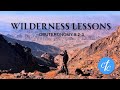
As a new year begins, take time to remember where God has already brought you. Scripture calls us again and again to remember—not to cling to wounds, but to recount God’s steady hand in our story. The last years may have felt like a wilderness, yet the Lord has not abandoned you; He has been leading, even when you couldn’t see the path. Remembering fuels trust for the road ahead and steadies your heart when plans don’t go as expected. As you look forward, let gratitude for God’s past faithfulness shape your present obedience. [49:38]
Deuteronomy 8:1–2 — Be careful to live by all I command today, so you will truly live, grow, and enter to possess what I promised your ancestors. Remember how the Lord led you these forty years in the wilderness to humble and test you, revealing what was in your heart.
Reflection: What is one concrete story from 2025 when God met you in a “wilderness” moment, and how will you mark it this week so you won’t forget?
The Spirit led Jesus into the wilderness; it wasn’t a setback but a sacred classroom. God uses seasons of lack, waiting, and uncertainty as basic training for your soul, shaping you for what is ahead. On the Potter’s wheel, He adds and removes what’s needed so your life can hold His purposes. You don’t have to enjoy the pressure to trust the process. Instead of asking, “What did I do wrong?” ask, “Lord, what are You forming in me here?” [01:16:09]
Matthew 4:1–4 — Jesus was led by the Spirit into the wilderness to be tested. After forty days without food, the tempter urged Him to make bread from stones. Jesus replied, “Life isn’t sustained by bread alone but by every word God speaks.”
Reflection: What current situation might actually be God’s boot camp for you, and what is one simple practice (a daily prayer, an act of obedience, or a boundary) you can adopt to cooperate with His forming work?
Wilderness pressure doesn’t create what’s inside; it exposes it. Like a bumped cup only spills what it holds, testing reveals fear, pride, control, or trust already present. Peter was sure he would never deny Jesus—until the moment came and his fear surfaced, and then grace met him in his tears. God’s goal is not shame but healing: He humbles to restore, not to crush. Bring what surfaces into the light so the Lord can transform it. [01:12:34]
Matthew 26:33–35, 74–75 — Peter vowed, “Even if everyone else falls away, I won’t.” Jesus told him, “Before the rooster crows, you’ll deny Me three times.” Under pressure Peter swore he didn’t know Jesus; the rooster sounded, he remembered, and he wept bitterly.
Reflection: When were you “bumped” recently and something unwanted spilled out—fear, pride, or control? What honest confession and simple next step toward Jesus could you take today, and who might pray with you?
Hunger made Israel murmur, but God sent manna to teach them that His Word sustains more than bread ever could. Your emotions may insist that you’ll “die in the desert,” yet God’s promises say He will finish what He started and bring you where He said. When anxieties rise, return to His Word like daily bread, not as a task but as your life. Let Scripture be the voice that shapes your outlook more than your feelings or circumstances. God’s promise is your nourishment in lean places. [01:06:22]
Deuteronomy 8:3 — The Lord let you feel hunger and then fed you with manna you’d never known, to teach you that people don’t live by bread alone but by every word from His mouth.
Reflection: Which specific promise from Scripture will you “feed on” when anxiety rises this week, and where will you place it (phone lock screen, dashboard, mirror) so it stays before you?
It’s easy to grow tired when the wheel keeps spinning and progress seems slow. Yet Scripture urges you not to give up, because in due time the harvest comes for those who keep sowing. Perseverance isn’t passive; it is steady trust expressed in small, faithful steps. Let endurance finish its work so you become mature and complete, shaped by the Potter’s hands. Stay on the wheel—His timing is purposeful, and His hands are kind. [01:18:50]
James 1:2–4 — Consider it a gift when you face many kinds of trials, because the testing of your faith develops endurance. Let endurance finish its work so you become mature and whole, lacking nothing.
Reflection: Where are you most tempted to give up right now, and what one small, concrete action will you take this week to keep going and stay on the Potter’s wheel?
On the final Sunday of 2025, the focus turns from announcements and celebration to a sober and hope-filled exploration of “Wilderness Lessons.” The theme is clear: wilderness seasons are not divine punishment but God’s classroom for transformation. Scripture calls God’s people to remember—over a hundred times—to look back and see His faithfulness, so they can trust Him in what lies ahead. The first half of the 2020s has felt like a wilderness for many—pandemics, storms, and uncertainty—yet the Word insists God leads His people through these places to humble, test, and prepare them.
Deuteronomy 8 frames the journey: God leads to increase, to enter, and to possess—but only as His people learn that life is sustained not by bread alone but by every word from His mouth. In the wilderness, God surfaces what is truly in the heart. Pressure doesn’t invent new realities; it reveals them. Like a bumped cup that spills what it already contains, testing exposes pride, fear, and unbelief—or trust, gratitude, and perseverance. Israel, freed from Egypt, still carried Egypt within; hunger and fear drew out grumbling and nostalgia for bondage. By contrast, Jesus, led by the Spirit into the wilderness, refused the bait of pride and answered lack with Scripture. Where Israel failed, He succeeded, making a way for His people to follow in faithful endurance.
The imagery of the potter and clay clarifies the process. God forms His people on the wheel, adding or withholding “water” until the consistency is right to bear what He intends to build. Galatians 6:9 and James 1 urge perseverance: do not grow weary, because at the proper time there is a harvest—if we do not give up. Trials are not meaningless; they produce maturity, completeness, and a life anchored in God’s Word more than in visible supply. This is basic training for promised-land living: not merely entering God’s promises, but possessing and keeping them. The call is simple and demanding—trust God in the wilderness, bow low under His hand, and let His Word outrank every feeling of lack.
``So if God was leading them and they found themselves in the wilderness, guess who wanted them in the wilderness? God, which speaks about Jesus before his ministry. It says the Holy Spirit led him into the wilderness to be tested. So understanding what I'm saying, again, just because you find yourself in a wilderness season in life does not mean God is punishing you. It could actually mean that God's preparing you for a bigger thing in your life.
[01:08:12]
(32 seconds)
#WildernessIsPreparation

So where Israel failed in the wilderness, Jesus succeeded. Where Israel failed all these tests in the wilderness, Jesus passed them on. Jesus responded not with complaints like the Israelites, but with scripture, with the word of God. All Israel did was complain. So God tests us to transform us, not to punish us. God wants to transform you, not punish you.
[01:17:47]
(35 seconds)
#TestsTransformNotPunish
Add this chatbot onto your site with the embed code below
<iframe frameborder="0" src="https://pastors.ai/sermonWidget/sermon/wilderness-lessons" width="100%" height="100%" style="height:100vh;"></iframe>Copy