Aug 18, 2026
Jesus told his disciples not to pray like the hypocrites. They loved to stand and pray in synagogues and on street corners. They wanted other people to see them. Jesus said they had already received their full reward. He gave a different instruction. He told them to go into their room, shut the door, and pray to their Father who is unseen.
This instruction redefines the audience of prayer. Prayer is not a performance for people. It is a personal conversation with a Father who sees in secret. The reward is not human applause. The reward is God himself. You get to know the one who already knows you completely.
Many of us carry a hidden performance anxiety into prayer. We worry about saying the right words. We feel we must inform a distant God. Jesus invites you into a quiet place. Shut the door on the need to be seen or heard by anyone else. Hear his gentle question: Where can you create a secret place to meet with your Father this week?
“But when you pray, go into your room and shut the door and pray to your Father who is in secret. And your Father who sees in secret will reward you.”
(Matthew 6:6, ESV)
Prayer: Ask God to meet you in the secret place, not as a distant deity but as a loving Father.
Challenge: Identify a specific, private place in your home where you can pray alone today.
Jesus taught his disciples that the Father knows what they need before they ask. He said not to heap up empty phrases like the pagans. They think they will be heard for their many words. Jesus was not saying that asking is pointless. He was explaining the nature of the relationship.
Your Father’s knowledge precedes your request. This truth changes everything. Prayer does not exist to update God on your situation. It exists to welcome you into communion. You are speaking to someone who already knows the strain in your marriage and the fear in your mind. You are heard before you speak.
You may feel you must explain your needs thoroughly to God. You might use many words to convince him. Jesus frees you from that burden. You can come simply, because you are already fully known. What need are you carrying today that you can simply name before your Father, trusting he already knows it?
“Do not be like them, for your Father knows what you need before you ask him.”
(Matthew 6:8, ESV)
Prayer: Thank God that he knows your deepest needs before you form the words to ask.
Challenge: Write down one specific need you have, and hold it in your hands as you pray, symbolically giving it to your Father.
After saying the Father knows, Jesus taught his disciples how to pray. He gave them the Lord’s Prayer. This prayer begins by focusing on God’s name, kingdom, and will. It then moves to our needs for daily bread, forgiveness, and deliverance. The order is intentional.
Jesus places God’s priorities before our petitions. This prayer realigns our hearts. We start by honoring God’s holiness and surrendering to his will. Then we bring our personal needs. Our prayer life exists to align us with God, not to align God with us. We step under his loving rule.
It is natural to come to prayer with a list of requests. Jesus invites you to start somewhere else. Begin your prayer by focusing on who God is. Let his glory become your priority. How might starting with “Our Father in heaven, hallowed be your name” change the way you view your needs today?
“Our Father in heaven, hallowed be your name. Your kingdom come, your will be done, on earth as it is in heaven.”
(Matthew 6:9–10, ESV)
Prayer: Pray the first line of the Lord’s Prayer slowly, asking for God’s name to be honored in your life.
Challenge: Set aside five minutes to pray today, consciously spending the first two minutes only on God’s character and will.
Jesus frequently withdrew to desolate places to pray. He spent whole nights in prayer. He prayed before meals and in moments of deep grief. If prayer’s main purpose was to inform God, Jesus’ prayer life would be confusing. But he demonstrated that prayer is about relationship.
Prayer is the life of communion. It is closeness that creates connection. It is being near enough to know and be known. Jesus lived in continual relation to the Father. This is true humanity. The deepest gift of prayer is not a fixed circumstance. The deepest gift is God himself.
You may come to prayer because you want something fixed. God may indeed fix it. But he always offers you himself in the process. He wants to be with you in the middle of your storm. Will you let his presence sustain you even if the outcome you want is delayed?
“And rising very early in the morning, while it was still dark, he departed and went out to a desolate place, and there he prayed.”
(Mark 1:35, ESV)
Prayer: Ask God for the gift of his presence, not just his solutions.
Challenge: Intentionally schedule a 10-minute “withdrawal” today to a quiet place just to be with God, without a request list.
A child can know their father loves them without ever sitting with him. There is a difference between the fact of love and the experience of receiving it. A home provides safety, but a child finds comfort climbing into a parent’s lap. Prayer is that place of climbing into the lap.
Jesus grounds prayer in the Fatherhood of God. He said to pray to “Our Father.” This relationship can hold what explanations cannot. Presence can carry what quick answers cannot. You are invited to stop carrying your life alone. You can consciously carry it with God.
Your Father already knows. You are finally free to pray as a child. You can bring your raw needs and honest fears. You can rest in the love that was there before you spoke. What would it look like for you to climb into your Father’s lap today with your heaviest burden?
“And he said, “Abba, Father, all things are possible for you. Remove this cup from me. Yet not what I will, but what you will.””
(Mark 14:36, ESV)
Prayer: Confess one burden you have been carrying alone and ask your Father to carry it with you.
Challenge: Find a physical chair to sit in today and prayerfully imagine it as your Father’s lap, placing your hands open on your knees.
The text opens with the problem: if God already knows every need, why pray? It rejects the notion that prayer exists to inform God and instead presents prayer as the gift that draws people into fellowship with the Father. Prayer functions as proximity — closeness that gives God influence in life — and as the primary way hearts are reshaped by God’s knowledge of what is true and good. Scripture from Matthew 6 reframes prayer not as a public performance or a string of formulae, but as a private, honest engagement with God who already knows needs before they are voiced.
Prayer increases communion rather than God’s awareness. Being known does not substitute for choosing to remain near; relationship requires presence, conversation, and shared life. The Lord’s Prayer models how that proximity reorders priorities: hallowing God’s name, submitting to the kingdom, daily reliance on provision, confession and forgiveness, and dependence for deliverance. These petitions do not empty prayer of request; they place requests into a richer familial context where asking flows from belonging.
Prayer also changes the one who prays. Rather than updating divine knowledge, prayer aligns desires, softens agendas, and cultivates dependence. Regular, honest prayer trains the will to surrender control, exposes what the heart still clings to, and invites transformation of character into Christlikeness. When outcomes lag, the practice of staying close becomes the means by which presence sustains through mystery and suffering.
Proximity remains the central point: nearness with the Father grants God authority to influence choices, reshape affections, and sustain the soul when answers do not arrive on human timetables. The deepest gift of prayer proves to be God himself — not merely solutions but his abiding presence. The life of Jesus provides the clearest pattern: frequent withdrawal to pray, persistent intercession, thanksgiving, lament, and submission. Those patterns show that true humanity lives in continual relation to the Father, praying through Christ by the Spirit.
The conclusion exhorts believers to recover the familial language of “Our Father,” to bring real needs into that relationship, and to consider whether the invitation is to speak more or to remain with the Father. Prayer stands as both refuge and formation: a daily participation that shapes hearts, aligns wills, and sustains faith through nearness to God.
Since your Father knows, you are finally free to pray as children of God.

Prayer is the gift by which we draw near to God and learn to live with Him.
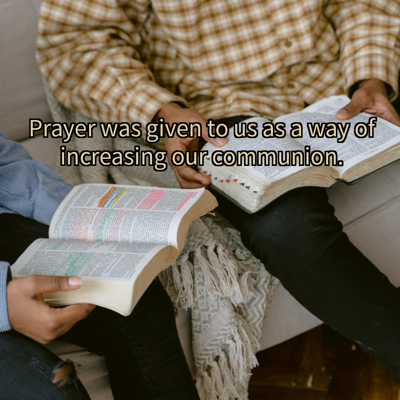
Prayer was given to us as a way of increasing our communion.

There is a difference between being known and knowingly living in a relationship.
Prayer is the place where we stop carrying our lives alone and begin consciously carrying them with God.

Our prayer life exists to align us with God and shape our hearts.
The deepest gift of prayer we receive is God himself.
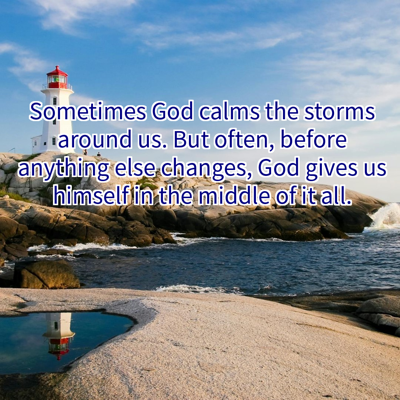
Sometimes God calms the storms around us. But often, before anything else changes, God gives us himself in the middle of it all.

To live as a human being as we were meant to live is to live in continual relation to the Father.

Let those words remind you that before you said anything at all, you were already known.
Hi, I'm an AI assistant for the pastor that gave this sermon. What would you like to make from it?
Add this chatbot onto your site with the embed code below
<iframe frameborder="0" src="https://pastors.ai/sermonWidget/sermon/why-pray-god-knows" width="100%" height="100%" style="height:100vh;"></iframe>Copy