
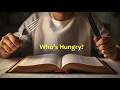
Who's Hungry?
Devotional
Day 1: The Word of God is powerful and creative.
The very first words spoken by God brought the entire universe into existence. His word is not merely informative; it is performative, carrying the inherent power to accomplish what it declares. This creative power established order from chaos and light from darkness. It is a profound reminder that the same voice that spoke creation into being now speaks to us through Scripture. We can trust in the authority and effectiveness of God's spoken word. [52:50]
In the beginning, God created the heavens and the earth. The earth was without form and void, and darkness was over the face of the deep. And the Spirit of God was hovering over the face of the waters. And God said, “Let there be light,” and there was light. (Genesis 1:1-3 ESV)
Reflection: Where in your current circumstances are you facing a formless or chaotic situation? How might inviting God’s powerful and creative word into that area bring light and order?
Day 2: The Word of God guards and guides our path.
Scripture acts as a protective shield for our hearts and minds, helping us to resist temptation and avoid sin. It is not a set of restrictive rules but a gift of divine wisdom for our flourishing. Furthermore, God’s word provides illumination for our journey, like a lamp for our immediate steps and a light for the broader path ahead. It offers both daily direction for our decisions and clarity for God’s overall will for our lives. We are never left to navigate the darkness alone. [58:48]
Your word is a lamp to my feet and a light to my path. (Psalm 119:105 ESV)
Reflection: What is a specific temptation or recurring thought you struggle with, and which verse from Scripture could you store in your heart this week to act as a guard against it?
Day 3: We are nourished by every word from God.
While physical food sustains our bodies, we cannot thrive on bread alone. Our spiritual lives require the sustenance that comes only from the Word of God. Jesus Himself demonstrated that this word is our true source of life, especially when we feel vulnerable or depleted. It is the essential nutrient for our souls, providing strength and vitality that the world cannot offer. To neglect it is to risk spiritual malnutrition. [01:00:21]
But he answered, “It is written, ‘Man shall not live by bread alone, but by every word that comes from the mouth of God.’” (Matthew 4:4 ESV)
Reflection: In what ways have you been seeking to satisfy your spiritual hunger with things other than God’s word? What would it look like to prioritize feeding on Scripture as regularly as you eat physical food?
Day 4: The Word of God cleanses and sanctifies us.
God’s word has a purifying effect on our lives. It washes away the guilt and shame of sin and sets us apart for His holy purposes. This process of sanctification is how we become more like Christ, which is the goal of our faith. The truth contained in Scripture has the power to transform our character and align our desires with God’s own heart. It is through the word that we are made clean and prepared for good works. [01:06:02]
Sanctify them in the truth; your word is truth. (John 17:17 ESV)
Reflection: As you read the Bible, what is one area of your life where you sense God’s truth inviting you into greater holiness or a change in attitude?
Day 5: Jesus Christ is the living Word of God.
The Bible is ultimately about a Person, not just principles. Jesus is the Word who was with God and was God from the very beginning. He is the full expression of the Father’s heart and the ultimate revelation of His character. To know the Scriptures is to know Christ more deeply. Abiding in His word is the mark of a true disciple and the pathway to genuine freedom. The written word points us to the Living Word. [01:16:34]
And the Word became flesh and dwelt among us, and we have seen his glory, glory as of the only Son from the Father, full of grace and truth. (John 1:14 ESV)
Reflection: How does understanding Jesus as the Word made flesh change the way you approach reading your Bible? What is one step you can take to move from simply gaining knowledge to cultivating a relationship with Him through Scripture?
Sermon Summary
God’s word carries creative, healing, guiding, and sustaining power that shapes every aspect of life. The Bible functions as a love letter, a handbook, a prescription for spiritual health, a history of faithfulness, and the bread of life—each role pointing beyond human comfort toward God’s glory. Scripture created the world by spoken decree, demonstrates power to heal and rescue, guards hearts from sin, provides direction for everyday steps and long-term destiny, and feeds spiritual hunger that physical bread cannot satisfy. The word also blesses and cleanses, sets believers apart in truth, produces faith as people hear it, and equips followers for every good work.
Scripture proves to be active and discerning, cutting to the intentions of the heart and exposing what hides beneath outward appearances. Through the eternally enduring word of God, one can be saved as faith comes from hearing. Furthermore, it accomplishes the purpose for which it goes forth and never returns empty. All Scripture stands inspired, profitable for teaching, reproof, correction, and training in righteousness. Above all, the incarnate Word, Jesus, embodies the Scripture: the Word became flesh, and the words Jesus spoke carry spirit and life. Abiding in those words identifies true discipleship and leads to freedom.
Practical application centers on four next steps: meditate regularly on Scripture so the word roots deeply and yields fruit; store Scripture in heart and mouth through memorization so it resurfaces in trial; live the word daily so life rests on rock rather than sand; and pray God’s promises and will, using Scripture as the best framework for petition. The congregation receives an invitation to a serious, sustained commitment to the word—one that demands time, hunger, and surrender—and receives a corporate prayer asking God to honor such decisions. The overall appeal frames Scripture not primarily as a tool for personal comfort but as the living means by which God reveals himself, equips his people, and fulfills his purposes in the world.
Key Takeaways
- 1. The Word creates and heals The Bible describes creation by divine speech and shows healing power when God “sends out his word.” Creation and restoration flow from speech because God’s word brings reality into being and rescues people from destruction. Trust in the word’s active power rather than treating Scripture as mere inspiration; expect concrete change when God’s truth is invoked in faith. [52:07]
- 2. Scripture guards, guides, and feeds Psalmic language presents Scripture as both lamp for immediate steps and light for the long path; it also sustains beyond physical bread. Internalizing God’s word equips moral discernment, steady direction amid uncertainty, and nourishment for spiritual endurance. Let Scripture shape everyday decisions and long-term vision so temptation meets God’s counter-word. [58:06]
- 3. Jesus is the living Word John frames the Word as the person of Christ—“the Word became flesh”—so knowing Scripture increases knowledge of Jesus. Words spoken by Jesus impart spirit and life and validate discipleship by abiding in them. Worship and doctrine connect directly to the person revealed through Scripture rather than to abstract ideals. [74:42]
- 4. Practice the Word daily Four concrete habits—meditate, memorize, live, and pray the word—form a resilient spiritual life that bears fruit and withstands storms. Regular meditation roots the heart, memorization supplies immediate defense, obedient living builds a foundation, and praying Scripture aligns desire with God’s will. Commitment requires sacrifice and rhythm, but yields steady growth and spiritual maturity. [77:39]
Youtube Chapters
- [00:00] - Welcome
- [30:26] - Opening Prayer & Worship
- [30:44] - Preparing Hearts
- [39:39] - Membership Certificates
- [43:48] - Assisted Living Outreach Story
- [45:31] - The Bible as a Love Letter
- [49:58] - Who's Hungry? (Sermon Title)
- [51:08] - Why the Word Matters: Overview
- [52:07] - Creation: Word Brings Life
- [53:54] - Healing & Faith in the Word
- [56:08] - Guarding, Guiding, Feeding
- [63:10] - Cleansing, Sanctifying, Blessing
- [72:41] - The Word Always Succeeds
- [74:42] - Jesus, the Living Word
- [77:39] - Four Next Steps: Practice Scripture
- [83:47] - Commitment Prayer & Closing
Bible Study Guide
Bible reading
Psalm 107:19–20 (ESV)
Then they cried to the Lord in their trouble, and he delivered them from their distress. He sent out his word and healed them, and delivered them from their destruction. Let them thank the Lord for his steadfast love, for his wondrous works to the children of men!
John 1:1, 14 (ESV)
In the beginning was the Word, and the Word was with God, and the Word was God. He was in the beginning with God… And the Word became flesh and dwelt among us, and we have seen his glory, glory as of the only Son from the Father, full of grace and truth.
Matthew 4:4 (ESV)
But he answered, “It is written, ‘Man shall not live by bread alone, but by every word that comes from the mouth of God.’”
---
Observation questions
- According to Psalm 107:19–20, what specific actions does God take when people cry out to Him in distress?
- In John 1:1 and 14, what is the relationship between “the Word” and God? What does it mean that “the Word became flesh”?
- What does Jesus say is more necessary than physical bread in Matthew 4:4?
- The sermon mentions that God’s word has power to create, heal, guard, guide, and feed [52:07]. Which of these stood out most to you?
---
Interpretation questions
- Why do you think God chooses to use His *word* as the means to create, heal, and save, rather than some other method?
- How does understanding Jesus as “the Word” change the way we read the Bible?
- The sermon described Scripture as “a lamp to my feet and a light to my path” [58:06]. What’s the difference between a lamp for your feet and a light for your path?
- If God’s word “never returns empty” [01:12:41], why do some people hear the Bible taught and remain unchanged?
---
Application questions
- God’s word is described as having power to heal and deliver [53:54]. Is there an area in your life where you need to trust God’s word to bring healing or rescue? What Scripture can you hold onto in that situation?
- Jesus said we don’t live by bread alone but by God’s word [59:31]. How satisfied are you spiritually? What would it look like to truly hunger for Scripture like you hunger for food?
- Memorizing Scripture helps us when we’re tempted or struggling [56:31]. What’s one verse you could start committing to memory this week?
- The word of God is meant to be lived out, not just heard [01:20:43]. What’s one specific command from Scripture you find difficult to obey? What would it look like to take a step toward obedience this week?
- Praying God’s word aligns our desires with His will [01:22:06]. Is there a promise or teaching from the Bible you could turn into a prayer today?
- Abiding in Jesus’ word is how we experience true freedom [01:17:20]. What would it look like to “abide” in His word daily rather than just reading it occasionally?
- The sermon ended with a challenge to take God’s word seriously through meditation, memorization, obedience, and prayer [01:17:39]. Which of these four next steps is God calling you to focus on first? What’s one practical way you can start?
Sermon Clips
When you build a house on the rock, what you're saying is that, yes, I know the word of God, but I'm gonna live the word of God as well. So when crisis come your way, when you lose your job, when when somebody's sick, something's going on, right, your your life is a mess, guess what? By building your your house on the rock, by your your life could be in complete chaos. But if you know the word and live the word, guess what? You're gonna be okay. You're gonna be alright. You're gonna get through your crisis in your life. Trust me on this.
[01:21:21]
(38 seconds)
#BuildOnTheRock




When we put all this together, the word of God becomes about him. The great I am described and expounded all throughout 66 books of the bible, both the old testament and the new testament. Especially, this is important since we are living in the age where as Christians, we often look to God to simply make us feel better. But the primary purpose of our faith, as you see up here, is really to give glory to God, to worship him, to follow him, and to love him above and beyond anything and everything this material world offers. It's all about him.
[00:48:55]
(47 seconds)
#AllAboutHim
When you read this, to me, I don't know about you, it's so reassuring because it's telling me that God's word is always always effective. Quote, unquote, this means that God is not just talk. When he talks, his words accomplish his intended purpose. The word of the lord has power and he never fails in his intended purpose. So we know scientifically and agriculturally, both rain and snow without fail does something to the earth ground, doesn't it? Making it make plants grow and to produce a harvest. That's pretty powerful.
[01:13:15]
(41 seconds)
#WordThatWorks
It says, your word is a lamp to my feet and a light to my path. When I read read this and when I read this, I see it this way. And maybe some of you guys may you might see it the way I see it as well. This is what I mean. A lamp to my feet. Just picture a lamp that you're holding. It's right in front of me, isn't it? And you can only see, I don't know, a few feet in front of you. It symbolizes everyday decisions that I have to make in order to walk with god, to walk right with god.
[00:58:19]
(34 seconds)
#LampToMyFeet
It it is it is sin to worry. Right? Because god said, don't worry. So when you start to worry, what do you do? What does the bible say? What does word of god says? He said, don't worry. Let work tomorrow worry itself. God takes care of the the lilies, the field, and the and the birds, the the the air. He's going to take care of me and my family, so I'm not going to worry. See how the word when it's hidden in you can come against the temptation and the sin in your life.
[00:57:35]
(30 seconds)
#FaithOverWorry
If you want it to land on your heart on a good soil, then take these four next steps. One, meditate on the word of God regularly. I want you to hunger for it. I want you to devour it. Bring that picture up again from the beginning. Who's hungry? It's coming. Alright? That should be us ready to to devour the word of God. Hungry for it.
[01:18:09]
(30 seconds)
#HungryForTheWord
So not just hear and know the word, but you need to to live it. You need to practice the word of God. Matthew seven twenty four, everyone then who hears these words of mine and does them will be like a wise man who built his house on the rock. I know we all wanna be wise men. We don't wanna be foolish and build our house on on sand. And when the storm comes, it gets knocked down.
[01:20:58]
(22 seconds)
#LiveTheWordNow
But when we think of the word of god to be a mere love letter, then the focus or or the emphasis can easily become us or me. As in his love letter for me. Hey. God loves me and that's all I ever need to know. If that's you, I would like to present to you the word of god also as the handbook for life and as the prescription for our spiritual health
[00:47:56]
(32 seconds)
#WordAsLifeHandbook
Chatbot

-
I'm an AI bot trained specifically on the sermon from Feb 15, 2026. Do you have any questions about it?