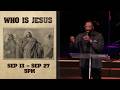
Matthew 11 puts the biggest question right in the middle of a prison cell: “Are you the one who is to come, or should we expect someone else?” John the Baptist had already pointed at Jesus and said, “That’s him.” John had seen the heavens open, heard the Father’s voice, and known Jesus from before birth. Yet John’s dark cell became the place where expectation and reality collided.
The expectation gap appears when the version of Jesus created in the mind does not match the situation being lived. Culture tells people to hustle, curate, manifest, and control until life works out. That same mindset can slip into faith: pray enough, give enough, trust enough, and everything should go well. Jesus refuses to be reduced to a formula for a pain-free life.
John’s doubt did not mean John stopped loving Jesus or walked away from Jesus. John took the question straight to the only one who could answer it. Jesus answered by pointing to what had been seen and heard: blind eyes opening, lame people walking, lepers cleansed, deaf ears hearing, dead people raised, and good news preached to the poor. Christ met John’s crisis not by fitting John’s political expectations, but by revealing the kingdom already breaking in.
The names of God anchor faith when feelings start spiralling. Elohim is the Creator who speaks into nothingness and brings something forth. Yahweh is the covenant-keeping God who works on a generational timeline, not a twenty-four-hour news cycle. Adonai is Lord and Master, confronting the lie that people are masters of their own destiny. El Shaddai is all-sufficient, even in a decades-long “not yet.”
El Roi, the God who sees, meets Leah in rejection and meets every hidden tear cried in the night. El Shamma, the God who hears, remembers Rachel’s cry and hears the cries of His children. Jesus is not the small image people curate for Him. Jesus is Creator, covenant keeper, Lord, provider, healer, shepherd, and the friend closer than a brother.
Doubt matters, but the place taken for answers matters even more. Worship turns the eyes from the prison cell back to Jesus. Praise does not deny anxiety, depression, pain, rejection, or delay. Praise declares that even before breakthrough appears, the child of God is seen, heard, loved, and held by the name of Jesus.
##
Key Takeaways
- 1. Bring doubt directly to Jesus [01:01:44] John the Baptist did not pretend that prison felt easy. John sent his question to Jesus rather than feeding it with speculation or despair. Doubt becomes dangerous when it is allowed to choose its own authority. Christ is able to receive honest questions without abandoning those who ask them. [61:44]
- 2. Jesus exceeds curated expectations [49:32] The expectation gap grows when faith becomes a transaction for control. Jesus is not obligated to fit the image formed by personal plans, pain, or timelines. Christ remains Lord even when circumstances do not make sense. His identity is steadier than every disappointed expectation. [49:32]
- 3. God sees hidden pain clearly [57:34] El Roi sees the tears that remain invisible in public worship and private rooms. Leah’s rejection did not escape God’s attention, even when human love failed her. Hidden pain is not proof of divine absence. The God who sees enters the places that shame tries to keep concealed. [57:34]
- 4. God’s timing is covenantal, not hurried [52:30] Yahweh keeps promises across generations and refuses to be rushed by human panic. Delay can feel like abandonment, especially when a promised future remains unseen. Yet God’s word does not return empty. Faith holds onto God’s character when the timetable remains unclear. [52:30]
- 5. Praise redirects the eyes to Christ [01:04:38] Worship does not make problems imaginary or remove every hard circumstance immediately. Praise shifts attention from what is surrounding a person to the One who sees, hears, and sustains them. The name of Jesus becomes a declaration against fear’s claim to final authority. Breakthrough may still be coming, but Christ is already present.
## [64:38]
Youtube Chapters