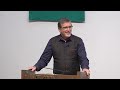
This week, we gathered as a community to celebrate, to pray, and to reflect on what it means to endure in faith when the world feels uncertain. We began with gratitude for the many hands that serve—those who prepare our spaces, bake cookies, and care for one another. We celebrated milestones, like Miss Ela’s 90th birthday, and shared good news, both big and small, reminding ourselves that even in challenging times, there is always something to be thankful for.
Our readings today were full of warnings and images of upheaval: Malachi’s fire that both consumes and heals, Paul’s exhortation to steady faithfulness in Thessalonians, and Jesus’ sobering words about the destruction of the temple in Luke. These passages speak to times when what once felt solid—our institutions, our relationships, even our sense of self—begins to shake. I shared how, in my own life, watching my children grow up and move on has brought both anxiety and hope, and how these personal transitions mirror the larger uncertainties we see in our world.
The prophets, I reflected, are not just voices of doom, but of hope. Their message is not that God delights in destruction, but that God refines and heals through what feels like loss. The fire is not for annihilation, but for purification. When the world feels off-kilter, our call is not to panic or disengage, but to persist in faithfulness—especially in the small, daily acts of love and service. Paul reminds us that the Christian life is not about grand gestures, but about steady, quiet endurance: working, helping, praying, and showing up for one another.
Jesus’ words in Luke are a reminder that even the grandest things—temples, nations, our own plans—are not permanent. Yet, he promises that by our endurance, we will gain our souls. Endurance is not passive waiting, but active trust. It is the courage to keep believing that God is still at work, even when everything else says otherwise. I shared the example of my mother, whose faith endured through illness and loss, and who taught me that endurance is not stoic suffering, but hope that God is not finished yet.
As a community, we are called to keep doing the small good things that reveal Christ’s presence: feeding the hungry, supporting one another, and building up our neighbors. When the world shakes, we stand firm—not because we are unafraid, but because we trust in the One who holds us fast.
Key Takeaways
- 1. Endurance is active trust, not passive waiting Endurance in faith is not simply holding on until things get better. It is a daily, intentional act of trusting God, even when there is no visible evidence that things will improve. This kind of trust matures us, shaping our character and deepening our hope. [31:06]
- 2. God’s refining fire brings both judgment and healing The same fire that consumes what is unjust also brings healing to those who revere God. God’s judgment is not for destruction’s sake, but to purify and restore what is good and lasting. Our relationship to God determines whether we experience the fire as loss or as renewal. [27:00]
- 3. Faithfulness is found in small, daily acts The Christian life is not defined by heroic gestures, but by steady, quiet acts of service and love. Baking bread, writing a card, or helping a neighbor are ways we embody Christ’s presence, especially when the world feels unstable. These small acts are the seeds of endurance. [29:10]
- 4. When the world shakes, stand firm in hope Uncertainty and upheaval are not new to God’s people. In times of crisis, we are called to hold fast to hope, remembering that God’s story is not finished. Even when everything else is unsettled, God’s promise remains: by our endurance, we will gain our souls. [33:08]
Youtube Chapters