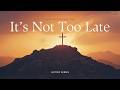
The crowds in Jerusalem expected a conquering hero, but Jesus arrived in a way that defied all expectations. He chose a humble donkey, a symbol of peace, over a powerful war horse. This entrance reveals a king whose power is found not in domination, but in gentle strength and loving service. His kingdom operates on a different value system, one where true greatness is measured by humility and sacrifice. We are invited to welcome this unexpected king on his own terms. [14:45]
When they had approached Jerusalem and had come to Bethphage, at the Mount of Olives, then Jesus sent two disciples, saying to them, “Go into the village opposite you, and immediately you will find a donkey tied there and a colt with her; untie them and bring them to Me. If anyone says anything to you, you shall say, ‘The Lord has need of them,’ and immediately he will send them.” This took place to fulfill what was spoken through the prophet: “Say to the daughter of Zion, ‘Behold your King is coming to you, Gentle, and mounted on a donkey, Even on a colt, the foal of a beast of burden.’” (Matthew 21:1-5 NASB)
Reflection: As you consider the story of Palm Sunday, what personal expectations of Jesus might need to be adjusted to align with the humble, servant-hearted king He actually is?
The path of Christ is one of self-emptying, a conscious release of privilege and power for the sake of love. This is not a loss of identity but the discovery of our true purpose in God's kingdom. To have the mind of Christ is to embrace a posture of service, putting the needs of others before our own ambitions. It is a counter-cultural way of living that finds its strength in vulnerability and its victory in surrender. This is the profound mystery at the heart of our faith. [37:48]
Have this attitude in yourselves which was also in Christ Jesus, who, although He existed in the form of God, did not regard equality with God a thing to be grasped, but emptied Himself, taking the form of a bond-servant, and being made in the likeness of men. (Philippians 2:5-7 NASB)
Reflection: Where is God inviting you to practice this "self-emptying" love in a specific relationship or situation this week?
The celebration of Palm Sunday is intrinsically linked to the sorrow of Good Friday. The same voices that cried "Hosanna!" would soon shout "Crucify him!" when their expectations were not immediately met. This shift challenges us to examine the consistency of our own devotion. True welcome means accepting Jesus not only as the king of our triumphs but also as the Lord of our struggles, trusting His path even when it leads through difficulty. [36:28]
“Hosanna to the Son of David!” “Blessed is he who comes in the name of the Lord!” “Hosanna in the highest heaven!” When Jesus entered Jerusalem, the whole city was stirred and asked, “Who is this?” (Matthew 21:9b-10 NIV)
Reflection: In what area of your life are you most tempted to turn away from Jesus when His plans differ from your own?
The kingdom of God stands in stark contrast to the kingdoms of this world. It is not built on force, fear, or political dominance, but on the foundations of justice, mercy, and grace. Jesus models a leadership that serves, empowers, and gives itself away. To follow this King is to participate in building a community where the last are first, the humble are exalted, and love is the ultimate authority. [42:22]
Jesus said, “My kingdom is not of this world. If it were, my servants would fight to prevent my arrest by the Jewish leaders. But now my kingdom is from another place.” (John 18:36 NIV)
Reflection: How can you actively demonstrate the values of God's kingdom—like compassion and service—in your sphere of influence today?
No matter where we have been or how we have struggled to follow, the invitation of Holy Week remains open. It is not too late to open our hearts to Christ's transforming love and to choose the path of humility He has set before us. This is a journey of grace, where we are met with forgiveness and empowered to live anew. We can still choose to welcome the King who comes in peace to reign in our lives. [42:08]
Here I am! I stand at the door and knock. If anyone hears my voice and opens the door, I will come in and eat with that person, and they with me. (Revelation 3:20 NIV)
Reflection: What is one practical step you can take this week to more fully welcome Jesus as the loving ruler of your daily life?
Palm Sunday scenes unfold with vivid honesty: a crowded Jerusalem, cloaks and palm branches laid in a bustling parade, and a king who arrives in an unexpected way. Jesus rides on a donkey—humble, borrowed, and symbolic of peace—rather than in commanding splendor. The crowd cries “Hosanna,” hoping for immediate political rescue, but the road beneath the procession already leads toward the cross. That contrast exposes a decisive question for every heart: who is this king?
Paul’s words from Philippians frame the answer with a startling claim about divine leadership. God’s glory does not cling to power but empties itself, taking the form of a servant and becoming obedient to death on a cross. True greatness appears in kneeling, giving, and risking love rather than in domination. The kingdom Jesus brings reverses usual measures: victory looks like sacrifice, authority looks like service, and power looks like mercy.
The narrative also shows human volatility. Jubilant praise can turn to condemnation when expectations go unmet; the same voices that shout “Blessed is the one who comes” may cry “Crucify him” within days. That instability prompts a sharper call than mere worship on a festive morning. The invitation requires following through hardship, not only celebrating triumph. Entering holy week means facing the upper room, Gethsemane, and the cross as central parts of the way to resurrection.
Practical demands follow: welcome the humble king by practicing the mind of Christ—helping, yielding, remaining kind when it is costly, and offering one’s life for others. The way of Jesus reshapes communities by persistent love that does not seek immediate return. The portrait ends with resurrection hope: the same love that led to suffering rises to conquer death, promising renewal and the power to live differently. The liturgy moves from palms to bread and cup, calling for a life that displays the fruit of humility, justice, mercy, and steadfast compassion so others may see and be held in the heart of God.
Is Jesus only the king we celebrate when things feel triumphant and good in our lives? Or is he the king we follow even when the road becomes difficult and it's hard to travel? The good news of this Lenten season, the good news of our whole series that we've been walking through during these Lenten days is that it's not too late to welcome the king, not too late to open our lives to Christ transforming love, not too late to follow the path of humility and compassion he sets before us, and not too late to join the work of God's kingdom.
[00:41:44]
(44 seconds)
#WelcomeTheKing

A kingdom built not on domination or fear, but on justice, equity, mercy, and grace. Today, Jesus still comes, still comes to us, not with armies, not with force, but with the quiet strength strength of love. The same love that carried him into Jerusalem long ago, the same love that carried him to a cross, the same love that will rise again on Easter morning conquering death and sin for good.
[00:42:28]
(45 seconds)
#KingdomOfLove
He can rise above sin and death and shame and walk out of an empty tomb, leaving all the things that keep us bound behind him. So today today, we stand with the crowd, we wave our palms, we sing our hosannas, god save us. But the question still lingers in the air for many of us and for many outside in the world. Who is this?
[00:41:05]
(39 seconds)
#PalmsAndQuestions
Our world admires strength and influence and control however you can get it. But the kingdom of God looks different. In the kingdom of God, greatness looks like humility. Power looks like serving. Victory looks like love that refuses to give up. Palm Sunday invites us to see that kind of king clearly.
[00:38:36]
(38 seconds)
#GreatnessIsHumility
And as holy week begins, may we not only wave the palms, may we also open our hearts and welcome the king who comes in humility and whose love can and will change the world. And upon accepting him, may our lives exhibit the fruit that will show others that they too are loved and held in the heart of God.
[00:43:41]
(45 seconds)
#WelcomeWithOpenHearts
Who is this? And that question sits right at the center of Palm Sunday. Who is this? Who is this king riding into Jerusalem? Because the way we answer that question changes everything. The people welcoming Jesus that day believed they knew who he was and what he was sent to do. They had hopes. They had dreams, expectations for what he would do and what he would bring.
[00:31:48]
(42 seconds)
#CrowdExpectations
But it was symbolic of peace instead of dominance, a sign that his kingdom operates differently than all other kingdoms in this world. And while the crowds shout with joy, something deeper is already unfolding. Because the road Jesus is riding down does not lead to a throne gilded in gold, it leads to a cross.
[00:35:36]
(28 seconds)
#PeaceNotPower
And if we're honest, we may recognize ourselves in the crowd. Because we often want Jesus to be the kind of king who solves our problems quickly. We want the triumphant parade. We want the victory that brings dominance. We want celebration. But Jesus invites us to something deeper and more meaningful.
[00:39:14]
(26 seconds)
#BeyondTriumph
I'm an AI bot trained specifically on the sermon from Mar 29, 2026. Do you have any questions about it?
Add this chatbot onto your site with the embed code below
<iframe frameborder="0" src="https://pastors.ai/sermonWidget/sermon/welcome-king-2026" width="100%" height="100%" style="height:100vh;"></iframe>Copy