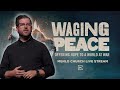
In a time marked by division, outrage, and the temptation to retreat into echo chambers, the call is to be a people who wage peace in a world at war. The events of recent weeks, including the tragic assassination of a political figure, have only highlighted how polarized and reactive our culture has become. The church is meant to be a countercultural community, one that refuses to be discipled by headlines, algorithms, or the outrage industry, but instead is shaped by the way of Jesus. Our faith is not a lens we put on after we’ve chosen our politics; it is the lens through which we see everything—including our politics, our relationships, and our response to conflict.
Drawing from Ephesians 4, there are five practical ways to wage peace. First, don’t sacrifice your presence. It’s easy to withdraw from those we disagree with, but we are called to stay engaged, to bear with one another in love, and to carry each other’s burdens. Second, stand your ground for unity. Unity is not uniformity, nor is it tribalism. The unity of the Spirit is a gift from God, rooted in the gospel, and it is something to be stewarded and protected, even when it’s uncomfortable. Third, don’t concede your hope. The temptation to cynicism is strong, especially when politics seem to offer no solutions. But our hope is not in any party or policy; it is in the unchanging reality of Jesus, who is still at work in the world.
Fourth, don’t surrender your voice. Silence in the face of lies or injustice is not an option, but neither is shouting in outrage or parroting party lines. We are called to speak the truth in love, to be people of both conviction and compassion, and to remember that our words have the power to build up or tear down. Finally, don’t arm yourself with anger. Outrage is not a spiritual weapon. When we let anger fester, it gives the enemy a foothold and poisons our relationships. Instead, we are to urgently seek peace, pursue reconciliation, and fight with the weapons of forgiveness, patience, and love.
The real war is not the one in the headlines, but the one in our hearts, homes, and habits. Even if we win the visible battles, we risk losing the invisible one that matters most. The invitation is to be a church that lives differently, that refuses to be discipled by the world’s outrage, and that holds fast to the bond of peace given by Christ.
Key Takeaways
- 1. Stay Present in Disagreement Withdrawing from those who think differently may feel safe, but it only deepens division and dehumanization. True Christian love means bearing with one another, carrying burdens, and engaging in real, face-to-face conversations—not just online performances. Presence is a spiritual discipline that resists the urge to retreat and instead chooses to love in proximity, even when it’s uncomfortable. [32:05]
- 2. Steward the Gift of Unity Unity in the church is not something we manufacture; it is a supernatural gift from God, rooted in the gospel and crystallized over centuries. This unity is not about uniformity or tribal allegiance, but about holding fast to the essentials of our faith while allowing for differences in perspective. We are urged to steward this unity with vigilance, resisting the cultural pressure to divide over secondary issues. [35:47]
- 3. Hold Fast to Hope, Not Cynicism It is easy to become cynical when politics and culture seem irreparably broken, but hope is not naïve optimism—it is trust in God’s ongoing work. Our hope is anchored in the reality that God is still sovereign, still writing the story, and still calling us to pray for and love even those we find most difficult. Refusing to concede hope is a radical act of faith in a world addicted to despair. [39:19]
- 4. Speak the Truth in Love, Not Outrage The temptation to either remain silent or to shout in anger is strong, but neither reflects the way of Jesus. Speaking the truth in love requires courage, humility, and a willingness to see others as more than categories or enemies. Our words should be shaped by both conviction and compassion, building up the body and refusing to surrender our voice to algorithms or party scripts. [40:57]
- 5. Wage Peace, Not War, with Your Emotions Anger is not inherently sinful, but when it is left unchecked, it becomes a tool for division and destruction. We are called to urgently seek peace, to pursue reconciliation, and to refuse to let anger fester into bitterness. The weapons of Christ are forgiveness, patience, and love—these are how we fight the real war, the one that matters most. [47:43]
Youtube Chapters
- [00:00] - Welcome
- [00:45] - Introduction of Elder Candidates
- [03:10] - Special Weekend: ACM, Elders, and Bylaws
- [05:30] - Addressing Polarization and Tragedy
- [07:55] - The Screwtape Letters Satire
- [10:22] - Prayer for Discernment and Peace
- [12:00] - Losing Our Third Place and the Rise of Outrage
- [14:40] - The Church’s Countercultural Role
- [16:00] - Five Ways to Wage Peace
- [17:15] - Don’t Sacrifice Your Presence
- [20:05] - Stand Your Ground for Unity
- [22:00] - Don’t Concede Your Hope
- [24:00] - Don’t Surrender Your Voice
- [27:00] - Don’t Arm Yourself with Anger
- [30:00] - The Real War: Waging Peace
- [32:00] - Closing Prayer and Worship