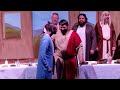
Bible reading Luke 22:14-20 (NIV) 14 When the hour came, Jesus and his apostles reclined at the table. 15 And he said to them, “I have eagerly desired to eat this Passover with you before I suffer. 16 For I tell you, I will not eat it again until it finds fulfillment in the kingdom of God.” 17 After taking the cup, he gave thanks and said, “Take this and divide it among you. 18 For I tell you I will not drink again from the fruit of the vine until the kingdom of God comes.” 19 And he took bread, gave thanks and broke it, and gave it to them, saying, “This is my body given for you; do this in remembrance of me.” 20 In the same way, after the supper he took the cup, saying, “This cup is the new covenant in my blood, which is poured out for you.
Romans 5:6-11 (NIV) 6 You see, at just the right time, when we were still powerless, Christ died for the ungodly. 7 Very rarely will anyone die for a righteous person, though for a good person someone might possibly dare to die. 8 But God demonstrates his own love for us in this: While we were still sinners, Christ died for us. 9 Since we have now been justified by his blood, how much more shall we be saved from God’s wrath through him! 10 For if, while we were God’s enemies, we were reconciled to him through the death of his Son, how much more, having been reconciled, shall we be saved through his life! 11 Not only is this so, but we also boast in God through our Lord Jesus Christ, through whom we have now received reconciliation.
Observation questions - In Luke 22, what did Jesus say the bread and the cup represented, and what did he instruct his followers to do with these elements?
- According to the sermon, what was the significance of Jesus reinterpreting the Passover symbols during the Last Supper? [16:12]
- What does Romans 5:8-10 say about the state of humanity when Christ died for us, and what results from his death?
- The sermon described several disciples who were present at the table. What was one characteristic or struggle mentioned about Philip? [06:48]
Interpretation questions - Jesus knew Judas would betray him yet still invited him to the table [10:13]. What does this reveal about the nature of God's grace and the difference between proximity and true surrender?
- The Passover meal, which remembered liberation from Egypt, was reframed to point to a greater liberation through Christ's sacrifice [16:56]. Why was it necessary for the old covenant sacrificial system to be fulfilled and replaced?
- Romans 5:10 says we were reconciled to God "through the death of his Son" and will be saved "through his life." What is the relationship between Christ’s death and his resurrection in accomplishing our salvation?
- James asked for a place of honor but later became the first apostle martyred [08:32]. How does his story illustrate the kingdom principle that greatness comes through sacrifice?
Application questions - Judas was close to Jesus but never surrendered his heart [09:50]. What are some signs that someone might be near Jesus relationally or in community but hasn't truly yielded their life to him? How can we guard against this in our own lives?
- The new covenant means no further sacrifice is needed for sin [16:56]. How does knowing your forgiveness is completely finished affect how you deal with guilt, shame, or the feeling you need to earn God's favor?
- Andrew had a gift of quietly bringing people to Jesus [11:25]. Who is one person in your life you could intentionally "introduce to Jesus" this week, whether through prayer, conversation, or invitation?
- Jesus said the bread represents his body "given for you" [15:25]. When you take communion, how can you move beyond ritual to personally remember his sacrifice was for you?
- Resurrection hope means death doesn't have the final word [23:29]. What is one area of suffering, fear, or "death" in your life where you need to apply the hope of Christ's resurrection and empty tomb?
- Bartholomew was an honest seeker who surrendered when truth was revealed [12:50]. What honest question or doubt about God are you wrestling with? How can you bring it to Jesus with a heart willing to surrender?
- The table is both a memorial and a summons to renewed commitment [26:08]. What is one specific way you can respond in obedience or sacrifice this week in light of Christ's sacrifice for you?