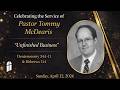
A child receives a public dedication and anointing as a sign of belonging to God and to a loving community. The ritual frames the moment with prayer, vows from parents and the congregation, and a charge to model faith for the next generation. Scripture from Deuteronomy recounts Moses standing on Mount Nebo, viewing the promised land he will not enter, and dying after a life of faithful service. That scene becomes a metaphor for faithful labor that often leaves work incomplete: God’s purposes advance through people who prepare the way rather than possess the outcome.
Stories of ordinary believers illustrate the theme. Helen Mosby chooses to live with anticipation for a hundredth birthday party and to leave “unfinished business” so others will continue God’s work. Melissa, a campus minister, keeps ministering and mentoring even as illness reduces her strength, showing that influence and legacy persist beyond a single lifetime. Both accounts highlight a faith that invests in formation, discipleship, and the handing-on of responsibility.
The community’s identity centers on being welcoming, affirming, and committed to long-term mission. A local congregation receives encouragement to keep cultivating a culture that affirms women in leadership, embraces those marginalized by other churches, and nurtures new generations to tell the Jesus story. The resurrection and Pentecost provide the grand arc: a small band empowered by the Spirit multiplies into a worldwide movement, proving that the work of God proceeds through shared obedience across time.
The text reframes success not as completed conquest but as faithful preparation. Serving the Lord defines identity more than finishing projects; leaving tasks for successors becomes a mark of trust in God’s continuing story. A final benediction charges the community to carry forward mercy, welcome, and the love of Christ, trusting that faith is the assurance of things hoped for and the conviction of things not yet seen.
Key Takeaways
- 1. Faithfulness matters more than finality Faithful obedience defines identity when outcomes remain beyond reach. The narrative of Moses shows that serving the Lord through years of toil matters more than securing the final prize; the purpose centers on preparing people and passing the baton. Embracing a vocation as stewardship rather than ownership frees decisions from performance anxiety and grounds action in dependence on God’s unfolding purposes. This perspective cultivates patience, resilience, and a long horizon for ministry. [1:19:41]
- 2. Leave unfinished work intentionally Leaving tasks for future hands becomes a spiritual discipline rather than a failure. Helen Mosby’s desire to leave “unfinished business” models a theology of legacy that expects others to complete what one begins, trusting the community and the Spirit to carry the story forward. Intentionally passing on responsibility invites mentoring, reproducible practices, and structures that outlast any single leader. Such an orientation preserves hope and invites participation from succeeding generations. [1:11:44]
- 3. Mission continues across generations The story of Joshua succeeding Moses and the spread of the early church after Pentecost demonstrate mission as multi-generational work. Investment in discipleship, formation, and mentorship matters more than short-term growth metrics because the gospel advances through steady transmission across time. Recognizing one’s role as preparer shapes priorities toward equipping others rather than claiming credit. This view encourages steady courage in difficult seasons and confidence in long-term fruitfulness. [1:21:41]
- 4. Make church truly welcoming A community that affirms marginalized people and cultivates inclusive leadership embodies the gospel’s reach and credibility. The church’s identity as a welcoming place anchors its witness: hospitality becomes theological action that reveals God’s love and draws diverse people into formation. Structural commitment to inclusion—through practice, policy, and daily kindness—ensures that welcome becomes sustainable rather than performative. Such a posture nurtures belonging and prepares successors to carry ministry forward. [1:25:41]
Youtube Chapters
- [00:00] - Welcome
- [19:08] - Opening remarks and context
- [20:11] - Introducing Mason: baby dedication
- [20:48] - Vows, anointing, and ritual
- [21:30] - Congregation's promises and charge
- [23:01] - Prayer for family and children
- [23:55] - Worship focus and reflection
- [1:08:53] - Story: Helen Mosby’s outlook
- [1:12:39] - Scripture: Moses on Mount Nebo
- [1:21:41] - Mission through generations
- [1:25:41] - Church identity and charge
- [1:52:40] - Farewell blessing and benediction