
Understanding the True Meaning of Christmas
Devotional
Sermon Summary
Bible Study Guide
Sermon Clips
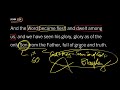
"we're gonna spend two sessions on verse 14 of John 1 in order to answer the question what is Christmas and I know as some of you are listening to this or watching this in in July or March and I think I would just say it is never ever out-of-date to understand the meaning of Christmas it changes our July's and marches and September's and the word became flesh and dwelt among us and we have seen his glory glory as of the only son from the father full of grace and truth" [00:07:01]
"three things in this session the word who is he became flesh what does that mean dwell among us what are the implications of that so let's take those one at a time the word became flesh here we are verse 14 and we have to go back now to verses 1 to 3 because here's where he defined clearly for us what the word is in the beginning was the word in the beginning all the way back as far back as you can go the word was there and the Word was with God and the Word was God" [00:72:02]
"all things were made all things were made through him now if you stopped right there a Jehovah's Witness might say well clearly he doesn't include himself in what he made so he could be made and that's what they believed they believed that he was the Archangel and that God made the Sun first he made Jesus first Christ first and then Christ with God the Father made everything now I think John is writing this to rule that out that's why it sounds so strange doesn't this sound awkward" [00:146:23]
"everything that was made everything that is in the category of made that was made everything in the category of made are you hearing that everything that is in the category of made the son made which means the son is not in the category of made because the son did not make the son he wasn't there to make the son if he was not made and therefore the son is always there he was in the beginning with God and he was God so he was not made" [00:205:15]
"and John is trying to help us understand the the metaphor or the image of son by putting it right here at the beginning in the context where he's explaining the son is the word and the word is with God from the beginning and he is God so the son of God is not the product of conception with Mary he was there eons before Mary ever existed and he is divine and he's not the product of a creation cuz he was not made" [00:311:71]
"the point we're at for now of saying he's the son is that that the father always had father always had a perfect image of himself he always had one to relate to and he stands forth as this image the image of God as a distinct person who is with God and is God that's what son means and that's why it's here in the context if you ever want to explain somebody how Jesus is the Son of God take them to the first fourteen verses of the Gospel of John" [00:354:03]
"he became flesh which implies one he was not flesh he was spirit before the creation of the world that he made and then he enters into it and becomes flesh that is he becomes man look at the use of the word flesh here in John 6 51 I am The Living bread that came down from heaven jesus says if anyone eats of this bread he will live forever and the bread that I will give for the life the world is my flesh and so giving his life is the point of having flesh he became flesh so that he could die" [00:432:65]
"he was speaking about the temple of his body he's gonna raise up his body he's not gonna leave it in the grave he's always going to have a body and Paul makes that plain here in Philippians 3:20 our citizenship is in heaven and from it we await a savior the Lord Jesus Christ who will transform our lowly body to be like his glorious body makes me want to dance by the power that enables him to subject all things to himself Jesus today has a glorious body and he's coming back and our lowly body these gets it cancer ridden dying bodies are gonna be raised and conformed to his glorious body" [00:505:37]
"and lastly he dwelt among us and I used to think because this is a Greek word for pitch a tent that it meant temporary like he he's only gonna spend 30 years among us and then I noticed that the same word is used in the book of Revelation for the final tending of God among us when he'll be with us forever and ever as they whoops that was a wrong inference from tent temporary rather now I see don't you see that to pitch a tent among us to dwell among us is to get near to us it's to have access to us its proximity" [00:561:04]
"the point of Christmas so Christmas is one God the word to be coming man so that he might die three to be near his people and there's more in this text next time" [00:609:23]
Ask a question about this sermon
"three things in this session the word who is he became flesh what does that mean dwell among us what are the implications of that so let's take those one at a time the word became flesh here we are verse 14 and we have to go back now to verses 1 to 3 because here's where he defined clearly for us what the word is in the beginning was the word in the beginning all the way back as far back as you can go the word was there and the Word was with God and the Word was God" [00:72:02]
"all things were made all things were made through him now if you stopped right there a Jehovah's Witness might say well clearly he doesn't include himself in what he made so he could be made and that's what they believed they believed that he was the Archangel and that God made the Sun first he made Jesus first Christ first and then Christ with God the Father made everything now I think John is writing this to rule that out that's why it sounds so strange doesn't this sound awkward" [00:146:23]
"everything that was made everything that is in the category of made that was made everything in the category of made are you hearing that everything that is in the category of made the son made which means the son is not in the category of made because the son did not make the son he wasn't there to make the son if he was not made and therefore the son is always there he was in the beginning with God and he was God so he was not made" [00:205:15]
"and John is trying to help us understand the the metaphor or the image of son by putting it right here at the beginning in the context where he's explaining the son is the word and the word is with God from the beginning and he is God so the son of God is not the product of conception with Mary he was there eons before Mary ever existed and he is divine and he's not the product of a creation cuz he was not made" [00:311:71]
"the point we're at for now of saying he's the son is that that the father always had father always had a perfect image of himself he always had one to relate to and he stands forth as this image the image of God as a distinct person who is with God and is God that's what son means and that's why it's here in the context if you ever want to explain somebody how Jesus is the Son of God take them to the first fourteen verses of the Gospel of John" [00:354:03]
"he became flesh which implies one he was not flesh he was spirit before the creation of the world that he made and then he enters into it and becomes flesh that is he becomes man look at the use of the word flesh here in John 6 51 I am The Living bread that came down from heaven jesus says if anyone eats of this bread he will live forever and the bread that I will give for the life the world is my flesh and so giving his life is the point of having flesh he became flesh so that he could die" [00:432:65]
"he was speaking about the temple of his body he's gonna raise up his body he's not gonna leave it in the grave he's always going to have a body and Paul makes that plain here in Philippians 3:20 our citizenship is in heaven and from it we await a savior the Lord Jesus Christ who will transform our lowly body to be like his glorious body makes me want to dance by the power that enables him to subject all things to himself Jesus today has a glorious body and he's coming back and our lowly body these gets it cancer ridden dying bodies are gonna be raised and conformed to his glorious body" [00:505:37]
"and lastly he dwelt among us and I used to think because this is a Greek word for pitch a tent that it meant temporary like he he's only gonna spend 30 years among us and then I noticed that the same word is used in the book of Revelation for the final tending of God among us when he'll be with us forever and ever as they whoops that was a wrong inference from tent temporary rather now I see don't you see that to pitch a tent among us to dwell among us is to get near to us it's to have access to us its proximity" [00:561:04]
"the point of Christmas so Christmas is one God the word to be coming man so that he might die three to be near his people and there's more in this text next time" [00:609:23]
Chatbot

-
I'm an AI bot trained specifically on the sermon from Dec 22, 2018. Do you have any questions about it?