
Understanding the Sabbath: Fulfillment and Freedom in Christ
Devotional
Sermon Summary
Bible Study Guide
Sermon Clips
"Through the Lord's mercies we are not consumed because his compassions fail not they are new every morning great is your faithfulness you see each Dawning day gives mankind hope in fresh Mercies in fresh compassions from God now look we need this don't we don't we need a continual new Mercy from God." [00:05:27]
"Every morning ends the night every morning brings a new day every morning brings new provision for the day every morning brings new forgiveness for new sins every morning brings new Strength for the new Temptations duties trials that we face so again without specifically saying it there's a sense here in Lamentations chapter 3." [00:06:22]
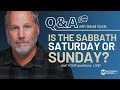
"The Sabbath as a day of rest is fulfilled in Jesus Christ this is made very clear in a few passage of scripture in the New Testament Hebrews chap 4 uh: uh 9 and 10 says this there remains therefore a rest for the people of God for he who has entered his rest has also himself ceased from his works as God did from his." [00:07:49]
"Jesus Christ is the rest of the believer and when Believers remember and live in consideration of his finished work then they're honoring and observing the Sabbath by the way those verses I read to you from Hebrews chap uh 4: uh 9 and 10 previously in the chapter Hebrews chap 4:4 it specifically ties this idea to the Sabbath the Sabbath rest." [00:08:32]
"Colossians 2: 16 and 17 which says this so let no one judge you in food or in drink or regarding a festival or a new moon or sabbaths which are a shadow of things to come but the substance is of Christ listen grateful princes of God I I know we get hung up on this because uh Sabbath keeping is mentioned as part of the Ten Commandments." [00:09:11]
"Christians are free to keep a Kosher diet if they want to Christians are free to observe the seventh day as a Sabbath if they please there's nothing wrong with those things but they should not think that eating kosher or Sabbath observance makes them any closer to God and they should not as verse 16 says in col to they should not judge another brother or sister who does not observe such laws." [00:12:07]
"The early church regarded Sunday not Saturday as their day of worship this was because Jesus was raised from the dead on Sunday and for Christians that changed everything I find it fascinating that all four gospels note that the resurrection of Jesus was evident on Sunday the first day of the week you can look it up yourself so I won't give you the references." [00:14:16]
"When we find mentions to which day of the week Christians met in the book of Acts and in the letters of Paul it's on the first day of the week it's on Sunday for example Acts 20:7 says now on the first day of the week when the discip deciples came together to break bread Paul ready to depart the next day spoke to them and continued his message until midnight." [00:14:41]
"Christians wanted to meet on the sixth or the seventh day of the week the Sabbath they were free to do so all days are alike to the Lord just as we read in Colossians chapter 2 we're free to worship on any day but Christians wanted to celebrate the day that Jesus rose from the dead." [00:16:22]
"Jesus Christ reveals the Triune God so you could say one you could say the other I don't think it makes any difference um again to regard it differently is to regard baptism as sort of a magical ceremony that needs the specific incantation thanks for that moderator okay uh Love Never Fails asks a question and it's this hi brother it is more than tradition to consider the day beginning at Sunset and ending at Sunset." [00:56:12]
"Love never fails if a person if you or if somebody else says I want to consider that the day begins at Twilight and ends at dusk I I want to do it you absolutely have freedom in Christ to do that absolutely there's no problem with that all all I I just don't think that there's a Biblical command to do that at the very best you could say based on Genesis 1:5 and the story of creation that at least there's some precedent for doing it but there's not a command for it." [00:57:56]
"Reconciliation may need to await until some trustworthiness has improved but forgiveness is a gift that we can lead and I think the overwhelming evidence of the scriptures is that God wants his people to be generous with forgiveness not stingy now let me just say one more thing about this I do think that there's a moral problem with us publicly forgiving people for what they've done to other people I don't think that's our place." [01:07:28]
Ask a question about this sermon
"Every morning ends the night every morning brings a new day every morning brings new provision for the day every morning brings new forgiveness for new sins every morning brings new Strength for the new Temptations duties trials that we face so again without specifically saying it there's a sense here in Lamentations chapter 3." [00:06:22]
"The Sabbath as a day of rest is fulfilled in Jesus Christ this is made very clear in a few passage of scripture in the New Testament Hebrews chap 4 uh: uh 9 and 10 says this there remains therefore a rest for the people of God for he who has entered his rest has also himself ceased from his works as God did from his." [00:07:49]
"Jesus Christ is the rest of the believer and when Believers remember and live in consideration of his finished work then they're honoring and observing the Sabbath by the way those verses I read to you from Hebrews chap uh 4: uh 9 and 10 previously in the chapter Hebrews chap 4:4 it specifically ties this idea to the Sabbath the Sabbath rest." [00:08:32]
"Colossians 2: 16 and 17 which says this so let no one judge you in food or in drink or regarding a festival or a new moon or sabbaths which are a shadow of things to come but the substance is of Christ listen grateful princes of God I I know we get hung up on this because uh Sabbath keeping is mentioned as part of the Ten Commandments." [00:09:11]
"Christians are free to keep a Kosher diet if they want to Christians are free to observe the seventh day as a Sabbath if they please there's nothing wrong with those things but they should not think that eating kosher or Sabbath observance makes them any closer to God and they should not as verse 16 says in col to they should not judge another brother or sister who does not observe such laws." [00:12:07]
"The early church regarded Sunday not Saturday as their day of worship this was because Jesus was raised from the dead on Sunday and for Christians that changed everything I find it fascinating that all four gospels note that the resurrection of Jesus was evident on Sunday the first day of the week you can look it up yourself so I won't give you the references." [00:14:16]
"When we find mentions to which day of the week Christians met in the book of Acts and in the letters of Paul it's on the first day of the week it's on Sunday for example Acts 20:7 says now on the first day of the week when the discip deciples came together to break bread Paul ready to depart the next day spoke to them and continued his message until midnight." [00:14:41]
"Christians wanted to meet on the sixth or the seventh day of the week the Sabbath they were free to do so all days are alike to the Lord just as we read in Colossians chapter 2 we're free to worship on any day but Christians wanted to celebrate the day that Jesus rose from the dead." [00:16:22]
"Jesus Christ reveals the Triune God so you could say one you could say the other I don't think it makes any difference um again to regard it differently is to regard baptism as sort of a magical ceremony that needs the specific incantation thanks for that moderator okay uh Love Never Fails asks a question and it's this hi brother it is more than tradition to consider the day beginning at Sunset and ending at Sunset." [00:56:12]
"Love never fails if a person if you or if somebody else says I want to consider that the day begins at Twilight and ends at dusk I I want to do it you absolutely have freedom in Christ to do that absolutely there's no problem with that all all I I just don't think that there's a Biblical command to do that at the very best you could say based on Genesis 1:5 and the story of creation that at least there's some precedent for doing it but there's not a command for it." [00:57:56]
"Reconciliation may need to await until some trustworthiness has improved but forgiveness is a gift that we can lead and I think the overwhelming evidence of the scriptures is that God wants his people to be generous with forgiveness not stingy now let me just say one more thing about this I do think that there's a moral problem with us publicly forgiving people for what they've done to other people I don't think that's our place." [01:07:28]
Chatbot

-
I'm an AI bot trained specifically on the sermon from Jul 11, 2024. Do you have any questions about it?