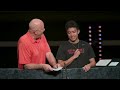
Baptism appears as a decisive, public hinge: a visible marker where belief becomes committed following. Each person’s testimony unfolds simply and honestly—stories of kids raised in faith, adults returning or stepping fully in, and those rescued from pain—showing how grace meets people in very different places. The act of baptism is presented not as a private ritual but as a proclamation to family, friends, and the wider community that life will now be lived under Christ’s lordship. There is consistent pastoral conviction that baptism carries ripple effects: it shapes households, creates spiritual legacies, and names an identity that reshapes daily choices.
Alongside the testimonies, the gathering models a church that celebrates and sustains. The congregation’s cheering is framed as both encouragement for the newly committed and worship to the God who brings new life. Practical care accompanies the celebration—prayer teams, invitations to meet ministry leaders, and an encouragement not to ignore the stirrings of faith people might feel while listening. Embedded in the stories is a robust theology of God’s presence in suffering: pain and brokenness do not disqualify someone from God’s love but often become the soil where new faith grows.
The weekend’s rhythm—stories, baptism, prayer, and community response—points toward ongoing discipleship rather than a single moment. Baptism is the opening step into a life of following, sustained by a local body that commits to walk alongside. For those hesitant or wounded, the invitation is clear: come close, lean in, and allow the church to be the family that encourages and nurtures the next steps of faith.
Key Takeaways
- 1. Baptism is a public declaration Baptism functions as a public stake driven into a life: it announces a shift from private belief to an intentional following of Christ. This act signals a willingness to be counted with Jesus, to accept the cost of discipleship, and to invite accountability from a believing community. It is less about perfection and more about a decided allegiance that shapes future choices and identity. [02:13]
- 2. Faith shapes family and legacy One person’s decision to follow Christ often translates into a spiritual influence that reaches children, spouses, and households. Faith lived out visibly becomes the primary catechesis for the next generation; it creates patterns, prayers, and practices that outlast single moments. The baptismal step carries responsibility: to steward that legacy with integrity, humility, and steady love. [05:43]
- 3. God meets people in suffering Brokenness and trauma are not barriers to God’s work but frequently the places where grace becomes most evident. Testimonies show that God does not author harm yet is present amid suffering—reorienting identity, offering dignity, and inviting hopeful re-storying. In those places, faith can grow not by denial but by honest dependence and renewed trust. [15:20]
- 4. Church family sustains and celebrates The gathered community’s response is both encouragement and worship—cheering affirms the new believer and acknowledges God’s work. Celebratory practices create a tangible memory that the baptized person can return to when faith feels small. More than applause, the church must follow with prayer, practical care, and places to belong so that the first step turns into lifelong following. [03:20]
Youtube Chapters