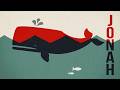
Jonah boarded a ship fleeing God’s call. Waves battered the vessel as seasoned sailors panicked, crying to their gods and tossing cargo. Meanwhile, Jonah slept below deck—oblivious to the chaos his disobedience unleashed. The storm revealed misplaced trust: sailors feared nature’s fury, while Jonah clung to apathy. [10:12]
God uses crises to expose where we anchor our souls. Jonah’s sleep symbolized spiritual numbness, prioritizing comfort over obedience. The sailors’ terror mirrored humanity’s desperation without the One who commands seas. Both reactions fell short of trusting the Storm-Maker.
When life’s waves overwhelm, where do you retreat—into numbing distractions or defiant control? What storm in your life right now demands you wake up and face God’s disruptive invitation?
“The sailors were afraid and each cried out to his own god. They threw the ship’s cargo into the sea to lighten the load. Meanwhile, Jonah had gone down to the lowest part of the vessel, stretched out, and fallen into a deep sleep.”
(Jonah 1:5, CSB)
Prayer: Ask God to reveal one area where you’ve numbed yourself to His voice.
Challenge: Write down one “storm” you’re facing and pray over it for 5 minutes.
The sailors cast lots, desperate to pinpoint the storm’s cause. The lot fell on Jonah—the reluctant prophet hiding below. Their frantic questions exposed his rebellion: “What have you done?” Jonah’s silence echoed our own avoidance when sin collides with consequences. [12:17]
God often uses outsiders to confront our compromises. Pagan sailors discerned spiritual stakes faster than Jonah, who knew God’s voice yet fled. Their urgency highlights how disobedience harms communities, not just individuals.
Who in your life speaks hard truths you’ve ignored? What relational or vocational “ship” might be rocking because of your unresolved disobedience?
“Then they said to him, ‘Tell us who is to blame for this trouble we’re in. What is your business, and where are you from? What is your country, and what people are you from?’”
(Jonah 1:8, CSB)
Prayer: Confess one way your choices have negatively impacted others.
Challenge: Text someone trustworthy: “What blind spot do you see in my life?”
Jonah finally confessed, “I worship the Lord, the God of the heavens, who made the sea and the dry land.” His words rang hollow—claiming allegiance while fleeing God’s mission. The sailors’ terror deepened: how could someone who knew the Creator resist Him so brazenly? [15:07]
Identity rooted in labels (“Hebrew”) rather than obedience breeds hypocrisy. Jonah named God’s power yet acted as if He were confined to Israel. True worshipers align their feet with their creeds.
Do your spiritual claims match your daily choices? Where has “I follow Jesus” become a title disconnected from your actions?
“He answered them, ‘I am a Hebrew. I worship the Lord, the God of the heavens, who made the sea and the dry land.’”
(Jonah 1:9, CSB)
Prayer: Thank God for His patience when your words and deeds contradict.
Challenge: Write one sentence declaring who God is, then list how you’ll live it today.
The sailors threw Jonah overboard—then offered sacrifices to Yahweh. These once-pagan men became reverent worshipers, while Jonah floated toward fish guts. Crisis transformed them from fearful idolaters to faithful servants, proving God redeems even through others’ rebellion. [22:44]
God’s grace works upstream of our failures. Jonah’s stubbornness became the sailors’ salvation. Our worst moments can still funnel His mercy to unexpected places.
Who might God reach through your current struggle? How could your confession or repentance bless someone watching?
“Then they cried out to the Lord: ‘Please, Lord, don’t let us perish because of this man’s life. Don’t charge us with innocent blood! For You, Lord, have done as You pleased.’”
(Jonah 1:14, CSB)
Prayer: Ask God to use your weaknesses to point others to Him.
Challenge: Share a past failure with someone, highlighting God’s redemption.
Jesus slept peacefully in a storm-tossed boat, then calmed the waves with a word. Unlike Jonah—whose presence caused chaos—Christ’s presence brought peace. The disciples marveled, “Who is this? Even the wind and waves obey Him!” [35:10]
Jonah’s story points to Jesus: both entered storms because of love for rebels. But where Jonah fled, Jesus embraced the storm of the cross. His resurrection anchors our trust beyond every crisis.
When anxiety surges, do you fixate on the storm or the Savior who rules it?
“He got up, rebuked the wind, and said to the sea, ‘Silence! Be still!’ The wind ceased, and there was a great calm. Then He said to them, ‘Why are you afraid? Do you still have no faith?’”
(Mark 4:39-40, CSB)
Prayer: Name one fear and say aloud: “Jesus, You are greater than this.”
Challenge: Set a 3-minute timer to meditate on Psalm 46:10.
Jonah 1 shows God hurling a storm while Jonah sleeps below deck and a boatload of sailors panic and pray to any god who might pick up. The text puts crisis on center stage as the moment that reveals what actually holds ultimate trust. The sailors scatter prayers like calls to customer service, and Jonah snoozes like nothing is wrong. When lots point at Jonah, the truth surfaces. Jonah answers first with nationality, “I am a Hebrew,” then with theology, “I worship the Lord who made sea and dry land,” hinting that identity can outrun obedience and that his Hebrewness may be steering his choices more than the Lord who made the waters currently swallowing the boat.
The storm exposes several kinds of trouble. Some storms belong to a broken world. Some, like this one, are thrown by God to get someone’s attention. Some are collateral damage from someone else’s rebellion. Here, Jonah admits blame, then proposes a skosh sketchy fix. “Throw me in.” He would rather descend than live in a world where enemies could become brothers. Yikes. The sailors, more noble than the prophet, row hard to spare his life, then finally pray to the Lord, ask not to be charged with blood, and are seized by a great fear that turns into sacrifice and vows. Their panic becomes worship. Jonah’s stubbornness becomes their conversion.
God refuses to waste even a botched prophet. The Lord appoints a great fish. Even the fish listens better than Jonah. Providence catches the runaway, not to crush him, but to carry him into mercy. The plot keeps asking the same question. What holds ultimate trust when stuff hits the fan, and when stuff feels fine. Money, hustle, people pleasing, numbing habits. Or the God who can end a storm in a breath.
The gospel thread shines when Jesus steps into view. Jonah asleep is a liability. Jesus asleep is calm authority. Jonah in the boat brings a storm. Jesus in the boat says, “Peace, be still,” and the wind just sits down. The text presses listeners to call on the Lord in rest, to pause the bank app, to seek solitude when relationships loom too large, to let conviction pull weeds without letting condemnation poison the soil. The God who appoints fish, storms, and second chances still pursues runaways and turns panic into peace.
Why why did Jonah go here? Why did Jonah go to I would rather go to the depths of the sea? I think it shows how stubborn old Joe's heart is. He does not want to go to the bad guys, tell them to turn around in case they do turn around. Jonah here would rather descend to the depths of his own death than live in a world where his enemies could become his brothers. Yikes.
[00:20:42]
(36 seconds)
#JonahStubbornHeart
But this person just asked a bunch of strangers to commit murder so that they would be okay. Can we agree that's at least a tad a skosh sketchy? I mean murder, maybe manslaughter if you get a really good lawyer, but it's not looking good. You you know what probably would have made the storm calm down? If Jonah said, okay, God, I'll go to Nineveh. No murder necessary.
[00:20:05]
(37 seconds)
#NoMurderNeeded
I love how this is worded. The Lord appointed a fish, a great fish. God decided to make this particular fish and have this particular fish born at a particular time in a particular sea and eat particular plankton that helped it grow up big and strong so that it would be big enough when God said, hey, I got a job for you. It goes and swallows Jonah. Even the fish is more faithful than Jonah.
[00:29:09]
(30 seconds)
#FaithfulFish
And the story is really interesting because it teaches us a lot about the storms of life. Sometimes we experience storms in life because we live in a sinful world. We live in a world that has the effects of sin, and because of that, we experience storms sometimes because of the effects of sin. I didn't cause it. They didn't cause it. It's part of living in a sinful world. But sometimes, like Jonah, we are the cause of our storms.
[00:13:16]
(28 seconds)
#StormsFromSin
Isn't that hilarious? This fish is better at listening to God than Jonah is. It's got like two brain cells. That's crazy. And I think ultimately it tells us that even when Jonah's trust is not being put in the God of the universe, God in his mercy is still beckoning him back. And I think that's good news for you and me that even though there are some weeds to pull still, even if we have particular idols or things that we run to for our ultimate trust, God in his mercy has appointed people and things to help bring us back.
[00:29:38]
(48 seconds)
#MercyBeckons
So they come down and they shake him. Jesus, what are you doing? We're gonna die. We're gonna die. We're gonna die. And so Jesus comes up and he stands at the hole and he says, peace be still. And the storm goes, and it totally fades away. If we have a Jonah in our boat, we should be worried because the storm's happening because he's in the hole of the ship.
[00:34:41]
(26 seconds)
#PeaceBeStillMoment
It's hard for me to read this story of Jonah without thinking about another story of Jesus, Where Jesus and the disciples are sailing and a big storm happens. And as the storm is raging and raging and raging, someone says, where's Jesus? And Jesus is asleep at the bottom of the boat. But Jesus isn't running from God. Jesus is God. While Jonah was at the bottom of the boat hiding from the God who was coming after him, Jesus was asleep at the bottom of the boat because he ain't worried about the storm.
[00:34:07]
(34 seconds)
#JesusCalmInStorm
But the sailors here say, our trust has been in the wrong things. And when this crisis has hit, we have realized that our trust needs to be in God. And I think the same is very true with us, where crisis will often help us see and realize where our ultimate trust lies. And I tell you, I've had times in my life where it has been very rude awakening to see where the crisis hits, where my trust ultimately was.
[00:25:00]
(32 seconds)
#CrisisExposesTrusts
I'm an AI bot trained specifically on the sermon from May 19, 2026. Do you have any questions about it?
Add this chatbot onto your site with the embed code below
<iframe frameborder="0" src="https://pastors.ai/sermonWidget/sermon/trust-jonah-pt2" width="100%" height="100%" style="height:100vh;"></iframe>Copy