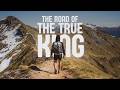
Jesus, the King of Kings, did not arrive with the force and spectacle the world expects. He deliberately chose a path of humility, riding on a borrowed colt down a rugged, unremarkable road. This was not a display of weakness, but a profound demonstration of strength under control. His authority was not proven by taking control, but by fully submitting to the Father. True power is found in purposeful humility and surrender to God’s will.
[13:57]
And they brought it to Jesus, and throwing their cloaks on the colt, they set Jesus on it. And as he rode along, they spread their cloaks on the road. As he was drawing near—already on the way down the Mount of Olives—the whole multitude of his disciples began to rejoice and praise God with a loud voice for all the mighty works that they had seen, saying, “Blessed is the King who comes in the name of the Lord! Peace in heaven and glory in the highest!” (Luke 19:35-38 ESV)
Reflection: Consider the path Jesus chose for himself. What is one area of your life where you are tempted to seek recognition or force, rather than walking in Christ-like humility and surrender to God's plan?
The most potent authority is not performed for an audience but cultivated in secret. It is born in the quiet moments of submission before God, long before any public display of faith. This is where the heart is postured and true allegiance is settled. Strength is not measured by the control we exert over others, but by who we bow to when no one is watching.
[10:31]
But when you pray, go into your room and shut the door and pray to your Father who is in secret. And your Father who sees in secret will reward you. (Matthew 6:6 ESV)
Reflection: Who are you when you are completely alone and unseen? What does your private time with God reveal about who or what truly holds authority over your heart and decisions?
It is entirely possible to celebrate Jesus loudly in a crowd yet resist His lordship quietly in the heart. Praise can sometimes become a substitute for the harder work of surrender. A faith that is vibrant in public but has not first bowed the knee in private ultimately denies the true nature of Christ. He seeks our full allegiance, not just our enthusiastic applause.
[17:54]
“This people honors me with their lips, but their heart is far from me; in vain do they worship me, teaching as doctrines the commandments of men.” (Matthew 15:8-9 ESV)
Reflection: Where do you see a disconnect between your public expressions of faith and the private surrender of your life? What one step can you take this week to better align your hidden life with your public worship?
Jesus’ tears over Jerusalem were not born from personal rejection, but from a deep grief that the people had entirely missed the point of who He was. They desired a king who would meet their earthly expectations of power and protection, while He offered them the deeper gifts of peace and surrender. The great tragedy was that they celebrated Him without ever truly knowing Him.
[20:15]
And when he drew near and saw the city, he wept over it, saying, “Would that you, even you, had known on this day the things that make for peace! But now they are hidden from your eyes.” (Luke 19:41-42 ESV)
Reflection: Have you ever found yourself disappointed with God because He did not meet a specific expectation? How might His plans for your peace and surrender be different, and perhaps better, than the specific outcomes you have been seeking?
The authority of Christ does not stop at the church doors; it is meant to travel all the way into the quiet, ordinary spaces of our lives. Our homes, workplaces, and private relationships are the primary arenas where our surrendered faith is lived out. This is where our faith becomes practical and powerful, shaping not only our own lives but also forming a legacy for those who are watching.
[23:19]
You shall love the Lord your God with all your heart and with all your soul and with all your might. And these words that I command you today shall be on your heart. You shall teach them diligently to your children, and shall talk of them when you sit in your house, and when you walk by the way, and when you lie down, and when you rise. (Deuteronomy 6:5-7 ESV)
Reflection: If someone were to observe the Jesus you follow based solely on your actions and attitudes within your home, what kind of King would they see? What is one practical way you can demonstrate surrendered leadership or love in your household this week?
Jesus rides toward Jerusalem by choice, not accident, and the road he takes reveals the nature of his kingship: humility, submission, and costly love. The procession on a borrowed colt fulfills prophecy and flips expectations of royal power; the king rejects spectacle and force, demonstrating strength under control. Crowds respond with loud praise, tossing cloaks and shouting Hosanna, yet public acclaim proves fragile when it does not issue from surrendered hearts. The scene reaches a quieter, sharper moment when the king looks over the city and weeps — lamenting a people who longed for protection and power but missed the offer of peace and true allegiance.
True authority shows first in private practices of surrender. The image of a man kneeling with an open Bible before stepping into public duty models leadership shaped by dependence on God rather than by displays of control. That posture of bowed heart, not performance, forms stable homes and faithful generations. Personal faith ripples outward: what a family sees behind closed doors will shape how children, spouses, and neighbors recognize the king.
Surrender requires more than verbal praise; it requires a reordering of loyalty so that Christ rules in bedrooms, workplaces, and kitchens as well as in sanctuaries. Celebration without surrender leaves a hollow faith that applauds when convenient but refuses allegiance when demands come. The invitation remains: to lay down tightly held things, to let allegiance shape everyday decisions, and to receive the filling the king promises when lives bow before him. Altars stand open to honest prayer: a simple cry, Lord, I need you, becomes the posture that steadies authority, forms legacy, and leads into the fullness this king offers.
The tragedy of Jerusalem wasn't that they hated Jesus. It was that they celebrated him without truly surrendering to him. We know the rest of the story. We know that they celebrated him, but we also know they're the ones that crucified him. But the tragedy of Jerusalem was this, is that they celebrated him, but they never surrendered to him. What kind of king do your home see? What kind of king do your children see? What kind of king does the world see in your reactions or your words? What kind of king do they see?
[00:20:15]
(63 seconds)

Who truly rules behind closed doors? I want you to ask yourself this question. This week, this question brought me to my knees. I can be really honest with you. Ask yourself if someone following Jesus following the Jesus they see in your home, would they recognize the king of kings? Would they recognize the king of Luke 19? If someone follow the Jesus they see behind your closed doors, would they recognize the king of Luke 19?
[00:21:18]
(50 seconds)
The crowd celebrated. They shouted. They praised. And praise itself is not a problem. Praise is actually beautiful. The problem comes when praise replaces surrender. The problem comes when praise replaces surrender. Praise is easy when Jesus fits our expectations. When everything is going well, Praise it is easy when the king looks like we want him to look, but the gospel presses us with this hard truth. It is possible to celebrate Jesus publicly and to resist him privately.
[00:16:46]
(59 seconds)
The road of the true king always leads through surrender, but it never leaves us empty. Because the king who asked us to bow is the same king who gave his life for me, for us, for you. You see, we're never left empty. He asked us to bow, and he will fill that spot. The question is simple. Who we follow? Will we follow this king on his road, or we'll cheer him on when the road feels safe?
[00:24:10]
(47 seconds)
But what I learned early in life was this. The strongest authority I've ever seen was the kind that bowed his knee, his head, his heart first. I need you to hear that from me. Guys, the strongest authority I've ever seen in my life was that of a man that bowed his knee, his heart before Christ, before he did anything else. Nothing else mattered as much as bowing before Christ. This image shaped how I understood leadership, power, and faith because a real because real authority is not proven by how much control you take, but by who you submit yourself to when no one is watching.
[00:09:27]
(60 seconds)
This is called humility on purpose, and this is not weakness. I need you to hear that humility on purpose is not weakness. This is strength under control. This is authority fully submitting to God. You need to understand that while Jesus was walking on this road, while he was on this colt, he was fully submitting to God the father. This is strength under control. Jesus is king, but not the king they were expecting. Jesus writes forward, the crowd responds like crowds do. They tend to kind of someone's yelling, we yell. If we look, we all look. Right?
[00:15:54]
(53 seconds)
Listen, I'm not saying everyone in your life's gonna become a pastor, but what I'm gonna say is when you bow and surrender, when you sit down and you surrender your lives, dads, I need you to listen to me. Your kids may not always see it with their eyes, but they hear it. They see their dad weeping as he reads scripture. Moms, your kids see you weeping. Who are you surrendered to? The king invites us to surrender our lives to him, to surrender all of our self to him. And sometimes the most powerful and the most honest prayer we can prayer pray is very simply, Lord, I need you.
[00:33:14]
(49 seconds)
I need you to hear that. True power, true authority comes from who you submit yourself to when absolutely no one is watching. Last week, we were reminded that real strength is strength under control. The kind of strength that kneels with a towel instead of demanding a throne. What imagery that has. Real strength under control. Not someone on a throne, not someone wearing a crown, but wearing a towel. As Jesus rides towards Jerusalem in Luke 19, we see that same kind of strength again.
[00:10:26]
(52 seconds)
I'm an AI bot trained specifically on the sermon from Mar 22, 2026. Do you have any questions about it?
Add this chatbot onto your site with the embed code below
<iframe frameborder="0" src="https://pastors.ai/sermonWidget/sermon/true-king-road1" width="100%" height="100%" style="height:100vh;"></iframe>Copy