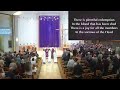
Jesus reveals his glory on a high mountain, standing luminous between Moses and Elijah as law and prophecy converge around his identity and imminent exodus from the world. Peter, James, and John witness a heavenly preview that confounds immediate understanding but later unfolds after the resurrection and the outpouring of the Spirit. The transfiguration frames Jesus as the full revelation of God—fulfilling law and prophets—and invites a listening posture toward the beloved Son.
Mount Tabor appears as a place of quiet holiness: a steep approach, a simple summit, a three-part church with a mosaic of the transfiguration, and a stillness that opens eyes to glory. The mountain scene links pilgrimage and contemplation, showing how space and silence prepare hearts for encountering divine light.
The narrative makes a direct call to transformation. The Greek notion of metamorphosis names a change in form that begins at baptism and deepens through participation in the Eucharist. Water mixed with wine at the altar testifies to a sharing in divine life; each reception of Christ’s body and blood participates in a gradual remaking toward Christlikeness. Saints and martyrs model that ongoing conversion, while ultimate completion awaits the fullness of heaven.
The liturgy gathers these truths into communal act: the Apostles’ Creed affirms baptismal faith; intercessions pray for strength on the Lenten journey; the Eucharistic prayers recount institution narratives that bind passion to glory; and the Our Father and Agnus Dei situate reconciliation and peace at the heart of Christian hope. Practical parish life appears alongside sacramental worship—calls to feed the poor, participate in reconciliation services, support diocesan ministries, and observe pastoral blessings—demonstrating how worship and service interweave.
The closing blessing and the prayer to Saint Michael send worshipers back into the world with grace, protection, and a renewed aim: to pursue transfiguration in daily choices, to listen to the beloved Son, and to press forward toward the Paschal glory revealed on the holy mountain.
Key Takeaways
- 1. Transfiguration reveals Christ's identity The mountain scene places Jesus at the center of God’s self-disclosure, where law and prophecy meet in his person and point toward a paschal destiny. This revelation commands attention: divine voice directs listening, not spectacle, making obedience the true response. Contemplation of that voice reshapes how suffering, death, and resurrection read in daily life. [20:21]
- 2. Believers called to ongoing transfiguration Baptism begins a metamorphosis that the Eucharist nourishes; holiness grows through concrete choices and repeated encounters with Christ. Transformation remains gradual and often hidden, forming character more than producing dramatic signs. Long-term fidelity and sacramental life construct the path toward likeness with Christ. [23:28]
- 3. Sacred places cultivate attentiveness Pilgrim sites like Mount Tabor use silence, beauty, and solitude to tune the heart to revelation, showing how environment affects spiritual receptivity. Such spaces do not replace interior work but accelerate a readiness to see heavenly truth in ordinary life. Regular retreats into silence train disciples to notice God’s light amid daily noise. [18:03]
- 4. Eucharist enacts Paschal mystery now The bread and chalice make present the passion that leads to resurrection, inviting participants into the reconciling work of Christ. Communion forms a people who live out unity, forgiveness, and service, linking worship with concrete mercy. Frequent reception transforms identity by grafting listeners into the story of Christ’s exodus and return. [36:00]
Youtube Chapters
- [00:00] - Welcome
- [06:49] - Call to Lenten Listening
- [08:58] - Reading: Abraham, Father in Faith
- [18:03] - Mount Tabor: A Pilgrim’s Place
- [20:21] - The Transfiguration Event
- [23:28] - Call to Metamorphosis
- [24:08] - Baptism and Eucharist Explained
- [34:14] - Eucharistic Prayer & Institution
- [55:39] - Parish Announcements & Drives
- [58:01] - Blessing and Prayer to St. Michael