
The Power and Responsibility of Our Words
Sep 29, 2024
Devotional
Sermon Summary
Bible Study Guide
Sermon Clips
1. "You know, our capacity to communicate is one of the biggest blessings God has given us. Our speech. Our words. They can exhibit great power. They can build up. They can encourage. They can motivate a person, especially when we speak life. But on the same note, that same tongue, that same mouth, can also spill poison and even speak death. When words of pride come into play, to tear down, perhaps to hurt, and even cause scars, whenever we somehow break a person's heart or attack a person's reputation or speak, in terms of pride." [01:50] (39 seconds) (Download raw clip | Download cropped clip)
2. "See, words deeply matter to God. In fact, what He has left us with is the Bible, God's Word. Because God knows that words can leave an imprint. Words can speak. Words can change people. Words can transform lives. And in fact, the Bible has so much to say about good speech, and also gives us a lot of caution as to the dangers of the misuse or abuse of our words." [03:15] (28 seconds) (Download raw clip | Download cropped clip)
3. "Our words are often a measure of maturity in character. Our words are often a measure of maturity in character. There was once this fable of a donkey. He actually found a lion's skin along the way, and he tried it on. And while doing that, he realized, I can frighten many animals doing this. And so he did so. And as he was doing that, soon a fox came along, and the donkey tried to scare him. But the fox, hearing the donkey's voice, said, you know what, if you really want to terrify me, you have to disguise even your voice, even the way you speak." [06:51] (38 seconds) (Download raw clip | Download cropped clip)
4. "You know, a tangible, a strong and tangible measure and reflection of maturity is when we can be tactful, when we can be wise to choose what we would say. The words that we will be choosing, we will be using to speak. Being able to speak the truth in love. Being able to truthfully balance what we need to say and what does not need to be said. What is appropriate for a certain time, whether you do it publicly or even privately." [08:08] (25 seconds) (Download raw clip | Download cropped clip)
5. "Our words have great power to guide and direct. See, our words and speech are powerful because they impact the listener. They are very significant because they affect the lives of other people. Our words are not always just an information. They are impactful. Our words can speak ideas. It can provoke thought. It can stir a conversation. It can prompt an emotion. It can trigger something. It can create memory. It can touch a person's heart." [12:41] (34 seconds) (Download raw clip | Download cropped clip)
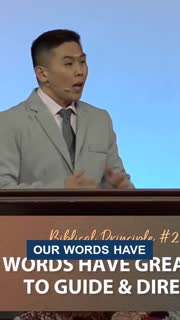
6. "Our words have great power to cause harm and damage. You know, the propensity of us to blurt words that can be hurtful or destructive are oftentimes during those instances wherein there is conflict, wherein there is disagreement, wherein perhaps we are stressed, perhaps we are disappointed or upset, or we have been easily triggered. A situation somehow calls us, triggers us to blurt such destructive words." [18:37] (31 seconds) (Download raw clip | Download cropped clip)
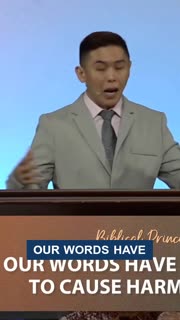
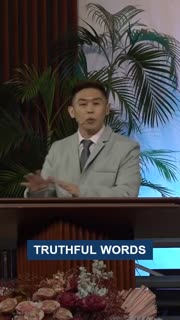
7. "Truthful words are not always synonymous with hurtful words. It is like me having a child, and I realize she is having a hard time with math or like Chinese. I can say, why are you so dumb? That's so easy, you can do that. Or I can say, I know that you are having a hard time. I think you need help. Saying the same thing, correct? But yet, because they were said differently, carefully, will have a different effect as well to your hearers." [22:16] (33 seconds) (Download raw clip | Download cropped clip)
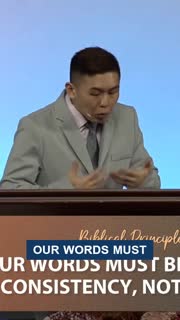
8. "Our words must be marked by consistency, not duplicity. We want to recognize that when God gave us a tongue, it is to communicate what is beneficial. It is for the purpose of speaking what will bless another person. It was never meant to be an instrument of injury. It was never meant to be an instrument of curse, especially to God's image-bearers." [27:04] (25 seconds) (Download raw clip | Download cropped clip)
9. "As wounded, broken, vulnerable, sinful people, we acknowledge that, yes, there will be times that we may stumble in our words. It is inevitable. As someone has said, hurt people hurt people. Many times, more often than not, we are not even immediately aware that we have caused hurt. There are even times that it wasn't even intentional that we will do so. But you know, when those times happen, you know what can make the difference? It is when you and I can have the humility to acknowledge and say, I have inflicted something and I am sorry." [29:48] (37 seconds) (Download raw clip | Download cropped clip)
10. "I hope that is something that we can cultivate in us. That somehow in our home, we are proactive to deposit the good stuff in the people that we love the most. That somehow, they don't just experience all the withdrawal, but they experience more deposits and they realize the withdrawal, it wasn't intentional. There's really something that they didn't really want to do. Problem is oftentimes, we withdraw so much, but we fail to deposit, isn't it?" [33:22] (32 seconds) (Download raw clip | Download cropped clip)
Ask a question about this sermon
2. "See, words deeply matter to God. In fact, what He has left us with is the Bible, God's Word. Because God knows that words can leave an imprint. Words can speak. Words can change people. Words can transform lives. And in fact, the Bible has so much to say about good speech, and also gives us a lot of caution as to the dangers of the misuse or abuse of our words." [03:15] (28 seconds) (Download raw clip | Download cropped clip)
3. "Our words are often a measure of maturity in character. Our words are often a measure of maturity in character. There was once this fable of a donkey. He actually found a lion's skin along the way, and he tried it on. And while doing that, he realized, I can frighten many animals doing this. And so he did so. And as he was doing that, soon a fox came along, and the donkey tried to scare him. But the fox, hearing the donkey's voice, said, you know what, if you really want to terrify me, you have to disguise even your voice, even the way you speak." [06:51] (38 seconds) (Download raw clip | Download cropped clip)
4. "You know, a tangible, a strong and tangible measure and reflection of maturity is when we can be tactful, when we can be wise to choose what we would say. The words that we will be choosing, we will be using to speak. Being able to speak the truth in love. Being able to truthfully balance what we need to say and what does not need to be said. What is appropriate for a certain time, whether you do it publicly or even privately." [08:08] (25 seconds) (Download raw clip | Download cropped clip)
5. "Our words have great power to guide and direct. See, our words and speech are powerful because they impact the listener. They are very significant because they affect the lives of other people. Our words are not always just an information. They are impactful. Our words can speak ideas. It can provoke thought. It can stir a conversation. It can prompt an emotion. It can trigger something. It can create memory. It can touch a person's heart." [12:41] (34 seconds) (Download raw clip | Download cropped clip)
6. "Our words have great power to cause harm and damage. You know, the propensity of us to blurt words that can be hurtful or destructive are oftentimes during those instances wherein there is conflict, wherein there is disagreement, wherein perhaps we are stressed, perhaps we are disappointed or upset, or we have been easily triggered. A situation somehow calls us, triggers us to blurt such destructive words." [18:37] (31 seconds) (Download raw clip | Download cropped clip)
7. "Truthful words are not always synonymous with hurtful words. It is like me having a child, and I realize she is having a hard time with math or like Chinese. I can say, why are you so dumb? That's so easy, you can do that. Or I can say, I know that you are having a hard time. I think you need help. Saying the same thing, correct? But yet, because they were said differently, carefully, will have a different effect as well to your hearers." [22:16] (33 seconds) (Download raw clip | Download cropped clip)
8. "Our words must be marked by consistency, not duplicity. We want to recognize that when God gave us a tongue, it is to communicate what is beneficial. It is for the purpose of speaking what will bless another person. It was never meant to be an instrument of injury. It was never meant to be an instrument of curse, especially to God's image-bearers." [27:04] (25 seconds) (Download raw clip | Download cropped clip)
9. "As wounded, broken, vulnerable, sinful people, we acknowledge that, yes, there will be times that we may stumble in our words. It is inevitable. As someone has said, hurt people hurt people. Many times, more often than not, we are not even immediately aware that we have caused hurt. There are even times that it wasn't even intentional that we will do so. But you know, when those times happen, you know what can make the difference? It is when you and I can have the humility to acknowledge and say, I have inflicted something and I am sorry." [29:48] (37 seconds) (Download raw clip | Download cropped clip)
10. "I hope that is something that we can cultivate in us. That somehow in our home, we are proactive to deposit the good stuff in the people that we love the most. That somehow, they don't just experience all the withdrawal, but they experience more deposits and they realize the withdrawal, it wasn't intentional. There's really something that they didn't really want to do. Problem is oftentimes, we withdraw so much, but we fail to deposit, isn't it?" [33:22] (32 seconds) (Download raw clip | Download cropped clip)
Grace Christian Church PH
This sermon · AI assistant


-
I'm an AI bot trained specifically on the sermon from Sep 30, 2024. Do you have any questions about it?