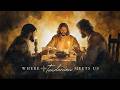
Christ meets people where hope has thinned, walking beside grief, confusion, and quiet resignation. The Emmaus narrative unfolds as a portrait of disappointed faith: two travelers confess, “we had hoped,” and a risen presence joins their walk without demanding immediate belief. Scripture receives careful exposition, showing that the Messiah’s path necessarily included suffering before glory. The risen Christ opens the scriptures for them, not by overpowering with proof, but by guiding their understanding through patient explanation and shared presence.
Tenderness shapes every encounter with the risen one. In multiple resurrection scenes, recognition arrives through intimate acts—calling a name, offering peace, breaking bread—rather than dramatic spectacle. The road to Emmaus highlights that presence, listening, and staying produce transformation long before cognitive certainty returns. When the travelers invite the stranger to stay, the simple act of blessing and breaking bread precipitates recognition; their hearts had already been warmed by the conversation and Scripture’s illumination.
Theology here centers on resurrection as relational reality: resurrection undoes isolation by reestablishing hospitality, conversation, and table fellowship. Hope does not reappear as a theatrical reversal but as a gradual reorientation: Christ’s nearness requalifies past disappointment into a journey toward renewed trust. The narrative exhorts practical faithfulness—offering space for doubt, lingering with others in sorrow, and practicing sacramental hospitality—so that recognition and hope can emerge organically.
Worship life flows from this theological vision into confession, communal prayer, Eucharist, and blessing. The liturgy repeats the pattern: confession of brokenness, assurance of forgiveness rooted in Christ’s death and resurrection, and the table where identity and mission renew. Prayers link resurrection to everyday needs—fields, leaders, first responders, the sick—so that resurrection power becomes a mandate for accompaniment and service. The concluding blessing sends people forth to embody presence, speaking hope into fractured lives by the same tender means that revealed the risen one on the road to Emmaus.
Key Takeaways
- 1. Resurrection meets disappointed, fragile faith The risen Christ approaches where hope has thinned and grief has settled, refusing to require restored certainty before drawing near. Presence replaces accusation; scripture and conversation reopen vision slowly. This invites trust that God’s redeeming work often begins in shared sorrow, not dramatic proof. [33:17]
- 2. Presence matters more than proof Tenderness, listening, and staying with others shape resurrection encounters more than logical arguments or signs. Being present validates suffering and creates the conditions for insight and healing to unfold. Ministry thus often looks like quiet companionship that outlasts easy answers. [35:21]
- 3. Recognition comes in the breaking The act of blessing and breaking bread becomes the sacramental hinge where understanding catches up with experience. Communal table practices ground theological truth in bodily, relational reality, so that memory, speech, and sight converge. Eucharist names and sustains the risen presence in everyday life. [31:38]
- 4. Hope shifts through patient companionship Hope rarely returns in a single moment; it migrates through consistent accompaniment and small acts of hospitality. Over time, companionship rewrites “we had hoped” into living hope that walks alongside, calls by name, and sits at the table. This steady pattern forms resilient faith communities. [38:31]
Youtube Chapters