The story of Israel is a recurring cycle of God's miraculous provision and humanity's quick forgetfulness. Despite witnessing incredible acts of deliverance and care, God's people consistently turned to despair, complaint, and rebellion. This pattern is not confined to ancient history but reflects a deep truth about the human condition. We are prone to wander and seek our own way, even when we have experienced God's goodness. Yet, throughout this cycle, God remains steadfast, always faithful to His promises and engaged with His people.
“When the people saw that Moses was so long in coming down from the mountain, they gathered around Aaron and said, ‘Come, make us gods who will go before us. As for this fellow Moses who brought us up out of Egypt, we don’t know what has happened to him.’” (Exodus 32:1, NIV)
Reflection: Where in your own life can you identify a pattern of forgetting God's past faithfulness when facing a new challenge or season of waiting? What is one practical way you can remind yourself of His proven character this week?
God's design was always to be the King of His people, leading them directly and providing for their every need. However, the desire to be like everyone else and to have visible, earthly leadership proved too strong. In asking for a king, Israel was not merely rejecting a prophet; they were rejecting God Himself as their ruler. This choice was rooted in a desire for conformity and control, preferring the familiar systems of the world over the unique and holy calling of God.
“But the people refused to listen to Samuel. ‘No!’ they said. ‘We want a king over us. Then we will be like all the other nations, with a king to lead us and to go out before us and fight our battles.’” (1 Samuel 8:19-20, NIV)
Reflection: In what areas of your life are you tempted to prefer the world's ways of operating over God's unique design for His people? How might choosing to be "set apart" look different from simply "fitting in"?
The long narrative of the Old Testament, with its relentless stories of human failure, serves a profound purpose. It demonstrates beyond any doubt that we cannot save ourselves. No earthly king, no set of rules, and no amount of human effort can achieve the righteousness God requires. This history holds up a mirror, showing us that we, too, are prone to rebellion, forgetfulness, and wanting to do what we see fit. It reveals our deep and universal need for a rescuer.
“We all, like sheep, have gone astray, each of us has turned to our own way; and the Lord has laid on him the iniquity of us all.” (Isaiah 53:6, NIV)
Reflection: Where have you been trying to "do it yourself" spiritually, relying on your own strength or goodness rather than acknowledging your need for God's rescue?
In the midst of flawed human leadership, God revealed His ultimate plan: a perfect, eternal King from the line of David. This King would not be like the others; His kingdom would be established forever. This promise finds its fulfillment in Jesus, the Messiah. He is the gracious, loving, and good King who walked among us, taught us, and ultimately gave His life to ransom us. He is the safe and trustworthy ruler we have always needed.
“Your house and your kingdom will endure forever before me; your throne will be established forever.” (2 Samuel 7:16, NIV)
Reflection: What qualities of King Jesus—His love, humility, or sacrifice—most draw you to trust and submit to His authority in your life?
To live in God's kingdom is to willingly submit to the loving authority of King Jesus. This submission is not about losing freedom but about finding true freedom within the good and life-giving boundaries of His ways. It means aligning our wallets, schedules, relationships, and desires with His rule. This is a daily, practical commitment to move beyond treating Jesus as a consultant we call for help, and instead honoring Him as the King we obey out of love, trust, and reverence.
“Therefore, I urge you, brothers and sisters, in view of God’s mercy, to offer your bodies as a living sacrifice, holy and pleasing to God—this is your true and proper worship.” (Romans 12:1, NIV)
Reflection: Considering the idea of Jesus as King rather than consultant, what is one specific area of your daily life where you feel invited to move from seeking His advice to embracing His command?
The Big Picture reading plan frames Scripture from creation to the second coming, showing God’s heart for humanity, his rescue plan, and the life offered within his kingdom. A childhood recollection recalls a year spent slowly studying the Pentateuch, noticing both astonishing divine acts—Red Sea, pillar of fire, daily manna—and rapid human forgetfulness that followed each miracle. The early national story repeats that pattern: God offers covenant, provision, and protection while Israel repeatedly rebels, forgets, and demands to be like surrounding nations. Judges portrays social fragmentation and moral chaos; Samuel records the people rejecting God’s kingship in favor of an earthly king, a choice that brought predictable failure.
The monarchy that follows begins in hope but falters through Saul’s disobedience, David’s moral collapse, and Solomon’s compromises; overall, the kings show human weakness and confirm that flawed human rulers cannot secure a faithful people. Amid those failures, a decisive promise in 2 Samuel 7 extends David’s line forever and reorients hope toward a different kind of king. That promise, interpreted as Messianic, points to a Son of David whose kingdom endures beyond human frailty.
The covenantal trajectory culminates in the new covenant enacted by Christ, who embodies the perfect, loving, and sovereign kingship God intended. Kingdom living requires submission to that authority; submission does not remove freedom but restores it by freeing people from sin’s bondage and creating space for flourishing. A practical illustration from married life shows how structure and surrendered authority can produce relational freedom rather than restriction.
Grace secures forgiveness without excusing indifference; true faith issues in transformed allegiance and reverent obedience. Treating Jesus merely as a consultant—calling on him when convenient—repeats Israel’s error. The Sermon on the Mount and the whole ethic of Jesus describe what kingdom life looks like: a steady, inward transformation that produces holiness, love, and tangible peace. The king who reigns is described as gentle, humble, gracious, and worthy of full trust; his rule aims at human flourishing rather than domination. The biblical story, from covenant to Christ, trains the heart to recognize both human dependence on God and the freedom that comes from living under the rule of the true King.
This plan is a nice quick summary of the overall story of the Bible — from creation to the second coming, showing God’s heart and his rescue plan.
When we read verse-by-verse, especially through Leviticus and poetry, we can lose sight of the whole story and forget the redemptive lens of Jesus.
We too are the Israelites: whiny, impatient, immature, forgetful, and self-centered to God.

God let them try. He lets us try, because we learn a lot through failure.
The stories of the Old Testament show us that we cannot save ourselves; we cannot do it on our own. We need God.
King Jesus, the perfect king, came to walk among us, to know us, to love us, and ultimately to die for us and save us.
When we submit our lives to the rule of Jesus, the structure and guidelines he has for us, we actually realize how freeing it is.
The more I release control and submit to Jesus, the healthier and more at peace I have become.
Submitting to King Jesus should have a big impact; living his way is slow, steady work transforming our hearts to love like he loves.
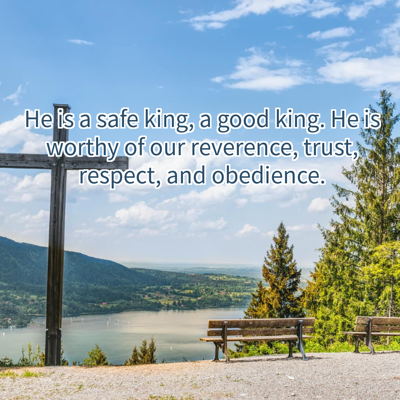
He is a safe king, a good king. He is worthy of our reverence, trust, respect, and obedience.
Hi, I'm an AI assistant for the pastor that gave this sermon. What would you like to make from it?
Add this chatbot onto your site with the embed code below
<iframe frameborder="0" src="https://pastors.ai/sermonWidget/sermon/submit-king-jesus-freedom" width="100%" height="100%" style="height:100vh;"></iframe>Copy