Many storms begin in the quiet places where things are left undefined. When priorities, relationships, or boundaries sit unexamined, confusion drifts in and fills the gaps. This ambiguity slowly reshapes decisions and habits until a small neglected corner of life becomes the source of a much larger crisis. Naming those spaces and inviting God’s clarity is not a one-time fix but a practice of bringing God’s order into everyday routines and relationships.
You are invited to ask the Spirit where things feel fuzzy or unmade in your life—where you keep answering “I don’t know” or “someday.” Bring one specific area before God this week (a relationship, a recurring decision, or a habit) and ask for clear next steps you can take to restore order. Small acts of definition—saying a boundary, writing a short plan, or having an honest conversation—can prevent the chaos that later demands a higher price.
Proverbs 24:3-4 (ESV)
By wisdom a house is built, and by understanding it is established; by knowledge the rooms are filled with all precious and pleasant riches.
Reflection: What is one vague or “someday” area in your life you can name today? Write it down and list two concrete next steps you can take this week to bring clarity.
Chaos exacts a cost long before a full storm arrives. Repeatedly tolerating disorder—avoiding difficult conversations, ignoring small financial leaks, or letting priorities drift—accumulates damage. The casualties are not always obvious at first: diminished trust, frayed patience, drained energy, and subtle loss of moral clarity. Over time, what began as minor neglect becomes the breeding ground for bigger failures.
Facing patterns honestly changes how storms play out. When awareness replaces denial, God can help limit the damage and retrain responses. Rather than waiting until everything breaks, examine the predictable places where disorder repeats itself (how you respond under stress, your household rhythms, or the health of a key relationship) and invite God to help you interrupt those patterns with deliberate, faithful choices.
Hosea 4:6-7 (ESV)
My people are destroyed for lack of knowledge; because you have rejected knowledge, I reject you from being a priest to me. And since you have forgotten the law of your God, I also will forget your children. The more they increased, the more they sinned against me; I will change their glory into shame.
Reflection: Identify one recurring pattern that causes harm (a relational response, money habit, or avoidance). What is one immediate practice you can start this week to interrupt that pattern?
The gospel does not promise a life without storms; it promises a God who meets us in them. Scripture shows sailors crying out when waves rise and being still when God speaks. Presence changes the storm’s meaning: the same wind that threatens can also become the occasion to experience God’s nearness. Peace in crisis is rooted less in circumstances changing and more in the certainty that God is with us and has work to do in and through the trial.
When the sea rages, the invitation is to cling to God’s character—His nearness, faithfulness, and power—rather than to an expectation that trouble will disappear. Practically, this looks like turning first to prayer, Scripture, and trusted community when panic comes, naming God’s promises aloud, and letting those truths shape how one responds rather than reacting out of fear.
Psalm 107:23-30 (ESV)
Some went down to the sea in ships, doing business on the great waters; they saw the deeds of the LORD, his wondrous works in the deep. For he commanded and raised the stormy wind, which lifted up the waves of the sea. They mounted up to heaven; they went down to the depths; their courage melted away in their calamity; they reeled and staggered like drunken men and were at their wits' end. Then they cried to the LORD in their trouble, and he delivered them from their distress. He made the storm be still, and the waves of the sea were hushed. Then they were glad that the waters were quiet, and he brought them to their desired haven.
Reflection: The next time you feel overwhelmed, what is one short phrase of Scripture or truth about God you can say aloud to re-center your heart? Memorize it and use it this week.
After a storm breaks, clarity often comes in surprising ways. Looking back, the pathways that once seemed random begin to show a pattern of God’s care. Even if wounds remain, they testify to being carried through rather than abandoned. This retrospective clarity builds trust: the memory of God’s faithfulness in past trials equips one to face current uncertainties with steadier hope.
Practically, reflecting on God’s past provision is an exercise of spiritual memory. Take time to remember specific moments of help, unexpected provision, or restored relationships. Naming those instances aloud or journaling them trains the heart to see God’s thread through loss and pain, so that future storms are met with a faith shaped by remembered grace.
Habakkuk 3:17-19 (ESV)
Though the fig tree should not blossom, nor fruit be on the vines, the produce of the olive fail and the fields yield no food, the flock be cut off from the fold and there be no herd in the stalls, yet I will rejoice in the LORD; I will take joy in the God of my salvation. God, the LORD, is my strength; he makes my feet like the deer's; he makes me tread on my high places. To the choirmaster: with stringed instruments.
Reflection: List three specific ways God has carried you through past difficulties. How do those memories change the way you view a current challenge?
The Bible does not always answer why storms happen, but it points to a future where they end. Scripture promises a renewed creation where brokenness, fear, and sorrow are healed. Holding that hope shapes present endurance: trusting not in explanations but in the goodness of the One who is making all things new gives purpose to suffering and steady courage to continue in faithfulness today.
Hope is not passive waiting but expectant living. Let the promise of restoration shape daily choices—how one loves neighbors, cares for creation, and invests in what lasts. Expectation changes how time is used now; it reframes losses as temporary and aligns present effort with the coming kingdom.
2 Peter 3:13-14 (ESV)
But according to his promise we are waiting for new heavens and a new earth in which righteousness dwells. Therefore, beloved, since you are waiting for these, be diligent to be found by him without spot or blemish, and at peace.
Reflection: In light of the coming new creation, what is one tangible way you can invest your time or resources this month to reflect God’s renewing work (serving someone, stewardship, reconciliation)? Name the action and when you will do it.
of the Sermon**
This morning, we dove into Acts 27, exploring Paul’s literal storm at sea as both a historical event and a powerful analogy for the storms we all face in life. We looked at the causes of storms—ambiguity, sin, and the brokenness of creation—and how chaos and disorder often precede the storms that disrupt our lives. We saw that storms always carry casualties, whether it’s loss of peace, relationships, or clarity, but also that God’s presence in the storm brings calm and clarity. Even when everything around us breaks, God’s promises remain unbroken. Ultimately, the story reminds us that while we may not always understand why storms come, we can trust the character of God, who is present with us, carries us through, and promises a day when all storms will cease.
**K
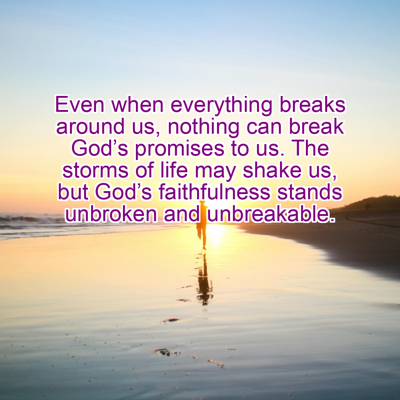
Even when everything breaks around us, nothing can break God’s promises to us. The storms of life may shake us, but God’s faithfulness stands unbroken and unbreakable.
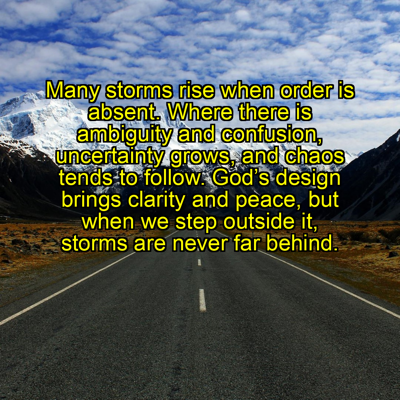
Many storms rise when order is absent. Where there is ambiguity and confusion, uncertainty grows, and chaos tends to follow. God’s design brings clarity and peace, but when we step outside it, storms are never far behind.
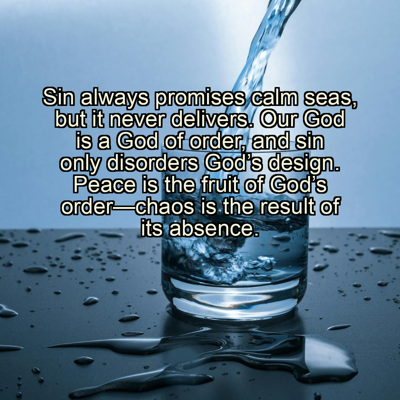
Sin always promises calm seas, but it never delivers. Our God is a God of order, and sin only disorders God’s design. Peace is the fruit of God’s order—chaos is the result of its absence.
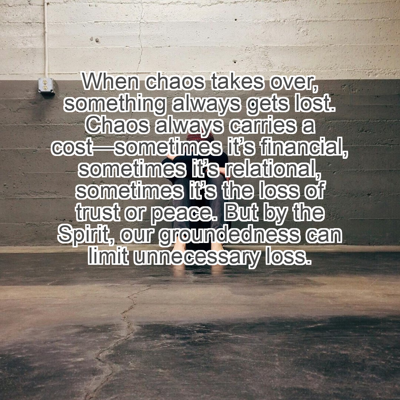
When chaos takes over, something always gets lost. Chaos always carries a cost—sometimes it’s financial, sometimes it’s relational, sometimes it’s the loss of trust or peace. But by the Spirit, our groundedness can limit unnecessary loss.
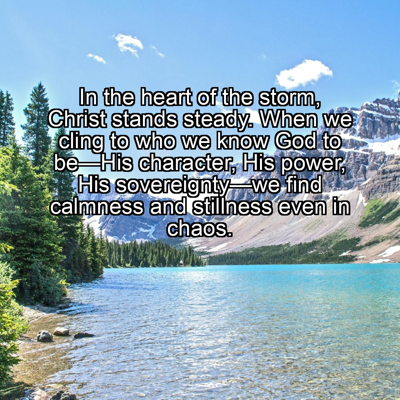
In the heart of the storm, Christ stands steady. When we cling to who we know God to be—His character, His power, His sovereignty—we find calmness and stillness even in chaos.
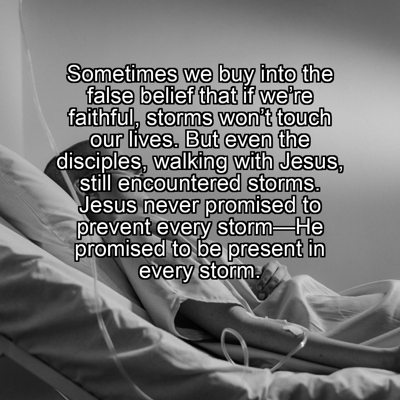
Sometimes we buy into the false belief that if we’re faithful, storms won’t touch our lives. But even the disciples, walking with Jesus, still encountered storms. Jesus never promised to prevent every storm—He promised to be present in every storm.
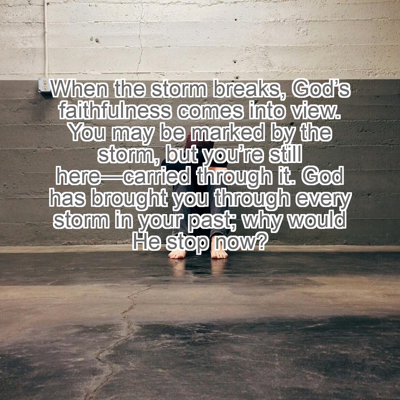
When the storm breaks, God’s faithfulness comes into view. You may be marked by the storm, but you’re still here—carried through it. God has brought you through every storm in your past; why would He stop now?
The absence of understanding does not mean the absence of redemption. God is still a Redeemer, still moving toward restoration, even when we don’t see the full picture on this side of heaven.
One day, the storms will be gone forever. No more chaos, no more destruction, no more fear or grief. That is the promise of God for all who place their trust in Christ Jesus, our Redeemer.
There’s nothing you have to earn, nothing you must accomplish. You simply receive and believe—receive forgiveness of sin and believe that Christ alone brings salvation and restores you to the God who loves you and created you.
Add this chatbot onto your site with the embed code below
<iframe frameborder="0" src="https://pastors.ai/sermonWidget/sermon/storm-chasers" width="100%" height="100%" style="height:100vh;"></iframe>Copy