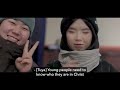
Henry pedaled toward shouting. A man raged at children on bikes. Most would’ve kept riding. Henry stopped. He shielded the kids, then faced the storm. “This isn’t okay,” he told the stranger. The man’s anger cracked like dry clay. He admitted his terrible day. Henry prayed right there on asphalt. [01:41]
Peacemaking isn’t diplomacy from a distance. It’s stepping into fractures with Christ’s presence. Henry didn’t lecture about anger management. He became a bridge for grace to walk across. Jesus said peacemakers reflect God’s sonship—not because they’re polished, but because they carry His reconciling DNA.
Where do you encounter relational fractures—workplace tension, family grudges, neighborhood disputes? Ask Christ to make you a bridge, not a bystander. What broken moment might He be asking you to walk toward today?
“Blessed are the peacemakers, for they will be called sons of God.”
(Matthew 5:9, ESV)
Prayer: Ask God to highlight one conflict around you where He wants you to embody Christ’s peace.
Challenge: Initiate a conversation today with someone caught in strife—listen first, then offer to pray aloud.
Paul hunched over parchment in Corinth, hands still shaking from last week’s mob. Timothy burst in with news: “The Thessalonians—they’re still standing!” Paul’s spine straightened. Their endurance under persecution wasn’t just inspiring—it was resurrection evidence. He scrawled, “Now we really live!” as if their faith had restarted his heart. [02:58]
God designed His church as interdependent body parts, not isolated statues. When missionaries in Mongolia thrive or a teen leads worship, it’s oxygen for your lungs. Paul didn’t just “like” their story—he metabolized it. Their standing became his standing.
Who’s faith-strength feeds yours? When did someone’s perseverance renew your hope? Text one person whose spiritual resilience has nourished you—name the specific fruit you’ve seen.
“But now Timothy has come to us from you… For now we really live, since you are standing firm in the Lord.”
(1 Thessalonians 3:6,8, ESV)
Prayer: Thank God for three people whose steadfast faith has sustained you.
Challenge: Call or text one believer who’s modeled endurance, detailing how their faith strengthened yours.
Paul didn’t beg the Thessalonians, “Try harder to love.” He prayed, “May the Lord cause you to overflow.” Like Henry’s courage, their love wasn’t self-generated—it sprang from Christ’s resurrection power. A baby church under siege became a geyser, drenching Paul’s parched soul. [15:08]
God doesn’t commission you to manufacture love but to channel it. The same power that raised Jesus fuels your capacity to care. When missionaries in Kenya persist or a student confronts injustice, it’s not human grit—it’s underground aquifers of grace breaking surface.
What relationships exhaust your emotional reserves? Stop striving. Confess, “Jesus, I’m dry. Cause Your love to erupt here.” Where might His surplus be waiting to flood your lack?
“May the Lord make your love increase and overflow for each other and for everyone else.”
(1 Thessalonians 3:12, ESV)
Prayer: Name two relationships where love feels scarce. Ask Christ to cause overflow, not just effort.
Challenge: Write “HE WILL DO IT” on your mirror. Read it aloud each time you wash your hands today.
Lynette’s kids grew up on missionary stories—not fables, but fuel. Years later, her daughter cradled her own child in Kenya, living the narratives she’d devoured. Paul fed the Thessalonians on Christ’s return; they became food for him. Mongolia’s church now feeds us. [19:58]
God’s faithfulness is a relay race. Hudson Taylor’s China endurance feeds a pastor in Virginia who feeds a teen confronting bullies. Your standing firm today becomes someone’s manna tomorrow.
Whose faith biography has marked you? How might your current struggle become future nourishment for another believer?
“The one who calls you is faithful, and he will do it.”
(1 Thessalonians 5:24, ESV)
Prayer: Thank God for one historical or modern believer whose story still feeds you.
Challenge: Read one chapter of a missionary biography (find free options at persecuted.org).
Mark and Lori sat in an Arkansas pew when Mongolia’s need gripped them. Not guilt, but feast-crumbs from God’s global table. They went, joining the 2,000-year chain of “why not us?” responses. Henry’s street prayer, Paul’s letter, your small obedience—all links. [22:29]
Missions isn’t heroics—it’s saying “yes” to your thread in the tapestry. The Spirit distributes roles: some sew finances, others knees in prayer, some board planes. All feast on the Story.
What “why not?” stirs when you hear of Ghana’s revivals or Mongolia’s baptisms? What makes you lean forward instead of look away?
“Therefore go and make disciples of all nations… And surely I am with you always.”
(Matthew 28:19-20, ESV)
Prayer: Ask God to clarify your role—sender, goer, intercessor—in His global work.
Challenge: Research one unreached people group (try joshuaproject.net) and pray for them by name.
Paul hears Timothy’s report and calls it good news, the same word he uses for the gospel, because a young church still standing in faith and love is resurrection made visible. Timothy’s report tells him that the message he preached has taken root and can be seen in their life together, even under pressure. A young church stands, and that standing serves as evidence that God is alive and at work. Paul sits in distress and persecution in Corinth, yet the news does not merely cheer him up; it keeps him alive. “Now we live since you are standing firm in the Lord.” The apostle who went is sustained by the steadfastness of those who believed.
Gratitude in Paul runs Godward like a debt he cannot repay. He does not flatter the Thessalonians for grit or technique; he thanks the God who alone could produce this endurance. Prayer then takes over. Paul prays night and day to see them and “to supply what is lacking” in their faith, because even a baby church standing firm still needs formation. The response to being fed by the faith of others is not guilt or self-drive; it is prayer.
Love becomes the shape of that prayer. “May the Lord cause you to increase and overflow with love for one another and for everyone.” Paul does not say try harder; he asks God to cause it. And that petition comes with a purpose clause. The love God causes is not God making people generally nicer; it is preparation. “So that he may establish your hearts blameless in holiness before our God and Father at the coming of our Lord Jesus with all his holy ones.” The King is returning, and God himself will finish what he started in his people.
“ He who calls you is faithful; he will do it.” The mission is not a human project to rescue or prop up; God opens shut doors, feeds his people on the standing firm of others, and then forms them into the next ones who stand. Reports from Mongolia, Kenya, and right down the street are not trivia; they are food. Those who are fed by what God is doing ask for more and then partner as God assigns, sometimes by praying, sometimes by giving, sometimes by going. The invitation is to sit at the table of God’s faithfulness, be sustained, and say with Paul, more God. More.
No. That is Paul telling them that god is going to finish what he started in them. You don't need to clean yourself up. You need to allow god to clean you up, to minister in you, to build you up so that you can build up others through the example of what god has done in you. Verse 12 wasn't the end of Paul's prayer. It had a sow that attached to it. So that god may establish your hearts blameless at the coming of the lord. The love god is causing in them isn't him making them generally nicer people. The love that god is causing in them is preparation.
[00:17:47]
(38 seconds)
Some of you are going to be sent. Our church is a part of a movement, the alliance, that has been sending people for a hundred and thirty eight years because people got fed by what God was doing, asked him for more of it, and sometimes the answer was, you go. That's how Mark and Lori ended up in Mongolia, sitting in a church in Arkansas, hearing about a place where the gospel hadn't been preached, and they said, why not? Some of you are going to say, why not? So this week, be fed. Ask God to do more of what he's doing and partner with him in it the way that he would have you partner in it. And know that he is faithful. He will do it.
[00:22:12]
(47 seconds)
Paul is talking here about Jesus coming back. The king is going to return. That is the Christian message, the Christian belief. He's going to bring with him every Christian who has ever lived and died trusting him. And Jesus is going to remake the world that he died and rose for. That is our future. And that is what Paul is praying toward. And notice what he said that God is going to do. He said, god is going to establish their hearts blameless in holiness. That's not Paul telling them to clean themselves up before the king arrives.
[00:17:14]
(33 seconds)
Paul here is the apostle. He's the church planter. He's the one who went, but he's being kept alive by news from a young church of new Christians. So I have to ask you something. Is there anyone who's standing firm strengthens you the way that Henry strengthened me? If the answer is no, I don't think that's an accident. Most of us have figured out how to keep the mission at a safe distance. It's informational. It's transactional. It's contained. It's something we do for an hour on Sunday mornings. Maybe today, closer to two. But we're starving.
[00:04:58]
(44 seconds)
I'm an AI bot trained specifically on the sermon from May 18, 2026. Do you have any questions about it?
Add this chatbot onto your site with the embed code below
<iframe frameborder="0" src="https://pastors.ai/sermonWidget/sermon/spiritual-hunger-1-thess-3-6-13" width="100%" height="100%" style="height:100vh;"></iframe>Copy