Spiritual growth is not a side project or an optional pursuit for followers of Jesus. Every day, each person is being formed—either by the patterns of this world or by the Spirit of God. The question is not whether you are being shaped, but by whom. To neglect the process of sanctification is to allow other forces—culture, habits, fears, or even apathy—to mold your heart and mind.
God’s will is that you would be intentionally formed into the likeness of Christ. This is not a calling for a select few, but for every believer. When you choose to engage in spiritual growth, you are responding to God’s invitation to become the person He created you to be. The process may be challenging, but it is the very heart of your purpose as a follower of Jesus.
“Do not be conformed to this world, but be transformed by the renewal of your mind, that by testing you may discern what is the will of God, what is good and acceptable and perfect.” (Romans 12:2, ESV)
Reflection: In what ways do you notice the world shaping your thoughts, attitudes, or desires? What is one small step you can take today to intentionally allow God to shape you instead?
Sanctification is a lifelong journey, not a one-time event. In a world that values instant results and quick solutions, God’s work in us often unfolds slowly and quietly. There will be seasons of progress and seasons of struggle, but the call is to persevere. Setbacks and failures are not signs that God has abandoned you; they are opportunities to learn, to let go of regret, and to keep moving forward.
Paul encourages believers to “forget what is behind and strain toward what is ahead.” This means refusing to be defined by past mistakes or disappointments. Instead, you are invited to trust that God is patient and persistent, working in you even when you cannot see immediate results. Spiritual growth is about faithfulness over the long haul, not perfection in the moment.
“Let us not grow weary of doing good, for in due season we will reap, if we do not give up.” (Galatians 6:9, ESV)
Reflection: Is there a past failure or regret that you keep replaying in your mind? What would it look like to release it to God today and take one step forward in faith?
True spiritual change is not something we can manufacture by sheer willpower or discipline. While we are called to participate, it is God who brings about real transformation in our hearts. Like sailors who cannot create the wind but can raise their sails, our role is to position ourselves to receive what God is already doing.
This means paying attention to where God is at work in your life, even in the ordinary or difficult moments. It means asking for His help, relying on His strength, and trusting that He is more committed to your growth than you are. Your responsibility is to cooperate with the Spirit, not to try to control the process.
“Not that we are sufficient in ourselves to claim anything as coming from us, but our sufficiency is from God, who has made us competent to be ministers of a new covenant, not of the letter but of the Spirit. For the letter kills, but the Spirit gives life.” (2 Corinthians 3:5-6, ESV)
Reflection: Where are you trying to force spiritual growth in your own strength? How can you invite God to work in that area and trust Him with the outcome?
Sanctification is not a private, self-improvement project. God’s desire is that your growth would overflow into love and service within your community. When spiritual growth becomes only about personal fulfillment, it can easily turn into pride or legalism. The true measure of maturity is not how spiritual you feel, but how well you love others—especially when it is difficult.
God calls you to pursue holiness not just for your own sake, but for the sake of those around you. Your transformation is meant to bless, encourage, and serve others. As you grow in Christlikeness, your life becomes a living testimony of God’s love to the world.
“Let each of you look not only to his own interests, but also to the interests of others. Have this mind among yourselves, which is yours in Christ Jesus.” (Philippians 2:4-5, ESV)
Reflection: Who in your life could benefit from your spiritual growth today? What is one practical way you can serve or encourage someone else as an expression of God’s love?
At the heart of sanctification is the call to become people who love as God loves. This is not about becoming spiritually superior or set apart for our own sake, but about embodying the self-giving, sacrificial love of Christ. God’s intent is to shape you into someone whose life reflects His character—someone who forgives, serves, and gives generously, even when it costs you.
This kind of love is the ultimate goal of spiritual growth. It is the evidence that God is at work in you, transforming you from the inside out. As you pursue Christlike love, your life becomes a testimony to the world of who God is and what He can do in a willing heart.
“Above all, keep loving one another earnestly, since love covers a multitude of sins. Show hospitality to one another without grumbling. As each has received a gift, use it to serve one another, as good stewards of God’s varied grace.” (1 Peter 4:8-10, ESV)
Reflection: What is one way you can practice Christlike, sacrificial love today—especially toward someone who may be difficult to love? Ask God to help you see them through His eyes.
of the Sermon**
In this sermon, we explored the question: "Whose job is spiritual growth—ours or God's?" Using Philippians 2:12-13 as our anchor, we examined the doctrine of sanctification and the confusion many Christians have about their role versus God's role in spiritual growth. Some believe sanctification is entirely God's work, while others see it as a matter of personal effort and discipline. The truth, as Paul teaches, is that sanctification is a joint project: we are called to "work out" our salvation, but it is God who works in us to will and to act according to His purpose. We considered four key truths: sanctification is normative (not optional), it is a painstaking process (not an event), it is empowered by God (not by us), and it is meant to be pursued for the sake of others, not just ourselves. Ultimately, the goal of sanctification is to become people who love as God loves.
**K
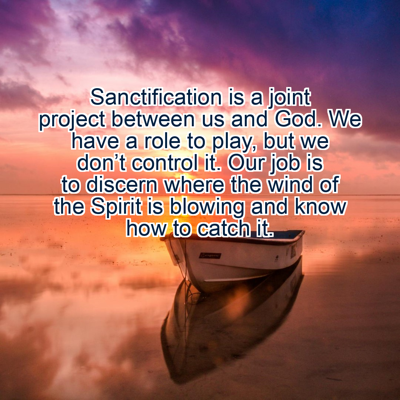
Sanctification is a joint project between us and God. We have a role to play, but we don’t control it. Our job is to discern where the wind of the Spirit is blowing and know how to catch it.
The question is not if you’re going to be formed spiritually; the question is by whom will you be formed? If you’re not formed by God, then you have a spiritual adversary who will be happy to do the task.

Sanctification is normative, not optional. It’s God’s will that you be sanctified. If you don’t want to live a life of truth, love, joy, humility, and servanthood now, why would you want to live that way eternally?
Sanctification is a process, not an event. You will fail often, but the danger is when you slip, you’ll get discouraged and give up. Paul urges us to keep going and to forget what is behind.

Forgetting is indispensable to sanctification. Learn what you need to from yesterday’s mistakes, but don’t be shackled to regrets. Sanctification is a journey, not a single moment—so don’t give up.
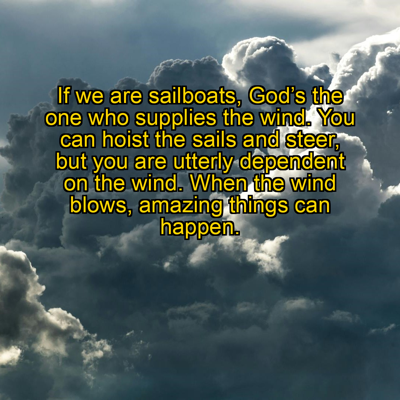
If we are sailboats, God’s the one who supplies the wind. You can hoist the sails and steer, but you are utterly dependent on the wind. When the wind blows, amazing things can happen.

You can allow the winds of the Spirit to blow in your life. That’s why sanctification is never mechanical and will look different from one person to another, and in different eras of your life.
There is a huge difference between being sanctified and being sanctimonious. The goal of sanctification, in a single word, is love. Sometimes people get them mixed up.
The pursuit of spiritual growth can get distorted if it becomes all about the individual. True sanctification is defined in terms of community, servanthood, and love—not just personal fulfillment.
God wants to sanctify you, and that’s no small thing. It’s not a spiritual self-improvement project or optional equipment. That is God’s destiny for you: to love as God loves. If you miss that, you miss what you were made for.
Add this chatbot onto your site with the embed code below
<iframe frameborder="0" src="https://pastors.ai/sermonWidget/sermon/spiritual-growth" width="100%" height="100%" style="height:100vh;"></iframe>Copy