Esther 3 picks up after Mordecai’s faithfulness had been recorded but not rewarded, and the text lets that forgotten moment sit in the background while Haman gets promoted. Haman, an Agagite, walks into the story with old family beef against the Jews, the kind that goes all the way back to Saul sparing King Agag when God had told him not to. Mordecai refuses to bow, not because he is trying to be difficult, but because he knows the history, he knows who Haman is, and his allegiance belongs higher than Persia.
The royal staff at the gate stirs the pot. Gossip takes what Haman had not noticed and makes sure he notices it, and that corrupt communication becomes fuel for rage. Haman’s anger does not stay with Mordecai alone. His prejudice turns one man’s refusal into a plan to wipe out a whole people. Racism shows itself for what it is, not a personality quirk, not an old fear, not something that can be dressed up with Bible talk, but sin. God loves all peoples, all tribes, all languages, all nations, and skin color never gives hatred a holy excuse.
Haman rolls the pur, like dice, and the date lands eleven months away. The Jews get almost a year to dread a coming purge. Haman accuses them of having different laws, and in one sense they do, because God’s people are citizens of another kingdom. That higher rule does not call them lower into rebellion or ugliness, but higher into faithfulness. The world’s tolerance only goes so far when power demands silence first, then affirmation.
The king hands Haman the signet ring, and delegated authority becomes deadly in the hands of a man full of rage. The decree goes out in every language, destroy, kill, and annihilate. The king and Haman sit down to drink in comfort while Susa sits in confusion. The enemy’s old pattern is right there, stealing, killing, destroying.
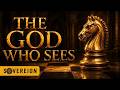
The chessboard image helps the whole thing land. A person can only see so far, like a piece blocked by another piece, but God sees the whole board. God sees forgotten faithfulness, the ways of the wicked, the cries of the crushed, and the big picture from beginning to end. Job looks east, west, north, and south and cannot find God, but he still says God knows the way he takes. Hagar goes farther still and says she has seen the God who sees. Jesus Christ makes that clear now, because God is not hidden anymore. God has revealed himself plainly, and the call is to look to him.
Key Takeaways
- 1. God sees forgotten faithfulness God’s sight is not mainly a threat hanging over hidden failure. Scripture most often ties his eyes to quiet righteousness, unseen service, and faithfulness that never got a public thank-you. Mordecai’s unrewarded act sits in the record because God is not unjust and does not forget love shown to his people. [1:03:20]
- 2. Gossip gives rage a weapon The royal staff did not create Haman’s hatred, but their words put a target in front of it. Corrupt communication can feel small because it is just talk, yet it can move pain, prejudice, and power into motion. The tongue can build up or tear down, and casual stirring can become real destruction. [46:50]
- 3. Prejudice is sin, period Haman’s hatred of the Jews exposes the evil of judging a people by bloodline, fear, or inherited beef. Religious language cannot sanctify racism, because God has already shown his heart for all tribes, nations, languages, and colors. The Bible does not give anyone permission to blame God for prejudice. [48:38]
- 4. God sees the whole board The knight on the chessboard can jump where other pieces cannot, and that picture fits the need for God to move beyond human limits. A person sees blocked paths, other people’s choices, and closed doors, but God sees the full board. Providence means God is not only in control, but active, wise, and good while acting. [40:18]
- 5. Jesus reveals the God who sees Job could not find God in any direction, and Hagar learned the wonder of seeing the One who saw her. Jesus brings that longing into the open, because God has made himself clear and plain in him. The Christian hope is not merely that God is watching from far away, but that God has come near and can be looked to. [1:14:34]
Youtube Chapters