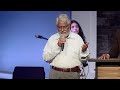
The call to worship begins with holy hands lifted and a new song rising in the house of God, because every child of God carries an individual testimony of what the Father has done. God is praised as merciful, patient, graceful, compassionate, and full of blessing, and the greatest identity given to any man or woman is not title, money, strength, or status, but to be called a child of God. Praise is not treated like church noise. Praise is an anointing on the tongue, an authority in the mouth, a scent like the alabaster box broken before the King.
The glory of God becomes the real desire. The song is not the goal, and the gathering is not about religious routine. God’s people are called to long for glory like the deer pants for the water, and the presence of the Holy Spirit is invited to flow like a river. Praise, like a crowd marching with joy through Inglewood, can shift an atmosphere, even when everybody around does not understand the language.
Mark 15:21 brings Simon the Cyrenian into view as a man who came 900 miles to Jerusalem for Passover and never planned to touch a bloody cross. The text says he was compelled, and that word matters. Simon had no training, no résumé, no convenient timing, and no chance to offer excuses. God placed him in an unexpected assignment because God found him fit to carry the burden.
The cross teaches that calling does not come at convenience. God does not wait for comfort, credentials, or perfect preparation. Grace becomes the only qualification. The child of God does not walk out of the house of God merely critiquing songs or complaining about people, but asking, “Lord, what can be done to make it easy to carry the burden of the cross?”
Simon’s encounter with Jesus was not in a synagogue, a Bible study, or a clean religious moment. God brought him close to the wounded Christ in the middle of shame, blood, pain, and public misunderstanding. The cross shows that real ministry carries burdens, and discipleship is not benchwarming. The American church may teach happiness, but the Bible calls for disciples who crucify flesh, comfort, and excuses.
Romans 16:13 reveals the inheritance of Simon’s obedience. Rufus, Simon’s son, is greeted as chosen in the Lord, and his mother is honored by Paul. Simon’s children saw their daddy carry an unexpected cross, and that sight became a deposit deeper than money, education, or retirement plans. God honors the seed of faithful fathers and mothers, and children often stand in the faith because God remembered a covenant with parents who carried the burden.
Key Takeaways
- 1. Unexpected crosses carry real calling God often places a person in the assignment before that person feels ready for it. Simon had no plan, no preparation, and no opinion in the matter, yet the cross found his shoulder because God had already marked the moment. Calling is not proven by convenience, but by obedience when the burden interrupts the plan. [1:30:27]
- 2. Grace is the only qualification The kingdom does not run on résumés, titles, or polished skill. God delights in empty vessels because emptiness can be filled with all of Him, while self-importance leaves no room for grace. The best answer to “what qualifies this servant?” is simply, “Grace.” [1:33:38]
- 3. Ministry leaves stains, not applause Simon came in his Sunday best, but he left marked by the blood and burden of the assignment. Real service does not always feel clean, visible, or comfortable, and it often looks more like carrying weight than receiving honor. The question is not whether the servant looked good leaving church, but whether the servant helped carry the cross. [1:34:30]
- 4. Children remember carried burdens The Holy Spirit names Alexander and Rufus because Simon’s obedience did not stop with Simon. A child may forget many lectures, but the sight of a father or mother carrying the burden of Christ gets etched deep into the heart. Spiritual inheritance is built when children see costly faith lived in front of them. [1:51:37]
- 5. Discipleship is not benchwarming A warm seat only proves that somebody was alive, not that somebody was faithful. The call of Christ is not to fill space, but to carry responsibility with hands that will one day give account before God. The church does not need benchwarmers when the cross still has weight to be carried. [1:49:29]
Youtube Chapters