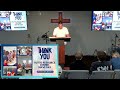
When we ask, "Do I really have to go to church?" we often reveal a deeper heart issue. Our excuses about time, preferences, or past hurts can mask a spiritual condition that needs attention. These reasons are often symptoms of something more profound, such as unresolved pain, unconfessed sin, or a hardened heart toward God. It is important to gently examine our motivations and what they might be saying about our relationship with God and His people. This honest reflection is the first step toward healing and reengagement.
[32:28]
And he gave the apostles, the prophets, the evangelists, the shepherds and teachers, to equip the saints for the work of ministry, for building up the body of Christ.
Ephesians 4:11-12 (ESV)
Reflection: What is one excuse you have used, even privately, for not fully engaging with the church? What might that excuse reveal about a deeper need or hurt in your heart that God wants to address?
Choosing to live apart from biblical community has serious consequences for our spiritual health. Just as still water becomes stagnant and breeds things that are unhealthy, a life disconnected from the body of Christ allows sin to grow unchecked. This isolation can lead to spiritual decay, weakened relationships, and poor decisions. We are designed to live in fellowship, and without it, our faith can grow cold and our lives can drift off course.
[35:18]
And let us consider how to stir up one another to love and good works, not neglecting to meet together, as is the habit of some, but encouraging one another, and all the more as you see the Day drawing near.
Hebrews 10:24-25 (ESV)
Reflection: In what area of your life have you noticed a sense of spiritual stagnation or a lack of growth? How might reengaging with a community of believers help to bring life and movement back to that area?
The church is not a building or an event; it is the living body of Christ. God’s design is for us to live in deep, meaningful relationship with one another, equipped to serve and build each other up. This kind of biblical community provides the truth, encouragement, and accountability we need to navigate life faithfully. It is a gift from God, intended for our good and His glory.
[39:25]
For as in one body we have many members, and the members do not all have the same function, so we, though many, are one body in Christ, and individually members one of another.
Romans 12:4-5 (ESV)
Reflection: Who is one person in your life that consistently points you back to the truth of the Gospel, even when it’s hard to hear? How can you nurture that relationship this week?
Church is not just about what we receive; it is also about what we give. Every believer has been gifted by God to serve and build up the rest of the body. Your presence, your gifts, and your encouragement are vital to the health and mission of the church. When you are absent, the family misses a crucial part of itself. We are called to carry one another’s burdens and to be there for each other.
[46:14]
Having gifts that differ according to the grace given to us, let us use them: if prophecy, in proportion to our faith; if service, in our serving; the one who teaches, in his teaching; the one who exhorts, in his exhortation; the one who contributes, in generosity; the one who leads, with zeal; the one who does acts of mercy, with cheerfulness.
Romans 12:6-8 (ESV)
Reflection: What spiritual gift or practical skill has God given you that could be a source of encouragement or service to someone else in your church family?
A transformative shift occurs when we move from being a church consumer to a church owner. An owner takes responsibility, invests deeply, and cares for the church as their own. This mindset changes our engagement from passive attendance to active participation in relationships, service, and mission. It is in this ownership that we find greater purpose, growth, and joy in our walk with Christ.
[51:43]
Go therefore and make disciples of all nations, baptizing them in the name of the Father and of the Son and of the Holy Spirit, teaching them to observe all that I have commanded you. And behold, I am with you always, to the end of the age.
Matthew 28:19-20 (ESV)
Reflection: What is one practical, tangible step you can take this week to move from a consumer mindset to an owner mindset in your relationship with your church family?
The series opens by naming a common question: do Christians really have to go to church? The message roots the answer in Scripture and practical observation, arguing that church attendance is not optional but integral to Christian formation. Common excuses—lack of time, dislike of worship style, suspicion about money, or the claim that personal faith suffices—get examined and reframed as symptoms of deeper heart issues. Those heart issues range from unresolved hurts and bitterness to ongoing secret sin and grief that has been turned into blame against God. When people avoid the body of Christ, spiritual stagnation follows: sin finds room to grow, relationships fray, and life trajectories shift away from flourishing.
Scripture frames the remedy. Ephesians 4 presents the church as the body of Christ, equipped through varied gifts to build one another up. Hebrews 10 calls for regular gathering so Christians can spur one another toward love and good works rather than drifting into neglect. Romans 12 emphasizes diverse gifts and mutual dependence—each person brings a necessary function and a needed correction. The Great Commission reframes corporate worship and community as means for mission: gathering exists not primarily for personal preference but to form disciples who make disciples.
Practical application centers on shifting from a consumer mindset to an owner’s mindset. Ownership means tending relationships, serving, confessing sin, and bearing one another’s burdens even when doing so gets messy. Ownership cultivates growth: serving transforms character, belonging strengthens faith, and engagement preserves spiritual health. Concrete next steps include joining a Bible study, reaching out to someone on the margins, confessing sin, or stepping into a ministry role. A closing call invites deeper commitment to the bride of Christ and offers specific community opportunities—service days with a local resource center, a canned-food drive, a child dedication process, and growing needs in the children’s ministry—each emphasizing the church as a living, communal, missional body.
The heck with the building, the church is about you who are sitting here in these chairs. It is the body. It is the people of Christ. And so what Paul is telling us here, he's given this big spiel on the unity and the importance of the unity in the body of Christ. And he's saying that all of us have a part in it, and the point is that we would be equipped for ministry so that the body of Christ would be built up. So here's the deal. It is incredibly important for you to have a biblical community in your life.
[00:40:09]
(32 seconds)
#ChurchIsPeople

You see, when it really comes down to why we gather together, it's not really about us at all. It's about Jesus. And it's about making Jesus known in our in our community. It's about bringing others in into the family of God and encouraging them, loving them, teaching them how Jesus loves, and helping them to emulate the love that he has for us. See, it's about a mission that's much bigger than you and I. I was thinking about this this last week. It's really pretty incredible.
[00:49:53]
(37 seconds)
#MissionFocusedChurch
We're not perfect people. If I haven't already, one day I'm gonna offend you. And I'm gonna say something or I'm gonna do something or I'm gonna not say hi to you one morning, and you're gonna think, well, pastor, just so rude. He didn't he doesn't like me. Not true at all. And other people are gonna do the same thing. And we have grace with one another, and we have forgiveness for one another, and we extend the grace and forgiveness that we have been given by God freely, by the way. We extend that to to others, and we grow in our love for him and our love for one another.
[00:56:17]
(37 seconds)
#GraceAndForgiveness
And when you become invested, and when you own the relationships in the church, all of sudden, everything is way different. You look at everything through a different lens, and church becomes meaningful to you because you own it. You invest in it. You invest in the relationships, and it's not just something where we show up for an hour on Sunday morning and then go home. So my challenge for you, instead of just being a consumer, become an owner. Own the relationships. And part of that means we've gotta be able to do messy well because we're not perfect.
[00:55:36]
(40 seconds)
#OwnYourChurch
when when we avoid the church or when we avoid close relationship with people in the church and keep everybody out here, what happens is we have some spiritual stagnation that goes on. And I don't know if you've ever been around stagnant water, but it's gross. And we we live close to Brushy Creek, and in the summertime, when Brushy Creek doesn't have as much water flowing through it, there are pools of it that will just sit, and they get stagnant, and they stink. And then what happens after that? Mosquitoes.
[00:35:11]
(34 seconds)
#AvoidSpiritualStagnation
Because when you move from a consumer mindset to an owner's mindset, all of a sudden you're growing. Why? Because you're serving. And so often in our lives, we grow more in our faith when we make the effort to go out and to serve than when we stay back and do nothing. Sometimes serving is just as important, if not more important than reading God's word because we are the hands and feet of God going out into the community. And so we grow. Our life begins to change. Our hearts begin to change. Hey, you may find a purpose
[00:54:58]
(36 seconds)
#ServeToGrow
And I understand that's not the case for everybody, and I'm not trying to say, if you're not in church, you're gonna get divorced. Okay? I'm not trying to say that here, but it's just the reality that when we when we're not engaged with the body of Christ and in close relationship with other people, it allows for there to be room for the sin to come into our hearts to corrupt our lives and for there for there to be damaging consequences.
[00:37:36]
(21 seconds)
#StayEngagedWithChurch
And when we have that kind of attitude towards church, what has happened is it's not about the community, it's not about what God has called us to, it's about me and my preferences. And in that moment, I'm thinking like a consumer, someone who is just showing up and taking. We'll talk more about that later. But worship can be an excuse for people. And the reality is we should all be worshiping all of the time, everywhere, because as Mike said earlier, we serve a great and awesome and powerful God.
[00:30:50]
(29 seconds)
#WorshipBeyondSunday
I'm an AI bot trained specifically on the sermon from Apr 13, 2026. Do you have any questions about it?
Add this chatbot onto your site with the embed code below
<iframe frameborder="0" src="https://pastors.ai/sermonWidget/sermon/should-i-go-to-church" width="100%" height="100%" style="height:100vh;"></iframe>Copy