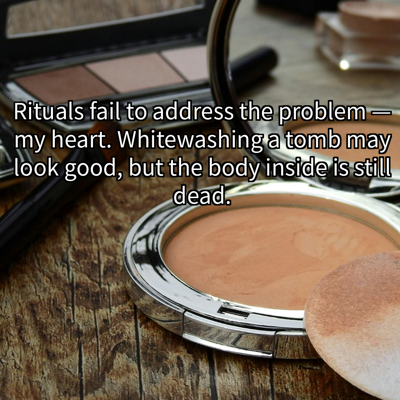
Romans 2:12–29 exposes how three common refuges—conscience, knowledge, and ritual—fail to make a person righteous. Paul argues that judgment depends on the light given: ignorance of a law spares neither the pagan nor the religious, because everyone will be judged by the law they possess and whether they obey it. Conscience bears a law written on human hearts, so even those without Scripture show moral awareness; yet that same conscience proves unreliable when private standards go unkept and self-judgment reveals personal failure. Scriptural teaching and doctrine matter deeply, but mere possession of truth without practice leaves a life built on sand: hearing without doing collapses under trial. Knowledge of God’s will can breed arrogance when presumed certainty replaces prayerful dependence; biblical examples show even learned people have misread God’s direction when prayer was neglected. Rituals and outward signs—circumcision, baptism, traditions, ceremonies—function only as markers of an inward reality; when rituals substitute for inward repentance and faith they become a dangerous trust that reduces the necessity of Christ’s work. Hypocrisy follows from claiming divine favor while failing to keep one’s own rules, and a pattern of moral inconsistency gives offense to God rather than honor. The text culminates in the claim that human efforts, rules, and rituals cannot rescue the unreliable heart. Only a Savior able to redeem and transform sinful humans into children of God truly answers the problem. The proper posture, according to the passage, is not confidence in conscience, creeds, or customs, but recognition of personal inability and dependence on Christ’s rescuing grace that changes hearts, not only outward behavior.
Key Takeaways
- 1. justification. Conscience becomes a guide toward dependence on the mercy that heals the heart.
Rituals without inward change fail
External ceremonies signify belonging only when they reflect transformed affections; otherwise they become cosmetic and misleading. Outward compliance can mask inner deadness, whitewashing what remains corrupt, and risks turning sacred signs into sources of self-deception. True worship lets rituals point to crucified and risen Christ, inviting ongoing repentance and renewal. If rituals stand in for repentance, they distort the gospel and undermine grace.
Confidence breeds hypocrisy and ruin
Certainty without continued humility and prayer fosters arrogance and moral collapse when human weakness surfaces. Claiming to know God’s will while neglecting prayer or mercy sets a person up to be exposed and judged by their own standards. Confession of unreliability and intentional dependence on Christ prevents spiritual self-deception and preserves integrity. Confidence rightly placed in God’s mercy leads to transformation, not self-exaltation.