Jul 16, 2026
Paul was knocked to the ground on the road to Damascus. Jesus saved him and changed him into a servant. Later, as a prisoner, Paul was shipwrecked on an island. He built a fire for the cold, wet men. A poisonous snake bit his hand. Paul simply shook it off into the flames and kept serving.
Paul served because he knew how bad he was and how good Jesus is. His past failure fueled his present service. He found a purpose that transcended his pain and problems. They were shaken off like the snake, meaningless next to his mission.
Many of us let our past failures or present pains stop us. We believe the lie that we are too broken to be useful. Hear Jesus’s call to serve as Paul did. Your purpose is greater than your problems. What pain or failure are you allowing to keep you from serving today?
“For I am the least of the apostles, unworthy to be called an apostle, because I persecuted the church of God. But by the grace of God I am what I am, and his grace toward me was not in vain.”
(1 Corinthians 15:9–10, ESV)
Prayer: Ask God to show you one specific way you can serve someone else today, just as Paul served the shipwrecked men.
Challenge: Identify one practical need in your home or workplace and meet it without being asked.
Jesus ate a meal with important religious leaders. A woman known as a sinner entered the room. She wept at Jesus’s feet, wiped them with her hair, and anointed them with expensive perfume. The host was scandalized. He thought a true prophet would never let such a woman touch him.
Jesus knew the man’s thoughts. He told a story about two debtors, one who owed little and one who owed much. Both debts were canceled. Jesus asked which debtor would love the moneylender more. He then applied this to the woman. Her many sins were forgiven, so she loved much.
Your capacity to love God is directly tied to your understanding of how much you have been forgiven. A small view of your sin leads to a small, complacent love. A large view of God’s grace leads to a brilliant, extravagant love. Do you love God little, or do you love Him much?
“Therefore I tell you, her sins, which are many, are forgiven—for she loved much. But he who is forgiven little, loves little.”
(Luke 7:47, ESV)
Prayer: Confess one specific sin to God and thank Him for the complete forgiveness He offers you in Christ.
Challenge: Write down the words “forgiven much” on a notecard and place it where you will see it throughout your day.
We often believe God has turned His back on us because of our sin. This is bad doctrine. From the beginning, God has pursued sinners. Adam and Eve hid, but God came back for them. Cain killed Abel, but God came back for Cain. Jacob was a liar, but God came back for Jacob.
This pursuit culminated in Jesus. God became a man to eat with sinners and pull them into His holiness. He welcomed the woman at the well, the tax collector in the tree, and the woman caught in adultery. On the cross, He absorbed the violence of our sin and revealed the Father’s heart by forgiving us.
God’s disposition toward you is not one of turned-back rejection. It is one of open-armed reconciliation. He is not waiting for you to clean yourself up before you can come home. He is running toward you now. Where do you see the evidence of God’s pursuit in your own story?
“All this is from God, who through Christ reconciled us to himself and gave us the ministry of reconciliation; that is, in Christ God was reconciling the world to himself, not counting their trespasses against them…”
(2 Corinthians 5:18–19, ESV)
Prayer: Thank God that He does not count your trespasses against you because of Christ’s work.
Challenge: Call or text one person and tell them one way you have seen God’s kindness in your life this week.
The gospel is not advice. It is not a list of rules for better living. It is not a set of complex doctrines to debate. The gospel is good news. It is the retelling of events that have happened. News is about facts, not advice.
This is the good news: King Jesus, the Lord of everything, became a man. He lived the perfect life we could not live. He defeated sin and death on the cross. He demonstrated His power by rising from the dead after three days. He now offers a right relationship with God as a gift to anyone who trusts in His work alone.
This news changes everything. You do not need to behave for God to love you. You are invited to believe that Jesus has already behaved for you. Your standing with God is based on His finished work, not your fluctuating performance. How would your day change if you operated from this news instead of advice?
“Now I would remind you, brothers, of the gospel I preached to you, which you received, in which you stand, and by which you are being saved… For I delivered to you as of first importance what I also received: that Christ died for our sins in accordance with the Scriptures, that he was buried, that he was raised on the third day in accordance with the Scriptures…”
(1 Corinthians 15:1, 3–4, ESV)
Prayer: Ask God to make the good news of Christ’s death and resurrection feel fresh and real to you today.
Challenge: Read 1 Corinthians 15:1-4 aloud to yourself, emphasizing the words “died,” “buried,” and “raised.”
We sometimes fear God’s calling. We imagine He will send us to a place we hate or force us into a life of misery. Paul saw his apostolic calling not as a burden, but as a joy. He was compelled by love, not coerced by fear.
God’s call matches what we most deeply crave. His design for your life aligns with the desires He has planted in your heart. When you delight yourself in the Lord, He shapes those desires and then fulfills them. Your calling is not to a generic misery but to a specific purpose you were made for.
You were designed for a mission that brings you joy and God glory. Your calling is not a punishment; it is an invitation into the life you were created to live. What is one thing you deeply enjoy that could be used to serve others and glorify God?
“Delight yourself in the Lord, and he will give you the desires of your heart.”
(Psalm 37:4, ESV)
Prayer: Ask God to align the desires of your heart with His good purposes for your life.
Challenge: Set aside 10 minutes to do an activity you truly delight in, and thank God for the gift of it.
Romans opens as the Bible’s most thorough doctrinal book and issues a sharp warning: bad doctrine kills. Examples of widespread Christian ignorance and folk theology demonstrate how easily truth becomes superstition—misattributed sermons, invented Bible verses, and the popular belief that God rewards self-reliance instead of calling sinners to helpless dependence. Scripture and tradition both contradict simplistic cause‑and‑effect views of suffering; Lamentations and Job expose the danger of pinning every hardship to divine punishment. Bad theology turns intimacy with God into fear, breeding a religion of performance, shame, and legalism rather than a family shaped by grace.
Paul stands at the center of the opening passage as an unlikely apostle whose conversion and ministry model the gospel’s transforming power. His past hostility toward the church and dramatic conversion on the Damascus road illustrate how the triune God pursues sinners and reorients lives toward service. Paul’s letters, his missionary journeys, and his endurance under shipwreck, snakebite, and imprisonment display a gospel‑shaped servanthood: awareness of sin produces a relentless impulse to serve, not to hide. The New Testament pattern of Jesus eating with outcasts and forgiving sinners reframes holiness as restorative engagement, not exclusionary purity.
The gospel itself receives clear definition: the triune God became flesh in Christ, united full deity and true humanity, defeated sin and death through atoning death and resurrection, and now offers sonship and daughter‑ship as a gift received by faith alone. The gospel is not an ethical handbook, political program, or doctrinal fine print; it is a recounting of historical events that rewrites identity and restores relationship with the Father through the Spirit. The chair illustration emphasizes God’s persistent, reconciling posture—God repeatedly turns back toward humanity, culminating in Christ’s atonement and indwelling presence. Romans promises corrective theology: honest study will dismantle fearful religion, reframe God’s disposition toward sinners, and shape lives marked by joy, service, and belonging in the household of God.
Bad doctrines have body counts; sadly, many Christians struggle with doctrine and even basic facts about the faith.

In reality God helps those that finally understand they can’t help themselves.

This idea makes the self-righteous march up and arrogantly take communion while the sensitive saint stays in their seat, worried.

Gritted teeth miserable religiosity is replaced by being in God’s family, His sons and daughters, welcomed back home like the prodigal son.

He tried to squash Christianity—watching Stephen be stoned, franchising his killing spree to Damascus—yet Jesus knocked him down and saved him.

Worth noting that often the worst sinners become the greatest servants.
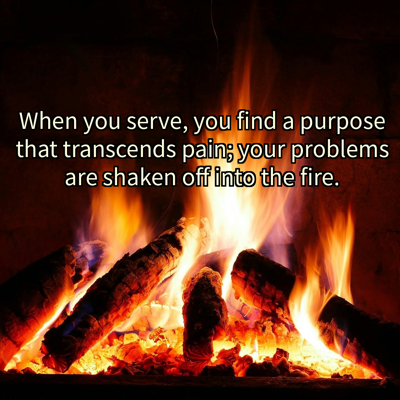
When you serve, you find a purpose that transcends pain; your problems are shaken off into the fire.

The gospel is not doctrine debates or advice on life; the gospel is good news about what God has done in Christ.

He offers sonship and daughter-ship — right relationship with our Heavenly Father — as a gift to anyone who places faith in His work alone.

If we submit to God he will call us to some scary, weird, dangerous, horrible place — and that call matches what we secretly crave.

Hi, I'm an AI assistant for the pastor that gave this sermon. What would you like to make from it?
Add this chatbot onto your site with the embed code below
<iframe frameborder="0" src="https://pastors.ai/sermonWidget/sermon/romans-1-1-intro" width="100%" height="100%" style="height:100vh;"></iframe>Copy