Bible Reading -
Ezekiel 34:2-4 (ESV): "Son of man, prophesy against the shepherds of Israel; prophesy, and say to them, even to the shepherds, Thus says the Lord GOD: Ah, shepherds of Israel who have been feeding yourselves! Should not shepherds feed the sheep? You eat the fat, you clothe yourselves with the wool, you slaughter the fat ones, but you do not feed the sheep. The weak you have not strengthened, the sick you have not healed, the injured you have not bound up, the strayed you have not brought back, the lost you have not sought, and with force and harshness you have ruled them."
-
John 14:15-17 (ESV): "If you love me, you will keep my commandments. And I will ask the Father, and he will give you another Helper, to be with you forever, even the Spirit of truth, whom the world cannot receive, because it neither sees him nor knows him. You know him, for he dwells with you and will be in you."
-
Matthew 28:19-20 (ESV): "Go therefore and make disciples of all nations, baptizing them in the name of the Father and of the Son and of the Holy Spirit, teaching them to observe all that I have commanded you. And behold, I am with you always, to the end of the age."
Observation Questions - In Ezekiel 34:2-4, what specific failures does God highlight about the shepherds of Israel? How do these failures contrast with the role of a faithful shepherd?
- According to John 14:15-17, what is the relationship between love for Jesus, obedience to His commandments, and the gift of the Holy Spirit?
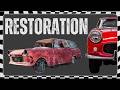
- The sermon compared God’s restoration to a car project. What details in the car restoration story illustrate the balance between preserving original design and making necessary improvements? [03:33]
- In Matthew 28:19-20, what two actions does Jesus command His followers to prioritize, and what promise does He give them?
Interpretation Questions - Ezekiel’s rebuke of the shepherds focuses on their neglect of the weak, sick, and lost. Why might God’s vision for leadership prioritize care for the vulnerable over self-interest? How does this apply to modern churches?
- Jesus says the Holy Spirit will “be with you forever” and empower obedience (John 14:16-17). How does this promise address the fear or difficulty of living out His commandments in daily life?
- The sermon mentions that restoration often requires blending “original design with necessary improvements.” How might this principle apply to both personal spiritual growth and the renewal of a church community? [03:33]
- The sermon emphasizes that “change invites our willing response.” Why is human cooperation essential in God’s restoration process, even though He holds ultimate power? [14:41]
Application Questions - Reflect on an area of your life where you feel “broken” or in need of restoration. What small step could you take this week to invite God into that process, even if it requires patience?
- The Holy Spirit is called the “Helper” who equips us for obedience. What practical habit (e.g., prayer, serving, studying Scripture) could you prioritize to rely more on the Spirit’s strength rather than your own?
- Ezekiel condemns shepherds who ignore the weak. Who in your community (neighbor, coworker, family member) feels “lost” or overlooked? How could you intentionally care for them this month?
- The sermon celebrates local church renewal efforts like baptisms and expanded generosity. What is one way you could contribute to your church’s mission—whether through time, gifts, or relationships—to help others see “Jesus in practical love”? [25:16]
- The car restoration metaphor highlights that God’s work takes time. Are you currently resisting a season of slow growth or change? How might embracing patience deepen your trust in His timing?
- The sermon mentions “small acts of hospitality, study, and service” as part of renewal. What is one “small act” you could do this week to reflect God’s restoration in your home, workplace, or neighborhood?
- The church plans to build a pavilion for “neighborly ministry.” What creative space or practice could your small group initiate to connect with people outside the church? [25:16]