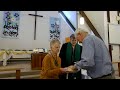
Communion is a simple act at its heart: a group of friends gathered around a table, sharing bread and wine, remembering Jesus and his love. Yet over the centuries, we have layered this act with rules, rituals, and debates—about what kind of bread to use, who is allowed to serve or receive, and what exactly happens when we break the bread and share the cup. We have tried to make it more special, more exclusive, or more “correct,” but in doing so, we often miss the deep mystery and radical inclusivity at the center of Jesus’ table.
When Jesus first broke bread and shared the cup, he did so with all his disciples—including Judas, the one who would betray him. This is a powerful reminder that the table is not for the worthy, but for all. The church has sometimes tried to restrict who can serve or receive communion, but the original meal was open, messy, and full of people who didn’t fully understand what was happening. If Judas could receive from Jesus, who are we to deny anyone?
We also tend to overcomplicate the elements themselves. Whether it’s unleavened bread, wafers, or cubes of white bread, wine or grape juice, the point is not the perfection of the elements but the act of sharing. Communion is not about magic words or special people; it is about remembering Jesus, celebrating the mystery of his presence, and affirming our connection to one another.
The mystery of communion is not that Jesus suddenly appears in the bread and wine, but that he is already present—at the table, in the pews, in our lives. The bread and cup are not a portal to a distant God, but a mirror reflecting the holy presence already among us. Communion is a celebration of this mystery, a human act of community that predates religion itself. Every time we share a meal, bless our food, or gather in love, we echo this ancient act.
When we come to the table, we bring our own reality—routine, repentance, celebration, protest, or longing for community. The meaning of communion is shaped by what we bring, and it is open to all who wish to receive. In the Methodist tradition, the table is open: all are welcome, all are invited to remember, to celebrate, and to be nourished by the presence of Christ.
Key Takeaways
- 1. The Table Is Radically Inclusive Jesus shared the first communion with all his disciples, including Judas. This challenges any attempt to restrict who is welcome at the table. Communion is not a reward for the worthy, but a gift for all, regardless of our understanding or our past. The radical inclusivity of Jesus’ table calls us to open our hearts and our practices to everyone who seeks grace. [44:19]
- 2. Mystery Over Method Debates about the elements or the mechanics of communion miss the deeper truth: the real mystery is Christ’s presence, which is not confined to bread, wine, or ritual. Jesus is already present in our midst, and communion is a celebration of that ongoing reality. The bread and cup are not magic, but a mirror reflecting the holy that is already here. [46:47]
- 3. Communion Is a Human Act of Community Long before it was a Christian sacrament, sharing food was a sign of trust, love, and relationship. Communion connects us not only to Christ but to one another, affirming our bonds and our shared humanity. Every meal shared in love is a small echo of this sacred act, reminding us that God meets us in the ordinary as well as the holy. [48:39]
- 4. The Meaning Is Shaped by What We Bring How we approach the table shapes our experience of communion. If we come out of routine, it may feel routine; if we come seeking forgiveness, it becomes redemptive; if we come in celebration, it is a feast. The sacrament is open to the meaning we bring, and God meets us in our reality, whatever it may be. [50:35]
Youtube Chapters
- [00:00] - Welcome
- [31:44] - Opening Prayer and Song
- [32:26] - Scripture Reading: Luke 22:14-23
- [34:32] - Preface: Communion and Sarcasm
- [35:08] - Who Can Serve Communion?
- [36:23] - The Commonness and Mystery of Communion
- [37:42] - Debates Over the Elements
- [39:07] - Who Is Fit to Serve?
- [41:07] - Local Practices and “Magic Words”
- [42:20] - Who Is Fit to Receive?
- [43:42] - Judas at the Table
- [44:53] - Women and Children at the Table
- [46:11] - Presence and the Word “Becomes”
- [47:24] - Why We Come to Communion
- [48:39] - Communion as Human Community
- [49:56] - The Last Supper: Remembering and Covenant
- [50:35] - The Meaning We Bring
- [51:13] - Invitation to Open Communion
- [52:40] - Communion Liturgy and Thanksgiving
- [53:55] - Words of Institution
- [54:34] - Prayer for the Holy Spirit
- [55:17] - Sharing Communion Together