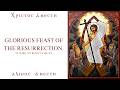
The Gospel reading opens with Mary Magdalene discovering the tomb empty and immediately reporting to Simon Peter and the disciple whom Jesus loved. The two run to the tomb; the younger disciple arrives first, peers in, then Peter enters and observes the linen wrappings and the separately folded head cloth. The narrative stresses detail: the grave clothes lie in order, and belief dawns even before the disciples recall scripture about rising. Mary remains weeping, encounters two angels, and then turns to find Jesus standing beside her. Mistaking him at first, she finally recognizes him when he speaks her name; he instructs her not to cling but to go and tell the brothers that he ascends to the Father. Mary obeys and becomes the first witness of the resurrection.
The liturgical prayers that follow move from praise into focused intercession. Blessings invoke apostolic lineage and ask for long life and faithfulness for bishops, priests, deacons, and the whole church. The prayers petition God to protect the faithful from visible and invisible enemies, to uproot idolatry and heresy, and to humble all forces opposed to the church. A theological reflection follows on the economy of salvation: God became flesh, not an angel or prophet, to renew humanity and break enmity between heaven and earth. The incarnation, passion, resurrection, and ascension work together to reconcile creation and to give the disciples Christ’s peace.
The assembly petitions for cleansing from hypocrisy, malice, and sin, and for the sanctifying work of the Holy Spirit. Practical petitions ask for provision, joy, and abundance even amid scarcity, and plead that fasting, martyrdom, and angelic care accompany the faithful. The litany then commemorates patriarchs, martyrs, confessors, and venerable fathers by name, invoking their prayers as a present help. The sequence closes with a unitive appeal to God’s mercy and a final Amen, leaving the community called to witness, holiness, and steadfastness in the risen life.
Key Takeaways
- 1. Resurrection turns grief into witness The encounter at the tomb moves sorrow into proclamation: Mary’s mourning becomes a missionary task once she recognizes the risen Lord. Recognition produces obedience, and obedience sends the one who loved into the community as the first herald. Resurrection faith thus reorients personal loss toward communal testimony and mission. [3:03:55]
- 2. Order in the empty tomb matters The detail of the linen cloths and the folded head covering signals intentionality, not theft or chaos; the scene testifies to a bodily, ordered rising. That order challenges simplistic spiritualizations of resurrection and insists on continuity between the crucified body and the risen life. Attention to such signs trains eyes to read God’s purposeful work amid apparent disorder. [3:02:15]
- 3. Incarnation restores fallen humanity The prayer emphasizes that God became truly human to renew what was broken, not by delegating salvation to angels or prophets but by entering the human condition. The incarnation affirms solidarity with the weak and provides a mediator who reconfigures the wall between heaven and earth. Salvation therefore reshapes human identity toward restored communion with God. [3:41:15]
- 4. Prayers guard the church's purity Intercession targets leadership, doctrine, and communal life, asking for protection against idolatry, heresy, and corrupting influences. The prayers frame spiritual vigilance as active work: naming threats, seeking divine uprooting of falsehood, and pleading for leaders to shepherd in righteousness. Persistent prayer thus secures the church’s holiness and steadies its mission in a contested world. [3:34:01]
Youtube Chapters