Jul 20, 2026
David felt a deep and specific pain. It was not an enemy who insulted him. It was a close companion, a man he trusted. They had shared sweet fellowship and worshiped God together. This friend’s betrayal caused David’s heart to be in anguish. Fear and trembling overwhelmed him. He wished for wings to fly far away from the tempest and storm.
This pain is different from other hurts. An enemy’s attack is expected. A friend’s betrayal cuts to the soul. It pulls the ground out from under you. David’s raw honesty shows us that such deep sorrow is a real part of the human experience. God does not dismiss the profound hurt caused by those we love.
You may carry a similar wound. The memory of a broken trust can still bring a wave of sorrow. The desire to escape the pain is a natural response. Do not rush to minimize this feeling. Instead, recognize its weight and its source. What specific betrayal from a trusted person still causes your heart anguish today?
Listen to my prayer, O God, do not ignore my plea; hear me and answer me. My thoughts trouble me and I am distraught because of what my enemy is saying, because of the threats of the wicked; for they bring down suffering on me and assail me in their anger. My heart is in anguish within me; the terrors of death have fallen on me. Fear and trembling have beset me; horror has overwhelmed me. I said, “Oh, that I had the wings of a dove! I would fly away and be at rest. I would flee far away and stay in the desert; I would hurry to my place of shelter, far from the tempest and storm.”
(Psalm 55:1-8, NIV)
Prayer: Ask God to help you name the specific betrayal that causes you the deepest pain.
Challenge: Write down the name of one person whose betrayal you still feel.
David did not hide his darkest emotions. He poured out his desire for revenge to God. He asked for death to surprise his enemies. He wanted them to go down alive to the realm of the dead. This is a harsh and shocking prayer. It comes from a place of deep, unedited hurt.
Bringing our anger to God is not a failure of faith. It is an act of faith. It means we trust God enough to handle our rawest emotions. We acknowledge that these feelings are too big for us to manage alone. God invites our whole selves into His presence, including our rage and our desire for vengeance.
You might feel you must suppress your anger to be a good Christian. But buried anger often poisons you from the inside. God can handle your honest cries, even the ones that feel wrong. What is one angry thought about your situation that you have been afraid to admit to God?
If an enemy were insulting me, I could endure it; if a foe were rising against me, I could hide. But it is you, a man like myself, my companion, my close friend, with whom I once enjoyed sweet fellowship at the house of God, as we walked about among the worshipers... Let death take my enemies by surprise; let them go down alive to the realm of the dead, for evil finds lodging among them.
(Psalm 55:12-15, NIV)
Prayer: Confess one specific angry or vengeful thought you have held onto.
Challenge: Set a timer for five minutes and speak all your frustrations about this hurt out loud to God.
After his emotional outburst, David’s focus shifted. Nothing had changed in his circumstances. He was still running for his life. But something changed inside him. He turned from his problem to his God. He remembered the Lord who is enthroned from of old, who does not change. This God hears and saves.
David moved from wanting to take action himself to trusting God to act. He released his need for personal revenge. He entrusted justice to the One who rules eternally. This turn is the pivot point. It is the moment honesty gives way to hope, and pain gives way to promise.
Your situation may also remain unchanged. The hurt is still real. The consequences are still present. But you can choose where to fix your gaze. Will you stare only at the betrayal, or will you turn to the unchanging God? What is one unchanging truth about God you can hold onto today?
As for me, I call to God, and the Lord saves me. Evening, morning and noon I cry out in distress, and he hears my voice. He rescues me unharmed from the battle waged against me, even though many oppose me. God, who is enthroned from of old, who does not change—he will hear them and humble them, because they have no fear of God.
(Psalm 55:16-19, NIV)
Prayer: Thank God that He does not change, even when your circumstances are unstable.
Challenge: Identify one specific, past instance where God helped you through a difficult time.
David’s personal experience became a command to all who would read his words. He issued an invitation from the depths of his pain. Cast your cares on the Lord. The promise attached is not that the cares will vanish. The promise is that He will sustain you. He will hold you up so you are not shaken.
This is the heart of the poem. We are not called to deny our cares, but to cast them. We are to throw them onto the One strong enough to carry them. This act of transfer is our part. The sustaining is God’s part. He shoulders the burden we were never meant to carry alone.
You may be trying to carry a weight of betrayal that is too heavy for you. The burden of hurt, anger, and confusion is exhausting. God’s invitation is to intentionally hand that load over to Him. What specific care do you need to cast onto the Lord right now?
Cast your cares on the Lord and he will sustain you; he will never let the righteous be shaken. But you, God, will bring down the wicked into the pit of decay; the bloodthirsty and deceitful will not live out half their days. But as for me, I trust in you.
(Psalm 55:22-23, NIV)
Prayer: Ask God for the strength to release your grip on a specific care you are carrying.
Challenge: Write a single word representing your biggest care on a piece of paper and physically place it in a box as a symbol of casting it to God.
The foundation for casting our cares is God’s character. Peter, who knew this Psalm well, quoted David and then added the reason why we can do this. We cast all our anxiety on Him because He cares for us. This is the ultimate truth. God’s never-giving-up love is the bedrock that makes honesty and trust possible.
God is not a distant king but a caring Father. He listens like a perfect parent. He offers compassion and a safe place for our tears. He assures us of His presence. This caring nature of God is what makes the entire process of Psalm 55 work. We can be honest because we are loved.
Your ability to trust God with your pain rests on your belief that He cares for you personally. It is not a theological concept but a relational reality. How would your response to hurt change if you truly believed God cared for you deeply?
Humble yourselves, therefore, under God’s mighty hand, that he may lift you up in due time. Cast all your anxiety on him because he cares for you.
(1 Peter 5:6-7, NIV)
Prayer: Thank God for His specific, personal care for you in your current situation.
Challenge: Call a trusted friend and tell them one reason you know God cares for you.
Psalm 55 receives close attention as a raw study of betrayal and trust. The psalm’s setting centers on a trusted companion who turns against the psalmist—an act that produces terror, anguish, and a desire to flee. The psalmist names the pain plainly: fear, horror, a wish to escape “like a dove,” and even imprecations against enemies. Those emotions move from vivid complaint to a decisive turn: after pouring out anger and grief, the psalmist calls to God and finds steadiness. The poem insists that honest lament is not a failure of faith but the route by which a person can arrive again at trust.
The historical shadow of David’s experience—abandonment by a close advisor during Absalom’s rebellion—frames the intensity of the Psalm’s language and the reality that betrayal often comes from within one’s own circle. The psalm models a pattern: acknowledge pain candidly, bring that honesty to God, and then entrust the outcome to God’s unchanging rule. The imperative “Cast your cares on the Lord” becomes the center: cares entrusted do not erase loss, but they prevent overwhelm and enable continued faithful living. An extended, personal example of professional rejection illustrates how honest processing of hurt, mutual confession within family, and renewed reliance on God’s sustaining care can transform lingering pain into deeper trust.
The psalm also balances raw human desire for justice with a relinquishing of personal vengeance. After the outcry and the cry for rescue, the psalmist rests on the theological claim that God, enthroned and unchanging, will act. The New Testament echo in Peter’s instruction to cast “all” cares underscores the Psalm’s continuing pastoral function: God cares deeply and receives the whole of human sorrow. Practical realism follows—the psalm does not promise instant restoration of what was lost, but promises a sustaining presence that keeps the faithful from being shaken and equips them to go on. An invitation to a tangible posture of receiving prayer captures the poem’s pastoral arc: honest lament, entrustment, and renewed perseverance under God’s care.
There is something uniquely painful about being betrayed by someone we trust; it's a deeper pain that's harder to get over.
The Bible is full of stories of people who are real and relatable, just like you and me.
When we are hurt it doesn’t do us any good to minimize what we are feeling or pretend like it isn’t there.
God invites us to come to him with the whole of who we are—joys and pains, confidence and doubts, faith and questions.
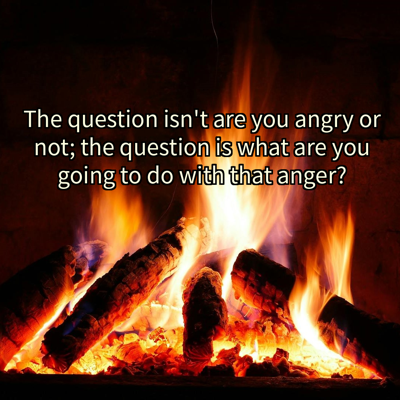
The question isn't are you angry or not; the question is what are you going to do with that anger?
Entrusting all of our cares to God does not mean that they will magically go away. But it does mean that they won’t overwhelm us.
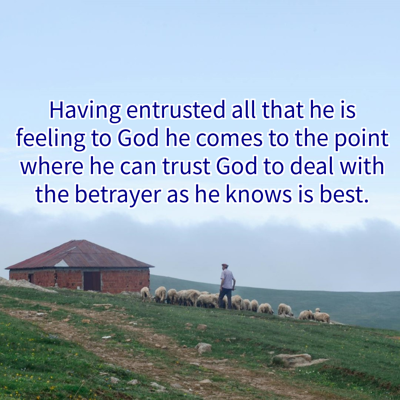
Having entrusted all that he is feeling to God he comes to the point where he can trust God to deal with the betrayer as he knows is best.
God is a God of unfailing love — a never-gives-up kind of love.
Hi, I'm an AI assistant for the pastor that gave this sermon. What would you like to make from it?
Add this chatbot onto your site with the embed code below
<iframe frameborder="0" src="https://pastors.ai/sermonWidget/sermon/rest-god-betrayal" width="100%" height="100%" style="height:100vh;"></iframe>Copy