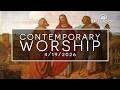
The Emmaus scene unfolds as a portrait of hope lost and hope restored. Two disciples walk away from Jerusalem heavy with disappointment because their expectations about the Messiah died with the cross. The resurrected Christ appears, still bearing wounds, and walks alongside them—listening, questioning, and reframing the story of Israel through scripture so that their hearts begin to burn within them. Recognition comes not by spectacle but through presence: the risen One draws near, stays with the travelers, and reveals salvation in the pattern of death and resurrection.
The narrative insists that spiritual sight often fails at the moment it is needed most. Eyes can be kept from seeing for reasons that remain mysterious, and God allows honest grief, doubt, and the question “How could a good God let this happen?” to surface. Yet those same humans who stumble in darkness also encounter God in small, ordinary ways—conversation, hospitality, shared bread, communal scripture and song. Testimony after testimony shows that practices of silence, Scripture, fellowship, music, accountability, and service prepare the heart to recognize the living Christ.
The risen presence is not merely a distant doctrine; it functions as everyday accompaniment. The Spirit that raised Jesus continues to come near, to walk beside, to listen, and to lead as long as it takes for eyes to open. Seeing Jesus often happens in the messiness of life rather than in curated religious moments. The community’s role proves decisive: saints walking together, supporting one another in grief and praise, create the conditions in which recognition deepens and hope revives.
Finally, the scene presses a missionary ethic: when eyes open, they begin to see Christ in those the world ignores and dehumanizes. That recognition reshapes behavior—calling the faithful outward to embody resurrection mercy. The narrative closes with an assurance that even when Jesus remains unseen, the Holy Spirit persists; therefore, people can go into a bruising world not as orphaned mourners but as companions who carry and reveal the presence of the risen Christ.
Key Takeaways
- 1. The resurrected Jesus walks beside Jesus comes close to accompany grief and confusion, not to lecture. Presence precedes explanation: proximity to the risen Christ creates the conditions for the heart to reorient and for understanding to follow. Companionship counts more than proof when hope has died; being accompanied changes the shape of mourning and opens a path toward renewed hope. [49:27]
- 2. Grief surfaces as "but we hoped" Unfulfilled expectations often arrive in the form of a single bitter line—“but we had hoped”—that names the gap between promise and reality. Allowing that honest lament prevents spiritual bypassing and anchors faith in real vulnerability, where God’s responses can land meaningfully. Naming the lost hope clarifies what needs to be healed and what resurrection must redeem. [48:05]
- 3. Eyes kept from seeing God Divine blindness can be a purposeful part of the journey, not merely spiritual failure. Such blindness forces dependence on God’s timing and invites practices that cultivate attentiveness rather than entitlement to visions. Waiting for God’s reveal refines faith into patience and humility. [52:52]
- 4. Quiet practices awaken sight of Jesus Silence, scripture, shared music, accountability, and service form a habitual scaffold that readies the heart to recognize Christ. These practices do not manufacture sight but remove the noise and pride that obscure perception, making ordinary moments sacramental. Regular spiritual rhythms train the soul to notice God’s footsteps beside it. [68:00]
- 5. Holy Spirit stays, even unseen The Spirit continues to accompany and act even when sight and assurance lag. Presence that persists in absence grounds courage for ministry and compassion toward those the world rejects. That promise enables faithful movement into a world that will test hope. [75:18]
Youtube Chapters
- [00:00] - Welcome
- [03:46] - Community announcements & events
- [10:22] - Children's teachable moment
- [16:38] - Shared prayers and intercession
- [22:16] - Offering and passing the peace
- [46:32] - Transition to the Emmaus narrative
- [47:47] - The "but we had hoped" lament
- [49:27] - The resurrected Christ walks beside
- [52:52] - Divine blindness and recognition
- [53:59] - Testimonies: Emmaus experiences
- [67:03] - Closing call to open eyes and go out