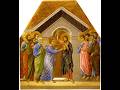
John 20:19–23 presents a decisive encounter that reshapes frightened followers into commissioned witnesses. Locked behind closed doors and gripped by fear after the passion, the disciples encounter the risen Jesus, who greets them with “Peace be with you,” displays his wounds, and reorients their broken expectations. That greeting functions as recalibration: it restores memory of relationship, reorders shattered hope, and invites renewed trust. The same moment moves immediately into commission—“As the Father has sent me, so I send you”—making mission a continuation of Jesus’ life, love, and nonviolent witness.
The narrative then gives a tangible sign of empowerment: Jesus breathes on the disciples and says, “Receive the Holy Spirit.” The breath links the Spirit with vocation. The Spirit appears as the enabling presence that had shaped Jesus’ own ministry—leading him into the wilderness, anointing him to proclaim good news, and empowering acts of liberation. Receiving the Spirit affirms the disciples’ identity and equips them to participate in God’s ongoing work rather than treating God’s activity as a one-time event.
The text surfaces practical pastoral realities. Those who have been traumatized or have hidden themselves for safety face divine invitation to recalibrate, to remember who they were called to be, and to let the Spirit reorder their lives. Ordination rites and communal laying on of hands function as communal enactments of this same pattern: public affirmation, Spirit-filled equipping, and mutual support for mission. Contemplative practices and spiritual inventories become concrete means to notice where the Spirit has led and where recalibration remains necessary.
The passage closes as a call to come out of hiding—out of shame, fear, and isolation—and to step into mission with the assurance that the risen Christ trusts, equips, and sends. The combination of peace, commission, and Spirit reframes discipleship as relational, communal, and Spirit-empowered work that continues the nonviolent, life-giving movement revealed in Jesus. The risen one’s breath both restores and propels; the invitation is to live publicly into that restoration and to join the ongoing work of God in the world.
Key Takeaways
- 1. Peace reorders fearful lives The greeting “Peace be with you” undoes paralysis and reorients scattered hearts toward trust. Peace here is not merely comfort; it reconstructs memory, resets expectations, and establishes inner coherence so purpose can emerge. When fear fragments identity, divine peace brings the pieces back into a trajectory for renewed action. [29:34]
- 2. Mission requires the Holy Spirit Commission flows only after Spirit-giving; vocation and empowerment arrive together. The Spirit is not an optional add-on but the presence that enables faithful witness, following the pattern of Jesus’ own Spirit-led ministry. Participation in God’s mission therefore assumes ongoing dependence on Spirit guidance and power. [34:23]
- 3. Recalibration starts with memory Reordering begins by remembering who was with them and what he taught; memory fuels commitment. Looking back at embodied encounters with Jesus clarifies what needs repair and what to recommit to going forward. Spiritual inventories that track the Spirit’s movement help reveal where recalibration remains necessary. [30:05]
- 4. Step out of hiding The resurrected presence calls the fearful to emerge and act despite risk. Leaving shame and self-protection does not presume readiness but trusts the Spirit’s equipping and presence. Small steps of faith, supported by communal affirmation, participate in God’s larger movement toward life and justice. [45:49]
Youtube Chapters