
Radical Love: Embracing Community in Christ
Aug 13, 2025
Radical Love: Embracing Community in Christ
Summary
The call to follow Jesus and gather together as the Bible describes is a challenge to rethink how we live, love, and relate to one another. Too often, we default to cultural norms—especially in America—where independence and self-sufficiency are prized, and church can become just another institution rather than a living, loving family. But God’s design for His people is radically different. Jesus’ command to love one another as He has loved us is not a suggestion or a surface-level nicety; it is a call to a supernatural, sacrificial, and servant-hearted love that stands out in a world marked by loneliness and division.
This love is not abstract. It is practical, visible, and deeply relational. The simple act of greeting one another—truly noticing, welcoming, and embracing each other—reflects the heart of God. In a culture where people often feel invisible or isolated, a genuine greeting can be a powerful ministry. It’s not about cultural gestures like a kiss of love, but about breaking through our comfort zones to draw close, to make others feel seen and valued, and to embody the warmth of Christ’s love.
But the call goes deeper still. We are to have a profound concern for one another, caring for each other’s needs as if they were our own. This means moving beyond token gestures or giving out of our excess. Instead, we are to give our best, just as God gave His best—His own Son—for us. When someone in the body suffers, we all share in that suffering; when one is honored, we all rejoice. This mutual care is not just a duty but a privilege, a way to participate in the very life of Christ.
God often taps us on the shoulder, inviting us to be the answer to someone else’s prayer. Sometimes, this means giving sacrificially, even when it’s inconvenient or costly. Other times, it means trusting that God will provide for us as we pour ourselves out for others. The challenge is to remain sensitive to the Spirit’s leading, to resist cynicism or fear, and to let love overflow in practical ways. In doing so, we become a living testimony to the world—a glimpse of heaven on earth, an embassy of Christ’s kingdom where love is real, tangible, and transformative.
Key Takeaways
- Supernatural Love Over Cultural Norms
The love Jesus calls us to is not natural to our culture or even to our instincts. It is a supernatural love that requires us to lay down our pride, comfort, and self-interest, just as Jesus laid down His life for us. This love is the distinguishing mark of true discipleship and is meant to be so unusual that the world takes notice. [02:57]
- The Power of Genuine Welcome
Greeting one another is more than a formality; it is a ministry of presence and affirmation. When we truly notice and welcome others, especially newcomers or those on the margins, we reflect the heart of Christ and break the cycle of loneliness and invisibility that plagues so many. Our warmth and openness can be the first step in someone experiencing the love of God. [12:39]
- Giving Our Best, Not Our Leftovers
True Christian generosity is measured not by what is convenient or expendable, but by what we ourselves would value. Just as God gave His most precious gift for us, we are called to give sacrificially and thoughtfully, meeting needs with the same care and quality we would desire for ourselves. This kind of giving transforms both the giver and the receiver. [31:08]
- Mutual Care and Shared Burdens
The body of Christ is designed for mutual care, where every member is valued equally and no one’s suffering or joy is ignored. When one part of the body hurts, we all hurt; when one is honored, we all rejoice. This unity and empathy are essential for a healthy, Christlike community and require us to move beyond favoritism or cliques. [42:32]
- Responding to God’s Promptings
God often answers prayers through the obedience of His people. When we sense the Spirit prompting us to meet a need, it is an invitation to participate in God’s provision and love. Even when it feels costly or inconvenient, responding to these promptings deepens our faith and allows us to experience the joy of being used by God for His purposes. [38:04]
Youtube Chapters
[00:00] - Welcome
[01:00] - Rethinking Church and Fellowship
[02:57] - Jesus’ Command: Love as I Have Loved
[05:30] - The Challenge of American Individualism
[08:00] - The Biblical Call to Genuine Fellowship
[10:56] - Personal Story: Feeling Invisible in Church
[12:39] - Turning Hurt into Ministry
[15:52] - The Importance of Balanced Hospitality
[19:28] - Audio Reflection: Passionate Concern
[21:49] - Meeting Needs as a Unified Body
[31:08] - Giving Our Best: Lessons from Watchman Nee
[33:40] - Radical Love that Transforms
[36:57] - God’s Tap: Being the Answer to Prayer
[38:04] - Learning to Respond to God’s Promptings
[42:32] - Mutual Care and Shared Suffering
[46:44] - Finding Love in God First
[57:00] - Compassion Without Enabling
Study Guide
Bible Study Discussion Guide: Supernatural Love and Genuine Fellowship
---
### Bible Reading
John 13:34-35 (ESV)
> "A new commandment I give to you, that you love one another: just as I have loved you, you also are to love one another. By this all people will know that you are my disciples, if you have love for one another."
Romans 16:16 (ESV)
> "Greet one another with a holy kiss. All the churches of Christ greet you."
1 Corinthians 12:24b-26 (ESV)
> "But God has so composed the body, giving greater honor to the part that lacked it, that there may be no division in the body, but that the members may have the same care for one another. If one member suffers, all suffer together; if one member is honored, all rejoice together."
---
### Observation Questions
1. According to John 13:34-35, what is the standard Jesus gives for how we are to love one another?
2. In Romans 16:16, what does Paul instruct believers to do, and what does this say about the nature of Christian community?
3. In 1 Corinthians 12:24-26, what is the expected response of the church when one member suffers or is honored?
4. The sermon described how American culture often values independence and self-sufficiency. How does this contrast with the biblical picture of church community? [[02:57]]
---
### Interpretation Questions
1. Jesus says to love one another “as I have loved you.” What are some ways Jesus demonstrated this love, and how might that challenge our usual ways of relating to others? [[02:57]]
2. The sermon shared a story about feeling invisible in church. Why do you think a simple greeting or welcome can have such a deep impact on someone? [[10:56]]
3. In 1 Corinthians 12, Paul talks about mutual care and shared burdens. What does it look like for a church to actually live this out, especially when it comes to suffering or celebrating together? [[42:32]]
4. The sermon mentioned that God sometimes “taps us on the shoulder” to be the answer to someone else’s prayer. Why might God choose to work this way, and how does it grow our faith? [[38:04]]
---
### Application Questions
1. The sermon challenged us to move beyond cultural norms of independence and comfort. In what areas of your life do you find it hardest to let others in or to depend on others? What would it look like to take a step toward deeper community this week? [[02:57]]
2. Think about the last time you were new somewhere—maybe at church, work, or a social event. How did people greet you? How did it make you feel? Is there someone in our church or group you could intentionally welcome this week? [[12:39]]
3. The pastor shared about giving not just leftovers, but our best, to those in need. Is there a way you can give sacrificially—your time, resources, or attention—to someone this month? What would it cost you, and what might God want to teach you through it? [[31:08]]
4. When you hear about someone in the church who is suffering or celebrating, what is your natural response? How can you grow in sharing both the burdens and the joys of others in our community? [[42:32]]
5. Have you ever sensed God prompting you to help someone, but hesitated because it was inconvenient or uncomfortable? What happened? How can you be more sensitive and responsive to the Spirit’s leading in the future? [[38:04]]
6. The sermon warned against letting cynicism or fear keep us from loving others. Are there any past experiences or disappointments that make it hard for you to reach out? How can you bring those to God and ask for renewed love? [[46:44]]
7. Sometimes we worry about being “taken advantage of” when helping others. How can we balance wise boundaries with a willingness to love sacrificially, as Jesus did? [[57:00]]
---
Closing Prayer Suggestion:
Ask God to help your group love one another with the supernatural, sacrificial love of Jesus, to notice and welcome those who feel invisible, and to be sensitive to the Spirit’s promptings to care for each other in practical ways.
Devotional
Day 1: Love One Another as Jesus Loved Us
Jesus calls His followers to a radical, self-giving love for one another, modeled after His own sacrificial love. This love is not just a feeling but an action—serving, humbling oneself, and laying down personal preferences for the good of others. It is a love that stands out in a world where people often keep their distance and look out for themselves. When believers love each other in this way, it becomes a powerful witness to the world, showing them a glimpse of heaven on earth. This is not easy or natural, but it is the supernatural love that Jesus commands, and it is how others will know we are His disciples. [02:57]
John 13:34-35 (ESV)
"A new commandment I give to you, that you love one another: just as I have loved you, you also are to love one another. By this all people will know that you are my disciples, if you have love for one another."
Reflection: Who in your church family could you serve in a practical, humble way this week, even if it feels uncomfortable or inconvenient?
Day 2: Greet One Another with Genuine Affection
Biblical greeting goes beyond a simple hello; it is an act of mutual affection and welcome that breaks down barriers and draws people into true fellowship. In a culture where people often feel invisible or isolated, a warm, sincere greeting can be a powerful expression of Christ’s love. It means noticing those who are new or alone, stepping out of our comfort zones, and making everyone feel seen and valued. This kind of greeting is not about cultural rituals but about building a community where no one feels like a stranger and everyone experiences the love of God through His people. [12:39]
1 Peter 5:14 (Amplified Bible)
"Greet one another with a kiss of love [that is, a symbol of mutual affection]."
Reflection: Is there someone in your church or community who often goes unnoticed? How can you intentionally reach out to them and make them feel truly welcomed?
Day 3: Have Deep Concern for One Another
God calls His people to a deep, mutual concern for each other, where every member of the body is valued and cared for. This means moving beyond surface-level relationships and being willing to share in each other’s joys and sufferings. When one person is in need or hurting, the whole community responds with compassion and practical help, not just words or prayers. This unity and shared concern reflect the heart of Christ and create a family where no one is left to struggle alone. [42:32]
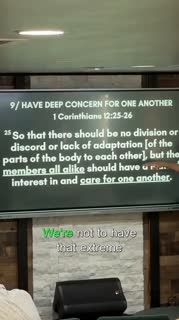
1 Corinthians 12:25-26 (ESV)
"That there may be no division in the body, but that the members may have the same care for one another. If one member suffers, all suffer together; if one member is honored, all rejoice together."
Reflection: When was the last time you shared in someone else’s suffering or joy in your church? What is one step you can take to deepen your concern for another member this week?
Day 4: Give as You Would Want to Receive
True Christian generosity is measured not by what is convenient to give, but by giving to others as you would want to receive yourself. This means offering your best, not your leftovers, and meeting needs with the same care and quality you would desire if you were in their place. It challenges us to rethink our motives and actions, moving from minimal charity to genuine, Christlike giving that reflects God’s own sacrificial love for us. [31:08]
Luke 6:31 (ESV)
"And as you wish that others would do to you, do so to them."
Reflection: Think of a current need in your church or community—how can you meet that need in a way that you yourself would hope to be treated if the roles were reversed?
Day 5: Respond to God’s Promptings to Love
God often taps us on the shoulder, prompting us to meet the needs of others in ways that may stretch our faith or resources. When we are sensitive to His leading, we become His hands and feet, providing timely help and encouragement. Sometimes, God’s answer to someone’s prayer is you. As you respond to these promptings, you not only bless others but also experience God’s provision and love in new ways. [38:04]
Galatians 6:2 (ESV)
"Bear one another’s burdens, and so fulfill the law of Christ."
Reflection: When have you sensed God prompting you to help someone? What would it look like to say “yes” to His leading today, even if it costs you something?
Quotes






-
I'm an AI bot trained specifically on the sermon from Aug 13, 2025. Do you have any questions about it?