Jul 07, 2026
The people of Israel sang a specific song in worship. The leader would call out, "Give thanks to the Lord, for he is good." The entire congregation would respond together, "His love endures forever." They declared God's hesed love. This Hebrew word means a love that never gives up. It is an unfailing, committed, and faithful love.
This love is the foundation of everything. God's character is defined by this hesed. He is compassionate and gracious. He is slow to anger and abounding in this faithful love. The entire Psalm is framed by this truth. Every act of rescue and redemption flows from this unchanging nature of God.
You can build your life on this love. It is not a fleeting emotion but a rock-solid promise. God's commitment to you will not fail, even when your own strength does. When you feel uncertain, you can declare this truth about God's character. What area of your life most needs the assurance of God's unfailing love today?
Give thanks to the Lord, for he is good; his love endures forever. Let the redeemed of the Lord tell their story—those he redeemed from the hand of the foe.
(Psalm 107:1-2, NIV)
Prayer: Thank God for His specific, unfailing love that never gives up on you.
Challenge: Write down the phrase "His love endures forever" and place it where you will see it three times today.
Some people wandered in desert wastelands. They could not find their way to a safe city. They grew hungry and thirsty. Their strength completely failed them. In their desperate trouble, they finally cried out to the Lord. He heard them and delivered them from their distress. He led them on a straight path to a place of safety and provision.
This describes a physical journey, but also a spiritual one. We can wander away from God through doubt, distraction, or pain. We can feel lost and without direction. Jesus is the good shepherd who seeks the lost sheep. He responds to our honest cry for help by providing guidance and sustenance.
You may feel lost right now. Your life might lack a clear direction or purpose. Your soul may feel parched. The invitation is to simply cry out to God. He is ready to lead you to a place of settlement and satisfaction. Where in your life are you currently wandering and in need of God's direction?
Some wandered in desert wastelands, finding no way to a city where they could settle. They were hungry and thirsty, and their lives ebbed away. Then they cried out to the Lord in their trouble, and he delivered them from their distress.
(Psalm 107:4-6, NIV)
Prayer: Ask God to lead you out of your personal wilderness and onto a straight path.
Challenge: Identify one specific area where you feel lost and verbally ask God for direction.
Some people sat in darkness, in utter darkness. They were prisoners suffering in iron chains. This was a consequence of their own rebellion against God. They stumbled, and no one was there to help them. Then they cried to the Lord in their trouble. He saved them from their distress. He brought them out of darkness and broke their chains apart.
God has a history of breaking chains. He freed Joseph from an Egyptian prison. He liberated the entire nation of Israel from slavery. The apostles Peter and Paul experienced miraculous jailbreaks. God’s power is greater than any physical or spiritual bondage. His love compels Him to shatter the locks that hold us captive.
Your prison may not have physical bars. It could be an addiction, a hurt, or a destructive habit you cannot break on your own. You may feel trapped in utter darkness. The same power that broke Peter’s chains is available to you. Will you cry out to the God who is a chain breaker?
Some sat in darkness, in utter darkness, prisoners suffering in iron chains, because they rebelled against God’s commands and despised the plans of the Most High. Then they cried to the Lord in their trouble, and he saved them from their distress. He brought them out of darkness, the utter darkness, and broke away their chains.
(Psalm 107:10-11, 13-14, NIV)
Prayer: Confess one specific chain that holds you and ask God to break it.
Challenge: Tell one trusted person about the chain you are asking God to break.
Some people became fools through their rebellious ways. They suffered affliction because of their own sins. They grew so sick they loathed all food and drew near to death’s door. Then they cried to the Lord in their trouble. He saved them from their distress. He sent out his word and healed them. He rescued them from the grave.
This group’s trouble was undeniably their own fault. Their poor choices led directly to their suffering. Yet, God did not abandon them to the consequences of their actions. His response to their cry was not judgment but healing. His word has the power to rescue and restore even from self-inflicted wounds.
You may be living with the heavy consequences of a bad decision. A financial mistake, a relationship failure, or a personal compromise may have brought you near your breaking point. God’s healing word is not reserved for the innocent but for the crying. Do you believe God’s love is big enough to heal the mess you made?
Some became fools through their rebellious ways and suffered affliction because of their iniquities. They loathed all food and drew near the gates of death. Then they cried to the Lord in their trouble, and he saved them from their distress. He sent out his word and healed them; he rescued them from the grave.
(Psalm 107:17-20, NIV)
Prayer: Ask God to send His healing word into the situation caused by your past failure.
Challenge: Write down one consequence of a past sin and pray over it, asking for God's redemption.
Some people went out to sea in ships. They were merchants on the mighty waters. But God stirred up a tempest that lifted high the waves. Their ships mounted up to the heavens and went down to the depths. Their courage melted away in their peril. They were at their wits’ end. Then they cried out to the Lord in their trouble. He brought them out of their distress. He stilled the storm to a whisper and hushed the waves.
For the Israelites, the sea represented chaos and danger. This storm was not necessarily their fault; it was a danger of the world. Being at your wits’ end means you have exhausted all your own resources and solutions. In that moment of total helplessness, God demonstrated His absolute power over chaos and His ability to guide them to safety.
You may be in a storm you did not create. A health diagnosis, a job loss, or a global crisis can make you feel like you’re going under. Your courage may melt away. God’s love for you is not diminished by the chaos. He specializes in calming storms and guiding His people to a desired haven. What storm are you facing that requires you to cry out to God?
Some went out on the sea in ships; they were merchants on the mighty waters. They saw the works of the Lord, his wonderful deeds in the deep. For he spoke and stirred up a tempest that lifted high the waves. They mounted up to the heavens and went down to the depths; in their peril their courage melted away. They reeled and staggered like drunkards; they were at their wits’ end. Then they cried out to the Lord in their trouble, and he brought them out of their distress.
(Psalm 107:23-28, NIV)
Prayer: Cry out to God about the specific storm that has brought you to your wits' end.
Challenge: Set a timer for five minutes to sit in silence, picturing Jesus calming the storm in your life.
Psalm 107 receives attention as the ancient songbook’s vivid portrait of God’s hesed—an unfailing, steadfast love that bookends the poem and holds its stories together. The Psalm situates songs as memory-carriers: music preserved belief when literacy was scarce, and the Psalms taught Israel who God is and what God has done. Verse one issues a liturgical call and response that both proclaims God’s goodness and invites the redeemed to tell how God rescued them. The bulk of the Psalm narrates four representative rescues—those who wandered in deserts, those bound in iron chains, those ruined by their own folly, and those threatened by tempestuous seas—each story following the same pattern: distress, cry to the Lord, divine deliverance, and thanksgiving. Each episode functions as both historical memory and portable metaphor: wandering speaks to aimlessness and spiritual doubt; imprisonment to addiction, shame, or bondage; folly to consequences of sinful choices; storms to overwhelming external trials.
The Hebrew term hesed appears as the theological lens through which every rescue must be read—acts of mercy, faithfulness, and compassion rather than mere emotional feeling. The Psalm moves worship into witness: the redeemed, having experienced deliverance, receive a command to recount their stories so that God’s deeds multiply through testimony. This summons receives practical application in the call to ponder God’s loving deeds, to shape personal narratives in three sentences, and to share those narratives with others. The text’s theology of rescue culminates in an invitation: lives are more broken than they appear and simultaneously more loved than can be measured; the proper response is to entrust personal stories to God’s redemptive purposes. Historical echoes—Joseph’s prison release, Israel’s exodus, John Newton’s conversion leading to Amazing Grace—illustrate how individual rescue becomes communal and far-reaching. The Psalm thus functions as theology and pastoral practice: it names human trouble, locates divine action, and charges experience with testimony so that rescue begets more rescue.
When we want to know someone we often start by learning their story.
What led me to want to spend the rest of my life with her was her story and how it matched mine.
Hesed is the kind of love that never gives up, a love that is unfailing.
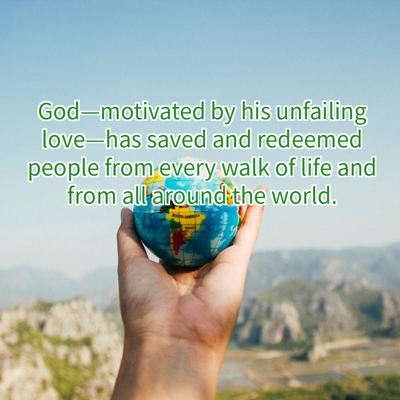
God—motivated by his unfailing love—has saved and redeemed people from every walk of life and from all around the world.
When these people cried out to God and asked for help, he saved them.
For our stories to be as great as they can be, we need to take God’s offer of love and grace and wrap our story in his.
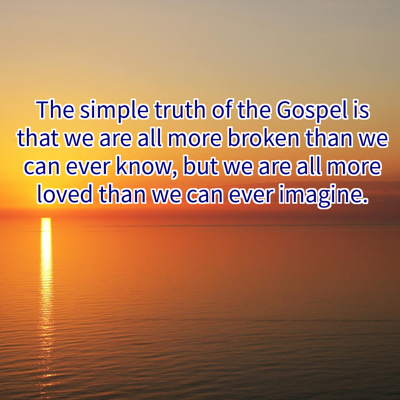
The simple truth of the Gospel is that we are all more broken than we can ever know, but we are all more loved than we can ever imagine.
You don’t have to stay lost forever; God is offering his help and rescue right now.
Many of us have followed Jesus for a long time but have never been asked to sit down and write out a simple version of our faith story.
Hi, I'm an AI assistant for the pastor that gave this sermon. What would you like to make from it?
Add this chatbot onto your site with the embed code below
<iframe frameborder="0" src="https://pastors.ai/sermonWidget/sermon/psalm-107-redeemed-story" width="100%" height="100%" style="height:100vh;"></iframe>Copy