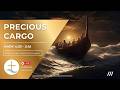
Mark sets the story between two simple lines: Jesus says, “Let us cross over to the other side,” and then the boat comes to the other side. The text makes the trip sound so simple at the beginning and the end, but the glory is in the in between. God orders the steps of the righteous, but God also works in all the stuff between one step and the next. The storm becomes the place where Christ shows who he is, what he does, and how faith learns to trust him.
Jesus becomes the first part of the precious cargo. Mark says the disciples “took him along in the boat as he was.” The boat cannot succeed without him, and life cannot succeed without him. Christ is not just a passenger added to a journey, but the captain who directs and gives the orders. Jesus must be received “as he was,” not as someone reshaped to fit human desire. He is Savior and Lord. At the same time, Jesus receives sinners just as they are, ruined and weak, and then he changes them. Christ does not change, but Christ changes his people and makes them what he calls them to be.
The facts become the second part of the precious cargo. The disciples panic and say, “Teacher, do you not care that we are perishing?” Their fear makes two false claims. The facts say Jesus always cares. The Good Shepherd lays down his life for the sheep, and he does not run like a hireling. The facts also say his people shall never perish. Feelings may say abandonment, fear, loneliness, or destruction, but God’s word stands when feelings shake like a boat in a storm.
Faith becomes the third part of the precious cargo. Jesus rises, rebukes the wind, and says to the sea, “Peace, be still.” Then Jesus asks, “Why are you so fearful? How is it that you have no faith?” Fear and faith are at war with each other. One will rule. The disciples begin by fearing the storm, but after the great calm they fear Jesus with reverence and awe. The storm shifts their fear from danger to worship. Christ brings his people through the in between so that they can say more truly who he is. Even the wind and the sea obey him, and soon even demons will bow before him.
##
Key Takeaways
- 1. Take Jesus as he is Jesus cannot be edited into a more convenient version of himself. The text says the disciples took him “as he was,” and that phrase carries both comfort and authority. Christ receives sinners as they are, but he does not remain a servant of human preferences, because he is Savior and Lord. [13:04]
- 2. Feelings must answer to facts Fear spoke loudly in the boat, but fear did not tell the truth. The disciples felt uncared for and doomed, but the facts were that Jesus cared and that his own would not perish. The Christian life often turns on deciding whether the loudest feeling or the living word of God gets the final say. [24:05]
- 3. Fear and faith fight for rule Faith and fear do not sit peacefully side by side as equals. One bows the heart before Christ, and the other bows the heart before the storm. Jesus does not treat fear as a small thing, because fear can become the thing that gives orders and receives reverence. [35:42]
- 4. The storm reveals Christ’s glory The storm was not wasted space between departure and arrival. The wind, waves, and panic became the place where the disciples learned that Jesus is more than teacher, more than prophet, and more than king as they had understood him. The “in between” became holy ground because Christ showed his authority there.
## [42:51]
Youtube Chapters
- [00:00] - Welcome
- [00:38] - Mark 4:35 to 5:1 Reading
- [01:56] - Precious Cargo and the In Between
- [05:55] - First Cargo: Take Jesus
- [10:03] - Other Little Boats With Him
- [13:04] - Receiving Jesus As He Is
- [19:52] - Second Cargo: Bring the Facts
- [24:05] - Panic Forgets What Is True
- [30:23] - God Says Who People Are
- [35:22] - Third Cargo: Have Faith
- [39:06] - Fear That Takes Control
- [42:51] - From Fearing Storms to Fearing Christ
- [44:04] - Thank God for the Storm