Suffering is a reality that touches every life, but for those who follow Jesus, it is not a sign of God’s absence or displeasure. Instead, suffering becomes a sacred space where God draws near, offering comfort and presence. Rather than seeing pain as a barrier to God’s love, we are invited to see it as a place where God meets us most intimately. In our hardships, we can soak in the Spirit’s solace, discovering a deeper awareness of God’s sustaining presence. When we allow ourselves to be honest about our pain, we open ourselves to the healing and companionship of Christ, who knows suffering firsthand and walks with us through every valley.
This perspective does not minimize the reality of suffering, but it transforms it. Instead of running from pain or pretending it doesn’t exist, we can bring our wounds to God, trusting that He is not distant or indifferent. Our suffering, then, becomes a supplement—a way God deepens our faith, shapes our character, and fills us with His Spirit. In these moments, we are reminded that God’s love is not proven by the absence of hardship, but by His presence with us in the midst of it.
“Blessed be the God and Father of our Lord Jesus Christ, the Father of mercies and God of all comfort, who comforts us in all our affliction, so that we may be able to comfort those who are in any affliction, with the comfort with which we ourselves are comforted by God.” (2 Corinthians 1:3-4, ESV)
Reflection: Where in your life are you experiencing pain or hardship right now? How might you invite God to meet you in that place, rather than trying to avoid or numb the suffering?
True humility is not about thinking less of yourself or neglecting your own needs. It is about being so deeply rooted in your identity as God’s beloved that you are free to serve others without fear of losing yourself. When you know that nothing can separate you from the love of Christ, you are released from the need to prove yourself or protect your own interests. This security in Christ is the wellspring of genuine humility—a humility that is not self-erasing, but self-offering.
Jesus modeled this kind of humility through His “kenosis”—His self-emptying love. He did not serve from a place of depletion, but from the fullness of being fully known and loved by the Father. In the same way, we are called to pour ourselves out for others, not because we are running on empty, but because we are filled with the unshakeable security of God’s love. Serving from this place is not only sustainable, but it is also life-giving, both for us and for those we serve.
“For you have died, and your life is hidden with Christ in God. When Christ who is your life appears, then you also will appear with him in glory.” (Colossians 3:3-4, ESV)
Reflection: In what ways do you find yourself serving others out of obligation or fear, rather than from a place of security in Christ? How might you remind yourself today that your life is hidden with Christ, freeing you to serve with joy and humility?
Discipleship is not a relentless cycle of giving until you have nothing left. Instead, it is a rhythm of being porous—soaking up the Spirit’s presence and love—and then being poured out in service to others. Paul’s example invites us to honest self-assessment: Are we running on empty, or are we being refilled through communion with God and community? The call to follow Jesus is not a call to burnout, but to a healthy cycle of receiving and giving, always returning to the source of our strength.
This rhythm requires both self-awareness and intentionality. It means making space to be filled—through prayer, worship, rest, and connection with others—so that when we pour ourselves out, it is from a place of fullness, not depletion. When we live in this rhythm, our service becomes sustainable, and our lives reflect the generous love of Christ.
“And he said to them, ‘Come away by yourselves to a desolate place and rest a while.’ For many were coming and going, and they had no leisure even to eat.” (Mark 6:31, ESV)
Reflection: Are you currently more “porous” (soaking in God’s presence) or “poured” (serving others)? What is one practical step you can take today to restore a healthy rhythm between being filled and pouring out?
Our ability to discern what is healthy or harmful in our lives and communities is closely tied to our spiritual “tank.” When we are spiritually depleted, we are more vulnerable to harm and less able to recognize danger, both within ourselves and in our surroundings. Being filled with the Spirit sharpens our awareness and equips us to care for the people and responsibilities God has entrusted to us.
Discernment is not a solo endeavor. Inviting others to help us gauge our spiritual health is a gift of community, not a sign of weakness. When we are honest about our need for help and accountability, we create space for God to protect and guide us through others. Staying filled with the Spirit is not just for our own benefit, but for the sake of the whole community.
“Pay careful attention to yourselves and to all the flock, in which the Holy Spirit has made you overseers, to care for the church of God, which he obtained with his own blood.” (Acts 20:28, ESV)
Reflection: Who in your life can help you honestly assess your spiritual health? What is one way you can invite their input or support this week?
Everything we do as followers of Jesus—soaking in the Spirit, enduring suffering, serving with humility—rests on the foundation of God’s grace. We do not earn our secure standing; it is a gift given to us in Christ. From this place of grace, we are invited to live lives that are both receptive and generous, always returning to the well of God’s love.
The example of Christ is not just a model to imitate, but a gift to receive. As we rest in grace, we are empowered to walk as disciples who give from fullness, not striving or scarcity. Grace frees us to be both porous and poured, to receive and to give, knowing that God’s love is inexhaustible and always available.
“And from his fullness we have all received, grace upon grace.” (John 1:16, ESV)
Reflection: In what area of your life do you find it hardest to receive God’s grace? How might receiving grace in that area change the way you relate to God and others today?
This sermon explored Acts 20, focusing on the journey of Paul and the shift in perspective as Luke, the author, moves from observer to participant. The heart of the message centered on “Paul’s Process”—a way of living as a follower of Jesus that is both “porous” (soaking up the Spirit of God) and “poured” (pouring out that fullness in service and humility to others). The sermon challenged us to rethink suffering, not as something to be avoided or denied, but as a supplement that draws us deeper into the presence and comfort of God. It also highlighted the security we have in Christ—a standing that cannot be taken away—and how this security enables us to serve others from a place of fullness, not depletion. Finally, the message called us to discernment and self-awareness, encouraging us to both care for ourselves and pour ourselves out for the sake of the gospel, all while remaining rooted in the grace and example of Christ.
“The process of Paul in Acts 20 is this: as a follower of Jesus, be porous and poured. Soak up the Spirit of God so that we might be poured out as an offering and a blessing for God and others.”
“Suffering, struggles, hardships, trials, tribulations—these are universal experiences of humanity. But the Christian distinction is that we have a God who is present with us through these times, who has experienced and can sympathize with our sufferings and sorrow.”
“Humility stems from security of the self, not from a scarcity of the self. Humility is displayed from how we are seen, not so that we become unseen. Jesus poured himself out fully because he was secure in his standing.”

“Our challenges become considerations for comfort. Suffering allows us to soak up solace from the space that’s offered by the Spirit of God. Not that we won’t experience sorrows, but that as we do, we are provided opportunities to soak in the presence of our Savior.”
“When we are in Christ, we receive a secure standing—one that cannot be stripped away or stolen. Nothing can break the secure standing we are offered in Jesus.”
“Humility isn’t neglecting the self; it’s being able to pour out oneself from the space of the secure standing of the self. Jesus knows he can offer himself because he is fully known, fully secure in his standing.”
“Are we to pour ourselves out for the sake of the Gospel? Yes, that is the call. But what is also the call is to care for the self, to replenish, refuel, and re-up through communing with God and the community of God.”
“If we are on empty and want to continue to pour out and serve, we might need to hit up the spiritual gas station and refuel. Others might have a full tank but need to be put into drive mode, serving and giving out of that fullness.”
“See our struggles as supplements that turn us towards the Spirit, to fill us more and more with his presence. God invites us to be porous in our pain, to be filled with presence and purpose as we persevere through our pain.”
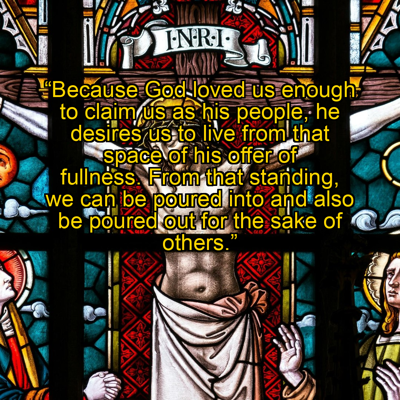
“Because God loved us enough to claim us as his people, he desires us to live from that space of his offer of fullness. From that standing, we can be poured into and also be poured out for the sake of others.”
Add this chatbot onto your site with the embed code below
<iframe frameborder="0" src="https://pastors.ai/sermonWidget/sermon/porous-poured" width="100%" height="100%" style="height:100vh;"></iframe>Copy