Oct 04, 2025
Faith is not about having a large reserve of certainty, but about taking the next step with what you already have. Jesus’ teaching about the mustard seed reminds us that even the tiniest bit of faith, when put into action, can move mountains. The focus is not on measuring or comparing faith, but on using what God has already given. When we act in trust, even if we feel unsure or weak, God multiplies our efforts and brings about growth we could never imagine.
You are invited to consider how you are using the faith you already possess. Instead of waiting for more confidence or a perfect situation, step out in trust today. Faith grows not by hoarding or analyzing, but by being lived out in real decisions, relationships, and acts of service. God honors even the smallest act of trust, and through it, His kingdom takes root in unexpected ways.
Luke 17:6 (ESV):
“And the Lord said, ‘If you had faith like a grain of mustard seed, you could say to this mulberry tree, “Be uprooted and planted in the sea,” and it would obey you.’”
Reflection:
What is one small act of trust you can take today, even if you feel uncertain or unprepared? How might God use that step to grow your faith?
Obedience to God is not a transaction where we do good in order to receive blessings or recognition. Jesus’ parable of the servant challenges us to serve simply because it is what God asks of us. True discipleship is marked by humble service—doing what is right, not for applause or reward, but out of love and devotion to God.
This kind of obedience shapes our character and forms the heart of Christian living. When we let go of the need for recognition, we are freed to serve with joy and sincerity. God sees and values every act of faithfulness, even those that go unnoticed by others. Our calling is to be faithful servants, trusting that God’s approval is enough.
Luke 17:10 (ESV):
“So you also, when you have done all that you were commanded, say, ‘We are unworthy servants; we have only done what was our duty.’”
Reflection:
Is there an area of your life where you are seeking recognition or reward for your service? How can you shift your motivation to simply serving God out of love and obedience?
Faith is not meant to be a solo journey. Jesus shifts the focus from individual faith to a shared “we,” reminding us that discipleship is a collective calling. Our faith is strengthened and expressed as we pray, serve, and witness together. Community is the soil where faith takes root, grows, and becomes contagious—spreading like mustard seed in a field.
When we gather with others, we are encouraged, challenged, and supported in ways we cannot experience alone. The ordinary acts of showing up, listening, and caring for one another are powerful expressions of faith. God uses our shared life to shape us and to reveal His love to the world.
Hebrews 10:24-25 (ESV):
“And let us consider how to stir up one another to love and good works, not neglecting to meet together, as is the habit of some, but encouraging one another, and all the more as you see the Day drawing near.”
Reflection:
Who in your faith community needs encouragement or support today? What is one way you can reach out and strengthen someone else’s faith this week?
The work of faithfulness is often found in the simple, consistent practices of daily life. Promising our prayers, presence, gifts, service, and witness may not seem glamorous, but these are the building blocks of a vibrant church and a transformed life. God often works through our steady, unseen acts of devotion, shaping us over time.
It is easy to overlook the significance of showing up, using our gifts, or supporting one another in small ways. Yet, these ordinary acts are the means by which God’s grace is made visible. Faithfulness is not about dramatic gestures, but about perseverance in the everyday.
1 Corinthians 15:58 (ESV):
“Therefore, my beloved brothers, be steadfast, immovable, always abounding in the work of the Lord, knowing that in the Lord your labor is not in vain.”
Reflection:
What is one ordinary, consistent practice you can commit to this week—such as prayer, service, or encouragement—that will help you grow in faithfulness?
Faith is ultimately about wholehearted trust—letting go of self-reliance and depending on God. The Heidelberg Catechism describes faith as “wholehearted trust,” created by the Holy Spirit. As we trust God and live out our faith with humility and discipline, we become true servants who do the work God gives us.
This trust is not passive, but active—a daily choice to rely on God’s faithfulness rather than our own strength. As we surrender our plans and desires, we discover the freedom and peace that come from depending on the One who is always faithful. Our faith grows not by striving for more, but by resting in God’s promises and obeying His call.
Psalm 37:5-6 (ESV):
“Commit your way to the Lord; trust in him, and he will act. He will bring forth your righteousness as the light, and your justice as the noonday.”
Reflection:
What is one area of your life where you are tempted to rely on your own strength? How can you practice trusting God more fully in that area today?
In this sermon on Luke 17:5-10, we explored the nature of faith and what it means to be faithful followers of Christ. Using the analogy of invasive plants like buckthorn and mustard weed, we considered how even the smallest seed can have a significant impact—just as a small amount of faith can accomplish great things. Jesus’ response to the disciples’ request for more faith was not to give them a formula for increasing it, but to remind them that they already have enough faith to do what God asks. The parable of the servant teaches us that faithfulness is not about earning rewards or recognition, but about humble obedience and service. Ultimately, faith is not something to be measured or hoarded, but lived out in community, through trust, discipline, and a willingness to serve and witness together.
It does not take much faith to do great things. The tiniest amount of faith can plant a tree in the ocean or move a mountain from one place to another. You have enough faith. God has already given you all the faith you need.
Instead of asking for more faith, or bigger faith, the disciples should have been finding opportunities to act on the faith they already had. We need to be living into the faith we’ve already been given.
Being faithful and obedient to God doesn’t make God owe us anything. It’s what we are supposed to do. We need to be more faithful, serving with no expectation of praise or recognition, in true humility.
Our obedience is by no means a way to gain honor, and good works aren’t something we do to receive a reward. We obey and serve because Christ calls us to follow him in obedient service.
Faith depends on this idea of community, because, when you get right down to it, faith is bigger than believing. Faith is trust, and trust requires relationship.
We don’t need more faith; we need to be faithful. And it’s also possible that we need a different kind of faith—one that, like mustard weed, spreads contagiously wherever it is dropped, grows persistently, and cannot be easily destroyed.
When we understand that faith is trusting God, we can begin to live out that trust through discipline and humility, becoming true servants of God who do the work God gives us to do.
You must be present to participate in the full life of the Body of Christ. It is not something you can do via e-mail or text. Your presence among the people of God is important for you, and for the rest of us.
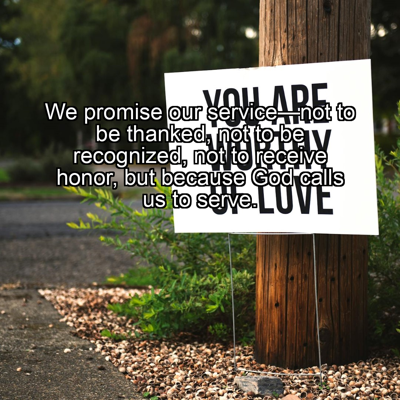
We promise our service—not to be thanked, not to be recognized, not to receive honor, but because God calls us to serve.
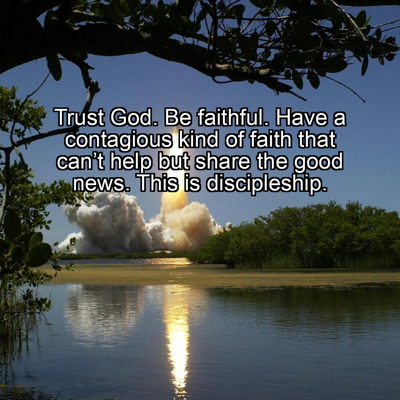
Trust God. Be faithful. Have a contagious kind of faith that can’t help but share the good news. This is discipleship.
Hi, I'm an AI assistant for the pastor that gave this sermon. What would you like to make from it?
Add this chatbot onto your site with the embed code below
<iframe frameborder="0" src="https://pastors.ai/sermonWidget/sermon/pentecost_17c_2025_sermonpdf" width="100%" height="100%" style="height:100vh;"></iframe>Copy