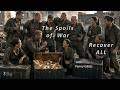
God is already in the room, and his presence is not a side thing. God is the one who ruins his people by himself and then speaks a word that hits the mark and brings fruit. The missing puzzle piece becomes the picture for what God wants to give, because one little white piece on a rug says the picture is not whole yet. God wants to expand capacity, expand believing, and expand movement with the Holy Spirit so his people walk out bigger in the spirit than when they came in.
The fifth biblical month carries God’s intention to bring his people into promise, into new land, new territory, new trust, and fresh ways for God to prove himself. The word “paradigm shift” names the change God is bringing, a whole different way of thinking and moving, not just higher on the same level but into another dimension of the Spirit. Isaiah 6 shows that when Uzziah dies, glory fills the temple, and Uzziah points to pride, especially religious pride and religious control. God is after the little piece that still says, “Holy Spirit, move this way, but not that way.”
The Spirit wants freedom, and religious control has to go. God is not asking for a neat box, a governor on the car, or a fear of wildfire. God likes fire. The hidden treasures and secret wealth belong to appointed times, and a yes can make something become time, just like Mary’s request at Cana. God is El Shaddai, not El Chipo, and he has not left his people with a devil bigger than the authority he gives.
First Samuel 30 becomes the now word: David asks, “Shall I pursue?” and God answers, “Pursue, overtake, and without fail recover all.” The Amalekites represent relentless harassment, weariness, and unprovoked evil, but Yahweh Nissi raises a banner over tired people. Recovery starts when lost things are recognized, and God says what looked gone forever can be recovered.
David does not just get back wives, children, goods, and livestock. David recovers all, then names the extra, “This is David’s spoil.” That is the paradigm shift. Recovery is not merely surviving the fight and saying, “Hallelujah, it’s over.” Recovery includes the spoil of war, whatever God says can be taken back and tagged by faith. The spoil may be peace, health, favor, land, relationships, books, nations, or more authority. God’s people can have anything God says they can have, because the blood of Jesus is not cheap, and his goodness has been boxed in too low.
##
Key Takeaways
- 1. Missing pieces change the picture The missing puzzle piece shows that something can look almost complete and still not be whole. God can use one small, overlooked thing to expose what has been absent in the picture. The point is not frustration over what is missing, but expectancy that God can place the right piece in the right season and shift the whole thing. [01:44]
- 2. Religious control boxes in fire Religious control can sound careful, balanced, and responsible, but underneath it may be fear trying to manage the Holy Spirit. God is not asking for a people who put a governor on the car and then call that wisdom. True repentance lets God move beyond familiar lanes, even when the movement feels wild to religious eyes. [08:08]
- 3. Weariness meets Yahweh Nissi The Amalekite spirit attacks the weak and weary, but God answers weariness with his banner. Yahweh Nissi is not just a nice title, but a covering over people who have been harassed in tired places. Praise lifts the hands again, and the lifted banner announces that the battle is not being fought uncovered. [15:06]
- 4. Recovery includes named spoil David’s recovery was not limited to getting back what was stolen. God’s idea of “recover all” included the spoil of a defeated enemy, enough to bless cities and regions. The church has often stopped at relief, but Scripture points to restoration that also carries authority, provision, and increase. [21:47]
- 5. God gives what He says The issue is not grabbing whatever desire comes to mind, but hearing what God says can be received. “Anything God says” keeps faith anchored in his voice instead of selfish appetite. Extravagance belongs to God’s nature, and the blood of Jesus should not be treated like it bought only survival.
## [36:05]
Youtube Chapters