Aug 12, 2026
The ancient poet begins with a stark choice. He describes a person at a crossroads, faced with two distinct paths. One path is walked in step with the wicked. The progression is subtle: first they walk, then they stand, then they sit. It is a slow drift into the company of those who mock God’s ways. This is the path of listening to the wrong voices.
This imagery reveals a profound truth about our spiritual lives. We are always walking somewhere. The voices we choose to listen to determine our direction. Listening leads to lingering, and lingering leads to settling in. The direction of our lives is shaped by the counsel we keep and the influences we allow to speak into our hearts.
Many of us feel this drift. We start by casually entertaining a thought or habit that is not from God. Before we know it, we have settled into a pattern far from Him. What voices are you casually walking alongside today? Which news feed, social circle, or internal narrative is subtly directing your steps? What is one voice you are listening to that might be leading you down the wrong trail?
Blessed is the one
who does not walk in step with the wicked
or stand in the way that sinners take
or sit in the company of mockers,
but whose delight is in the law of the Lord,
and who meditates on his law day and night.
(Psalm 1:1-2, NIV)
Prayer: Ask God to reveal the voices you are currently listening to and to give you discernment to recognize which ones lead you toward Him.
Challenge: Identify one source of input you regularly consume—a podcast, social media account, or news outlet—and replace it with five minutes of reading the Bible today.
The second path presents a radically different focus. The person on this path finds their delight in the law of the Lord. This is not a grim duty but a source of joy. They do not merely read God’s words; they meditate on them. They chew on them, think them over, and apply them day and night. This constant connection to God’s voice becomes their guide.
This meditation is the key to staying on the right path. Delighting in God’s law means we find our ultimate satisfaction in His wisdom and character. It is a active, ongoing engagement with Scripture that shapes our desires and recalibrates our compass. God’s word becomes the primary voice we trust to tell us what is true and valuable.
Your daily habits reveal what you truly delight in. We make time for what we love. The call is to actively shift your delight toward God’s eternal word. Intentionally choose to find joy in His instructions rather than the world’s distractions. What one truth from Scripture can you meditate on today to redirect your delight?
but whose delight is in the law of the Lord,
and who meditates on his law day and night.
(Psalm 1:2, NIV)
Prayer: Confess to God the things you often delight in more than His word and ask Him to give you a fresh joy in Scripture.
Challenge: Write down one verse from your Bible reading on a notecard and place it where you will see it three times today, pausing to meditate on it each time.
The poet paints a powerful picture of the result of a life connected to God. This person is like a tree planted by streams of water. Its roots reach a constant source of nourishment. It does not struggle to survive. It yields fruit in its season. Its leaves do not wither. Health and productivity are the natural outcomes of its planted position.
This tree does not produce fruit by sheer effort. It bears fruit because it is rooted in a life-giving source. Jesus is our living water. Our spiritual health does not come from trying harder but from abiding deeper. We thrive when we are connected to Him through His Spirit. Our vitality is a direct result of our proximity to the source.
You cannot strain your way into spiritual growth. Your calling is not to manufacture fruit but to sink your roots deep into Christ. Your stability and fruitfulness depend on your connection to Him, not your self-discipline. In which area of your life are you trying to produce fruit through your own effort instead of relying on Christ’s power?
That person is like a tree planted by streams of water,
which yields its fruit in season
and whose leaf does not wither—
whatever they do prospers.
(Psalm 1:3, NIV)
Prayer: Thank Jesus that He is your living water and ask Him to help you stop striving and simply abide in His presence today.
Challenge: Set aside ten minutes of quiet. Do nothing but sit and prayerfully acknowledge your dependence on Jesus, the source of your life.
The contrast to the healthy tree is the chaff. The wicked are not like a weak tree; they are like the worthless husk separated from the wheat at harvest. Chaff is dry, hollow, and lightweight. It has no substance. It is blown away by the slightest wind. It is temporary and has no lasting value or purpose.
This is the destination of the wrong path. A life built on voices other than God’s may appear substantial for a season, but it lacks a true anchor. It is rootless. When the winds of difficulty, change, or judgment come, it cannot stand. It is carried away because it has no weight, no core truth, and no connection to anything eternal.
We often chase things that feel weighty but are ultimately chaff—approval, success, comfort. These things cannot anchor us in a storm. They offer no eternal security. What are you investing in that, in the end, will prove to be as temporary and insubstantial as chaff?
Not so the wicked!
They are like chaff
that the wind blows away.
(Psalm 1:4, NIV)
Prayer: Ask God for clarity to see the empty things you are chasing and the courage to let the wind of His Spirit blow them away.
Challenge: Identify one pursuit in your life that feels weighty but is ultimately temporary. Write it down and prayerfully release it to God.
The psalm concludes by revealing two futures. The wicked will not stand in the judgment. They will have no defense. Sinners will have no place in the assembly of the righteous. But for those on the right path, the future is secure. The Lord watches over the way of the righteous. He knows them, loves them, and protects their journey.
This watching over is a promise of intimate care. God is not a distant observer but a present guardian. His oversight is the guarantee for the righteous. Their way leads to life and inclusion in His permanent family. The destination is determined by the direction chosen each day. Your path determines your end.
You are headed toward a destination. The daily choice to listen to God’s voice secures your future under His watchful care. You can walk with confidence, not in your own ability to stay on the path, but in His faithfulness to keep you. Does your understanding of the future change how you choose to walk today?
Therefore the wicked will not stand in the judgment,
nor sinners in the assembly of the righteous.
For the Lord watches over the way of the righteous,
but the way of the wicked leads to destruction.
(Psalm 1:5-6, NIV)
Prayer: Thank God that He watches over your path and ask Him to make you aware of His guiding presence throughout your day.
Challenge: Call or text one person and share one way you have experienced God’s guidance or care this week.
Psalm 1 opens the Psalter by framing life as a walk along one of two paths, each shaped by the voices that guide daily decisions. The opening verses present a progression—walking, standing, sitting—as a picture of how sin gradually takes hold when people listen to wrong voices and linger in their influence. By contrast, delighting in and meditating on God's law day and night describes a life that intentionally tunes itself to divine truth. That attentiveness to God’s word produces a pattern of living rooted in God rather than rooted in fleeting opinions or cultural pressures.
The psalmist then uses agricultural imagery to show the outcomes of those choices. A person who delights in the law is like a tree planted by streams of water: sustained, fruitful in season, and resilient against withering. Fruitfulness flows from proximity to life-giving water, not from strained effort, so spiritual growth results from remaining connected to God’s life rather than merely trying harder. Those who follow the wrong course, by contrast, are like chaff—light, empty, and blown away—illustrating instability and lack of lasting substance.
The poem closes by linking paths and plants to ultimate destinies. The way of the righteous is watched over by the Lord and enables standing in the assembly of the righteous; the way of the wicked leads to destruction and failing to stand in judgment. That final contrast makes the practical stakes clear: daily attentiveness to God's voice shapes not only present fruitfulness but final standing. The psalm also points forward to the work of Christ, whose perfect fulfillment of the righteous way opens forgiveness and the gift of rootedness through the Spirit, enabling those who follow him to become the kind of people who walk the right path and bear lasting fruit. The text thus calls each person to assess which voices shape life, to cultivate delights that keep roots near living water, and to choose the path that leads to life and endurance rather than to instability and loss.
Life is a lot like walking a path—at every stage of life we are walking somewhere; the question is, which way are we walking?
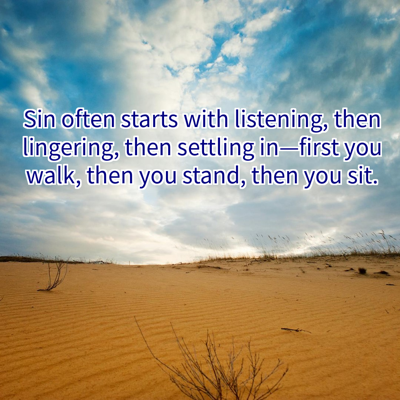
Sin often starts with listening, then lingering, then settling in—first you walk, then you stand, then you sit.
Every day we decide which voices we will listen to; the voices we trust play a huge role in determining which path we go down.
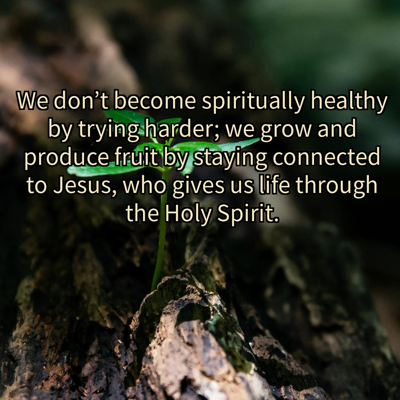
We don’t become spiritually healthy by trying harder; we grow and produce fruit by staying connected to Jesus, who gives us life through the Holy Spirit.
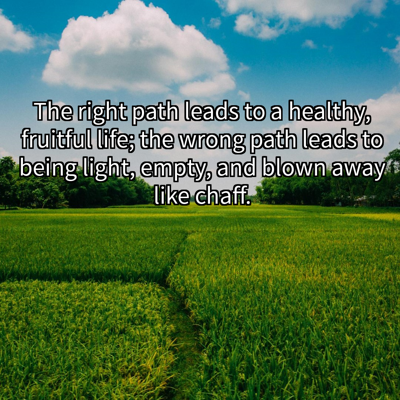
The right path leads to a healthy, fruitful life; the wrong path leads to being light, empty, and blown away like chaff.
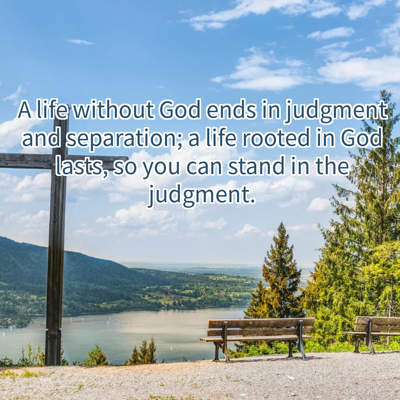
A life without God ends in judgment and separation; a life rooted in God lasts, so you can stand in the judgment.
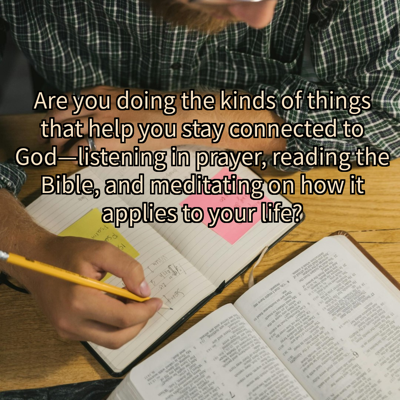
Are you doing the kinds of things that help you stay connected to God—listening in prayer, reading the Bible, and meditating on how it applies to your life?
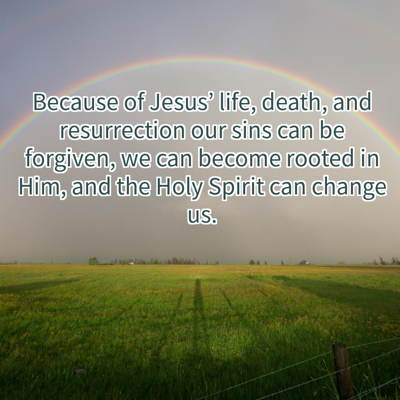
Because of Jesus’ life, death, and resurrection our sins can be forgiven, we can become rooted in Him, and the Holy Spirit can change us.
Hi, I'm an AI assistant for the pastor that gave this sermon. What would you like to make from it?
Add this chatbot onto your site with the embed code below
<iframe frameborder="0" src="https://pastors.ai/sermonWidget/sermon/paths-plants-futures" width="100%" height="100%" style="height:100vh;"></iframe>Copy