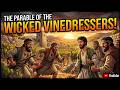
Matthew 21:33-46 puts Jesus’ parable of the wicked vinedressers right at the end of His earthly ministry, after He entered Jerusalem and before religious leaders pushed for His crucifixion. The landowner pictures God, the vineyard pictures the nation God planted, and the hedge, winepress, and tower show that God had made full provision for fruit. The vinedressers picture the chief priests, Pharisees, and religious system that had been entrusted with God’s vineyard.
God sent prophets to receive the fruit that belonged to Him, because Israel had received both the privilege and responsibility of making the knowledge of God known among the nations. The religious leaders beat, stoned, and killed the servants, revealing that religion can reject God’s correction while still claiming to represent Him. God then sent His Son, saying, “They will respect My Son,” yet the vinedressers recognized the Heir and chose to kill Him so they could seize His inheritance.
Jesus exposes the real issue: they did not merely misunderstand Him. The religious system loved its religion, its position, and its control more than it loved God. The chief priests and Pharisees answer their own judgment when they say the owner will “destroy those wicked men miserably” and lease the vineyard to others who will render its fruit. Wickedness is twisted truth, like wicker furniture twisted out of shape, and religion becomes dangerous when truth is bent until it is no longer truth.
Jesus identifies Himself as the stone rejected by the builders who becomes the chief cornerstone. The stone gives every person only two options: fall on the Rock through repentance and faith, or allow the Rock to fall in judgment upon a lost condition. The kingdom responsibility is then taken from Israel’s religious leadership and given to another nation that will bear its fruit.
Exodus 19 calls Israel a kingdom of priests and a holy nation, set apart to bring God’s knowledge to the earth. First Peter 2 calls the church a chosen generation, royal priesthood, and holy nation, called out of darkness to proclaim God’s praises. The church therefore cannot settle for gathering, singing, and going home as nominal believers. The church carries the privilege and responsibility of taking the gospel to nations and bringing God the fruit that belongs to Him.
Key Takeaways
- 1. Religion can reject Jesus while appearing faithful. Religion can know the Scriptures, hold positions, preserve traditions, and still reject the very Son of God. The religious leaders did not lack information about Jesus; they refused Him because His lordship threatened what they controlled. Love for God must remain greater than attachment to religious systems, reputation, or personal comfort. [55:26]
- 2. God expects fruit from His vineyard. God’s provision is never empty or casual, because the landowner planted, protected, equipped, and entrusted the vineyard for a purpose. Fruit belongs to God, not to those temporarily entrusted with His work. The call of God always carries both privilege and responsibility, and neither should be separated from the other. [1:01:07]
- 3. Fall on the Rock and live. Jesus is the chief cornerstone, and every life must eventually reckon with Him. Repentance and faith mean falling on the Rock, surrendering self-rule so that Christ can save and restore. Refusal does not remove Christ’s authority; it leaves a person exposed to judgment in a spiritually lost condition. [1:08:14]
- 4. The church is God’s holy nation. The church has inherited a kingdom assignment, not merely a church-attendance routine. First Peter identifies God’s people as a royal priesthood called to proclaim the One who brought them out of darkness into marvelous light. The gospel belongs in the nations, and active believers carry that responsibility with joy. [1:11:51]
- 5. Missions is privilege, not religious duty. The Great Commission is not an optional department for a few interested people. God calls His people to bring the knowledge of Jesus beyond familiar walls, local routines, and personal concerns. Giving, sending, planting, and going become ways of rendering to God the fruit of His vineyard. [1:17:52]
Youtube Chapters