The parable of the Pharisee and the tax collector reveals that God’s mercy is not reserved for those who appear righteous or have a record of good deeds, but is freely given to anyone who humbly acknowledges their need for forgiveness. The tax collector, standing at a distance and unable even to lift his eyes to heaven, simply prays, “O God, be merciful to me, a sinner,” and it is this honest humility that leads to his justification before God. This story challenges us to approach God not with pride in our accomplishments, but with open hearts, trusting that whenever we turn to Him and ask for mercy, mercy will be given. [03:07]
Luke 18:9-14 (ESV)
He also told this parable to some who trusted in themselves that they were righteous, and treated others with contempt: “Two men went up into the temple to pray, one a Pharisee and the other a tax collector. The Pharisee, standing by himself, prayed thus: ‘God, I thank you that I am not like other men, extortioners, unjust, adulterers, or even like this tax collector. I fast twice a week; I give tithes of all that I get.’ But the tax collector, standing far off, would not even lift up his eyes to heaven, but beat his breast, saying, ‘God, be merciful to me, a sinner!’ I tell you, this man went down to his house justified, rather than the other. For everyone who exalts himself will be humbled, but the one who humbles himself will be exalted.”
Reflection: When was the last time you honestly admitted your need for God’s mercy? What would it look like to approach God today with the humility of the tax collector?
God’s love and acceptance are not rewards for religious achievement or moral perfection, but are gifts given freely and without condition. Just as the children brought for baptism come not because they have earned it, but because God loves them first, so too are we called beloved by God, not for our worthiness, but because of His gracious initiative. We are invited to open our hearts to this love, letting God wash away what we cannot fix and fill us with His Spirit and joy. [10:37]
Romans 5:8 (ESV)
But God shows his love for us in that while we were still sinners, Christ died for us.
Reflection: In what ways do you find yourself trying to “earn” God’s love or approval? How can you rest today in the truth that God loves you first, freely and completely?
True strength before God is found not in pride or self-sufficiency, but in humility—a willingness to be honest about our need and to depend on God’s mercy. The world may see humility as weakness, but in God’s eyes, it is the very quality that opens us to His grace and makes our hearts truly holy. We never have to pretend before God; instead, we are invited to walk in the strength of humility, trusting that God’s mercy, not our pride, is what transforms us. [11:26]
James 4:6 (ESV)
But he gives more grace. Therefore it says, “God opposes the proud but gives grace to the humble.”
Reflection: Where in your life do you feel tempted to hide your weaknesses or pretend before God or others? What would it mean for you to embrace humility as your strength today?
Baptism is not a reward for the worthy, but the beginning of a new life given by God’s grace—a moment when we are claimed as beloved children, washed clean, and filled with the Holy Spirit. In baptism, we are welcomed into the family of God, clothed in Christ, and entrusted with the light of faith to carry forward. This new identity is a gift to be cherished and lived out, not a status to be earned. [15:09]
Galatians 3:26-27 (ESV)
For in Christ Jesus you are all sons of God, through faith. For as many of you as were baptized into Christ have put on Christ.
Reflection: Recall your own baptism or a moment when you felt God claim you as His beloved. How can you live out your identity as a child of God today?
God’s mercy and justification are not limited to those who are outwardly religious or morally upright; even those who seem far from God—those the world might judge or exclude—are welcomed when they turn to Him in need. The parable reminds us that we do not have a monopoly on God’s love, and that anyone who recognizes their need for mercy will find acceptance and new life alongside us. This challenges us to see others with God’s eyes and to extend the same mercy we have received. [09:44]
Matthew 9:12-13 (ESV)
But when he heard it, he said, “Those who are well have no need of a physician, but those who are sick. Go and learn what this means: ‘I desire mercy, and not sacrifice.’ For I came not to call the righteous, but sinners.”
Reflection: Is there someone in your life or in your community whom you struggle to see as worthy of God’s mercy? How might you extend God’s welcome and acceptance to them today?
Today’s reflection centers on the parable of the Pharisee and the tax collector, a story that challenges our assumptions about righteousness, prayer, and God’s mercy. The parable is not simply a critique of religious hypocrisy or a comparison between two types of people; rather, it is a revelation about the heart of God and the radical accessibility of divine mercy. The Pharisee, respected and devout, stands confidently in the temple, listing his virtues and thanking God that he is not like others. The tax collector, despised and aware of his failings, stands at a distance, unable even to lift his eyes, and simply pleads for mercy.
The surprise in Jesus’ teaching is that both the Pharisee and the tax collector can go home justified—not because of their status or achievements, but because God’s mercy is available to all who recognize their need for it. This challenges us, especially those who strive to live faithfully, to remember that our religious observance does not give us exclusive rights to God’s love. God’s acceptance is not earned by our efforts, but received by opening our hearts to grace.
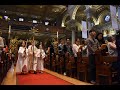
This truth is beautifully embodied in the sacrament of baptism, as witnessed today with the young children brought forward by their families. They come not because they have proven themselves worthy, but because God loves them first—freely and unconditionally. Baptism is a reminder that none of us need to pretend before God; we are called to humility, to acknowledge our need, and to trust in the mercy that makes us new.
As we recall our own baptism, we are invited to return to that foundational moment when God called us beloved. We are encouraged to walk in humility, to recognize that mercy—not pride or self-sufficiency—is the mark of a holy heart. In a world quick to judge and divide, we are called to be witnesses of God’s inclusive love, welcoming all who seek mercy, and trusting that God’s grace is always greater than our failures.
It's not really about Pharisees, it's not really about tax collectors as we hear Jesus talking about. It's really about God isn't it? Because it poses the question what is required for God to hear our prayer right? Isn't that what we hear in this gospel? What do we have to do in order to obtain God's favor? And the parable answers, not that much. For whenever we turn to God and ask for mercy, mercy will be given. [00:04:08]
He takes his position in God's house. He speaks to God as a friend. He thanks God for that he has not fallen into serious sins such as greed and adultery. He takes his faith pretty seriously. He fasts twice a week. He gives a tenth of his income to the temple and to the poor. This Pharisee is a good religious person who is at home in God's house. [00:05:31]
When he comes to pray, unlike the Pharisee, he has no good works to point to. He doesn't fast or tithe. He doesn't feel at home really in God's house. He stands off at a distance. The only thing that he can say is that he is a sinner. And that one true statement is his only prayer. [00:06:12]
The surprise then of the parable is that God accepts the prayer of the tax collector, doesn't he? The parable ends by saying that the tax collector went home justified. And that means he was accepted by God. [00:06:40]
So I think this translation brings us a deeper meaning to the parable. So that the last line would read that the tax collector goes home justified along with the Pharisee. You see, Jesus' hearers, those who are paying attention, would automatically presume that the Pharisee would go home justified. And he does. But the surprise for the listeners is that the tax collector also goes home justified right along with him. [00:07:16]
We are good religious people, aren't we? We come to church regularly. We try to avoid serious sin. We share our wealth with the church, with the poor. We take our faith seriously and God loves us for our faith and for our generosity. And we expect that when we leave church, we will go home justified. And we will feel accepted by God. And we do. But this parable tells us that we are not the only ones, right? [00:08:03]
There are people in our world who are...Who are comparable to the tax collector, people who are not religious, people not even that good, sex offenders, white-collar criminals, atheists, people who are motivated by greed and by violence. This parable says that all any of them need to do is admit, I am in need, I am a sinner, and God will accept them, and God will justify it. [00:08:39]
Now, get me wrong, God wants us to be religious. God wants us to hear the gospel, and to live it, and to share it with others. But this parable tells us that the fact that we take our faith seriously not necessarily mean that we have a monopoly on God's love. [00:09:13]
The tax collectors of our world, the non-religious, the compromised, only have to recognize that they need mercy. And mercy will be given. They will go home justified, accepted by God, right along with us. [00:09:36]
And when these young people come to the waters of baptism, they come forward, not because they've earned it, or they've somehow proven themselves worthy, they come because God loves them first, right? Freely, completely, and without condition. In that water, God says to each of them, You are my beloved child. I claim you as my own. You don't have to be perfect. Just open to my love. [00:10:06]
You know, the Pharisee, he tried to save himself by his own effort. The tax collector simply opened his heart to mercy. Baptism is that moment for us when we open our hearts. When we let God wash away what we cannot fix. And then fill us with the Spirit. And fill us with his grace and his joy. [00:10:43]
So today, as we witness these baptisms, let's remember our own. Let's return in our hearts to that moment when God first called us beloved. And let's pray this. Let's pray that these young people here will grow knowing this truth. they never have to pretend before God. That humility is strength. And that mercy, not pride, is what makes a heart truly holy. [00:11:08]
And may they always walk knowing that the God who welcomes them today will never stop loving them, never stop guiding them, and calling them deeper into his grace. [00:11:39]
We all say amen. have a candle. Receive the light of Christ. Parents and godparents, this light is entrusted to you to be kept burning brightly. These children have been enlightened by Christ. They are to walk always as children of the light. May they keep the flame of faith alive in their hearts. When the Lord comes, may they go out to meet him with all the saints in the heavenly kingdom. [00:21:16]
We are in relationship with a creator who often subverts our norms and expectations. Searching for what our God wants us to see, we come with these petitions for ourselves and our world in need. [00:22:20]
Bring your church, O Lord, to perfect faith and charity, together with Leo, our Pope, Salvatore, our Bishop, with all bishops, priests, and deacons, and the entire people you have made for your own. [00:37:31]
Open our eyes to the needs of our brothers and sisters. Inspire in us words and actions to comfort those who labor and are burdened. Make us serve them truly after the example of Christ and at his command. And may your church stand as a living witness to truth and freedom, to peace and justice, that all people may be raised up to a new hope. [00:37:45]
Thank you for making us a part of you, the mystical body of Christ the church renew in us your sacrificial presence and let us be united with you at this moment so that in all our thoughts words and actions we may represent you and love others as you love us amen my friends behold this is the Lamb of God this is the one who comes to take away the sins of the world how happy and blessed are we to be called to the supper of the Lamb. [00:42:48]
May your sacraments, O Lord, we pray, perfect in us what lies within them, that what we now celebrate in signs we may one day possess in truth through Christ our Lord. [00:53:07]
I'm an AI bot trained specifically on the sermon from Oct 27, 2025. Do you have any questions about it?
Add this chatbot onto your site with the embed code below
<iframe frameborder="0" src="https://pastors.ai/sermonWidget/sermon/parable-mercy-baptism-ignatius" width="100%" height="100%" style="height:100vh;"></iframe>Copy