Jun 01, 2026
The Israelites did evil and forgot the Lord their God. They served the Baals and the Asherahs. The Lord’s anger burned against Israel. He sold them into the hands of Cushan-Rishathaim king of Aram. The Israelites were subject to him for eight long years. But then they cried out to the Lord. He heard their desperate plea.
God raised up a deliverer for them, Othniel. The Spirit of the Lord came upon Othniel. He became Israel’s judge and went to war. The Lord gave the king of Aram into Othniel’s hands. Othniel overpowered him. The land then enjoyed peace for forty years. This clear pattern shows a God who responds to cries for help.
This cycle of forgetting, oppression, crying out, and deliverance is our story too. We forget God’s goodness and go our own way. We often find ourselves in a place of hardship as a result. Yet when we finally cry out, God hears. He is ready to bring deliverance and restore peace. Where in your life have you stopped crying out to God and started trying to fix things on your own?
The Israelites did evil in the eyes of the Lord; they forgot the Lord their God and served the Baals and the Asherahs. The anger of the Lord burned against Israel so that he sold them into the hands of Cushan-Rishathaim king of Aram Naharaim, to whom the Israelites were subject for eight years. But when they cried out to the Lord, he raised up for them a deliverer, Othniel son of Kenaz, Caleb’s younger brother, who saved them. The Spirit of the Lord came on him, so that he became Israel’s judge and went to war. The Lord gave Cushan-Rishathaim king of Aram into the hands of Othniel, who overpowered him. So the land had peace for forty years, until Othniel son of Kenaz died.
(Judges 3:7-11, NIV)
Prayer: Confess to God one specific way you have forgotten Him and gone your own way this week.
Challenge: Set a timer for five minutes tonight and cry out to God about one area where you feel oppressed or stuck.
The Israelites cried out to the Lord again. He gave them Ehud, a left-handed man. Ehud was the son of Gera the Benjamite. The text says he was unable to use his right hand. This made him an unlikely hero. No one would have looked to him as a leader. But God did. The Israelites sent Ehud to deliver tribute to Eglon, the fat king of Moab.
Ehud made a double-edged sword about eighteen inches long. He strapped it to his right thigh under his clothing. The king’s guards searched him but missed the weapon. They likely patted down his left side, expecting a right-handed man. Ehud’s difference became his greatest advantage. God used his perceived weakness to bring deliverance.
God specializes in using our unique traits for His purposes. Your limitation, your background, or your perceived flaw might be the very thing God wants to use. He does not call the equipped; He equips the called. What part of your story do you assume disqualifies you from being used by God?
Again the Israelites cried out to the Lord, and he gave them a deliverer—Ehud, a left-handed man, the son of Gera the Benjamite. The Israelites sent him with tribute to Eglon king of Moab. Now Ehud had made a double-edged sword about a cubit long, which he strapped to his right thigh under his clothing.
(Judges 3:15-16, NIV)
Prayer: Ask God to show you one unique trait or experience He wants to use for His glory.
Challenge: Write down one personal limitation you have. Next to it, write one way God could use it.
Ehud presented the tribute to King Eglon. Then he sent away the men who carried it. Ehud himself turned back. He went to the king and said, “Your majesty, I have a secret message for you.” The king told his attendants to leave them alone. They all exited the room. Ehud was now alone with the powerful king.
Ehud reached with his left hand. He drew the sword from his right thigh. He plunged it into the king’s belly. The handle sank in after the blade. Ehud did not pull the sword out. The fat closed over it. He then locked the doors behind him and escaped. This courageous step led to Israel’s victory and eighty years of peace.
God calls us to take courageous steps even when we are afraid. This often means moving forward before we see the full outcome. It requires trusting that God is with us in the risk. Your obedience in a small, scary moment can lead to God’s deliverance. What is one courageous step God is asking you to take that you have been avoiding?
After Ehud had presented the tribute, he sent on their way those who had carried it. But on reaching the stone images near Gilgal he himself went back to Eglon and said, “Your majesty, I have a secret message for you.” The king said to his attendants, “Leave us!” And they all left.
(Judges 3:18-19, NIV)
Prayer: Ask God for the courage to take the specific step you know He has placed before you.
Challenge: Identify one difficult conversation you need to have and commit to initiating it within 24 hours.
Deborah, a prophet and the wife of Lappidoth, was leading Israel. She held court under a palm tree. The Israelites went up to her to have their disputes decided. She sent for Barak and gave him God’s command. She told him to take ten thousand men to Mount Tabor. God would deliver the enemy into his hands.
Barak said to Deborah, “If you go with me, I will go; but if you don’t go with me, I won’t go.” Deborah agreed to go with him. But she told Barak that the honor would not be his. The Lord would deliver the enemy into the hands of a woman. Deborah’s leadership and Barak’s obedience, though hesitant, led to a great victory.
God’s call does not always come through expected channels. He used a female judge in a male-dominated culture. He used a hesitant military leader. He works through anyone who is willing to listen and obey, regardless of their position or confidence. Are you listening for God’s call through people you might not expect to hear from?
Now Deborah, a prophet, the wife of Lappidoth, was leading Israel at that time. She held court under the Palm of Deborah between Ramah and Bethel in the hill country of Ephraim, and the Israelites went up to her to have their disputes decided. She sent for Barak son of Abinoam from Kedesh in Naphtali and said to him, “The Lord, the God of Israel, commands you: ‘Go, take with you ten thousand men of Naphtali and Zebulun and lead them up to Mount Tabor.’”
(Judges 4:4-6, NIV)
Prayer: Ask God to help you recognize His voice today, whether it comes from a familiar or unexpected source.
Challenge: Intentionally seek counsel today from someone different from you in age, gender, or background.
Sisera, the commander of the enemy army, fled on foot. He came to the tent of Jael, the wife of Heber. Heber was an ally of Sisera’s king. Sisera thought he was safe. He was exhausted and fell asleep. Jael picked up a tent peg and a hammer. She went quietly to him while he slept.
Jael drove the peg through his temple into the ground, and he died. Barak came by in pursuit of Sisera. Jael showed him the man he was looking for, dead. That day God subdued the king of Canaan before the Israelites. A previously unknown woman completed the deliverance God promised through Deborah.
God often completes His work through the most unexpected people. Jael was not a soldier or a judge. She was an ordinary person who acted with decisive courage at a critical moment. Your faithful action in your ordinary sphere can be the means of God’s extraordinary deliverance. Where is God asking you to act decisively with the tools already in your hand?
But Jael, Heber’s wife, picked up a tent peg and a hammer and went quietly to him while he lay fast asleep, exhausted. She drove the peg through his temple into the ground, and he died. Just then Barak came by in pursuit of Sisera, and Jael went out to meet him. “Come,” she said, “I will show you the man you’re looking for.” So he went in with her, and there lay Sisera with the tent peg through his temple—dead.
(Judges 4:21-22, NIV)
Prayer: Ask God for the clarity to see your moment and the courage to use what you have.
Challenge: Name one practical tool or skill you possess and use it today to serve someone else.
The opening chapters of Judges trace a recurring cycle: Israel prospers, forgets God, falls under foreign oppression, cries out, and receives a deliverer who brings a season of peace. Othniel begins the sequence as an obvious, godly leader whose obedience yields forty years of rest. The narrative then surprises by raising Ehud, described as unable to use his right hand—either left-handed or maimed—who uses stealth and decisive violence to topple King Eglon and secure an eighty-year deliverance. The account emphasizes unlikely means: a concealed sword, a grotesque but providential delay, and a trumpet call that gathers Israel for battle.
The cycle repeats again with Deborah, the prophet-judge who settles disputes beneath a palm tree, and Barak, the reluctant military commander. Deborah’s presence reframes leadership expectations in a male-dominated context: divine authority appears through a woman, and victory comes in ways that defy military prestige. The climactic reversal occurs when Jael, a foreign ally’s wife, drives a tent peg through Sisera’s temple while he sleeps—an act that both fulfills Deborah’s prophecy and responds to Sisera’s record of cruelty toward women. The result is another long peace, testified to in both historical prose and a theological victory song in chapter 5.
Across these stories, God repeatedly operates through ordinary, flawed, and unexpected people. Leadership does not require social prominence or unblemished ability; faithfulness and courageous action open the door for divine agency. The repeated refrain that “the Israelites cried out to the Lord” frames God’s responsiveness: prayer and lament precede deliverance, and human initiative often accompanies divine intervention. The accounts resist neat moralizing; they preserve vivid, messy details—fear, hesitation, violence, ingenuity—so that the work of deliverance appears both gracious and costly. The pattern invites readers to see themselves within the cast of characters: ordinary persons called to step into risky obedience, trusting that God hears cries for mercy and works through unlikely hands to bring reconciliation and peace.
Our God can do some extraordinary things through the lives of ordinary people like you and me.
This isn’t a cycle as much as it is a downward spiral, because each time the people go around again their behavior and the consequences of that behavior gets worse.
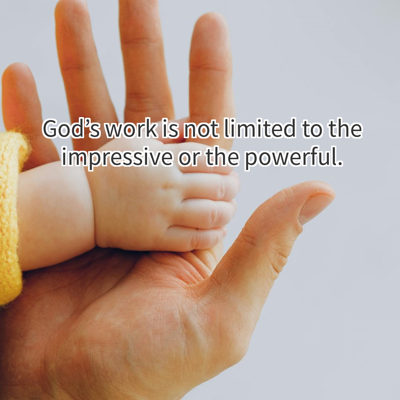
God’s work is not limited to the impressive or the powerful.
Don’t wait until you feel “important enough” to get involved or to respond when you feel God calling you to step out and serve.
Being faithful to God’s call on our lives often means we need to take a courageous step even when we aren’t sure what the outcome will be.
He has a track record of working through imperfect and unexpected people.
All of these stories help us remember that God hears and responds to the cry of His people.
We serve a God who listens, who hears, and who cares.
Hi, I'm an AI assistant for the pastor that gave this sermon. What would you like to make from it?
Add this chatbot onto your site with the embed code below
<iframe frameborder="0" src="https://pastors.ai/sermonWidget/sermon/ordinary-people-god1" width="100%" height="100%" style="height:100vh;"></iframe>Copy